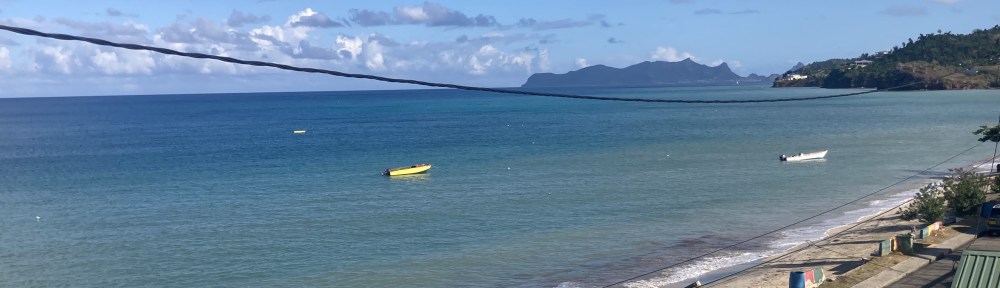
From the ferry approaching Tyrell Bay the island looked much the same as I remembered it. Colorful houses and roofs spread across the green hillside and plenty of sail boats anchored in the harbour. On closer inspections there seemed to be quite a few blue roofs which turned out to be tarps and sailboats without masts. It was to be expected after the devastating impact Hurricane Beryl had on the small island.
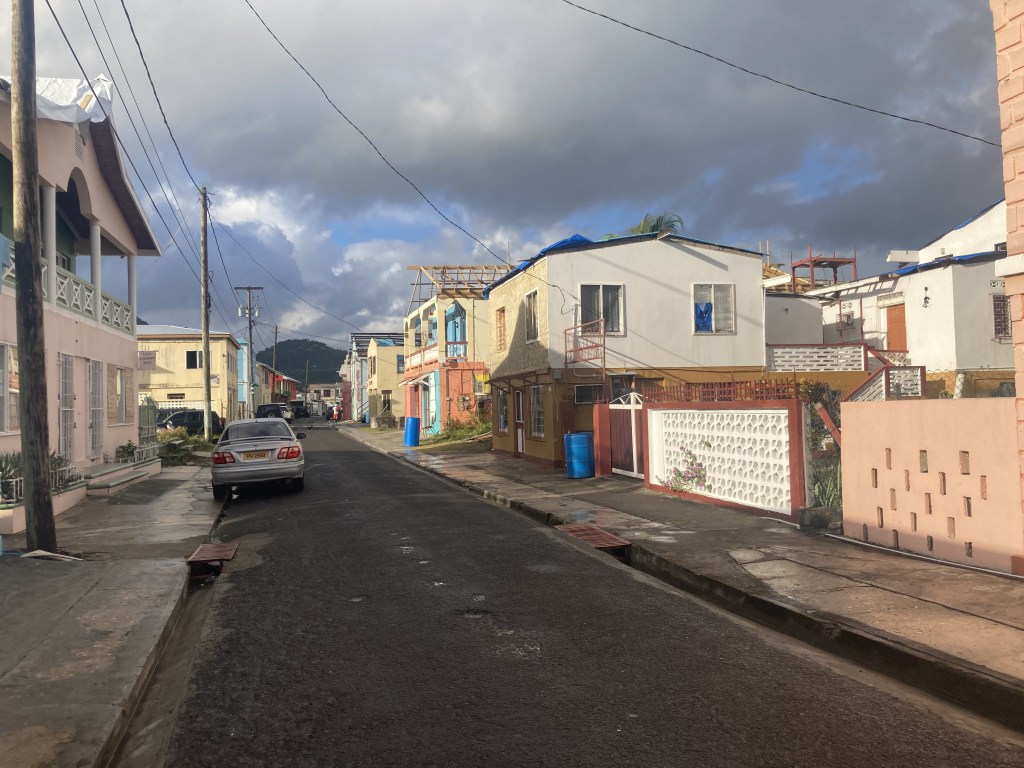
The Chinese built ferry terminal building had no roof anymore and was closed. We all disembarked and walked through an opening in the fence across the large parking lot toward the road. Driving along towards Hillsborough the true extent of the carnage Beryl left behind in July was evident everywhere and made us stare in silence and shock. ‘It’s much better than it used to be,’ our driver said, displaying the sunny optimism of many of the locals despite hardship and heartbreak. ‘There is much progress.’ It was hard for us to see. So many destroyed homes and missing buildings with only the tiled floors left behind as silent witnesses. Sometimes with a cubicle like a telephone booth left standing; remnants of a former bathroom.
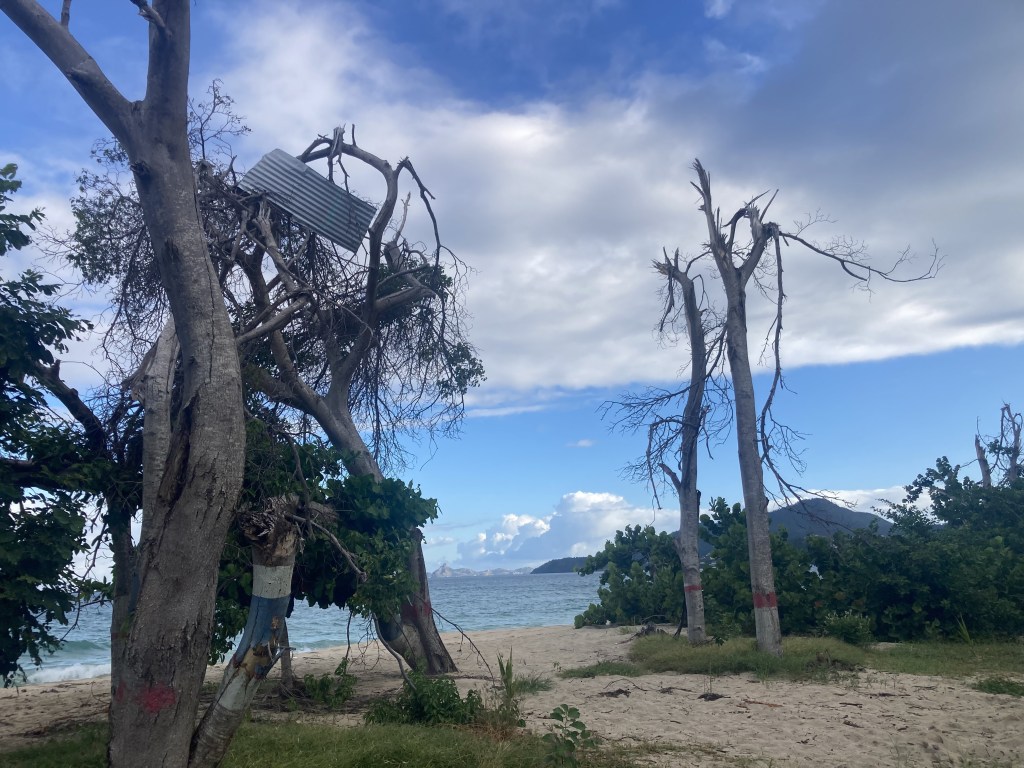
The lush and green vegetation is once again covering the island which was pruned and denuded of any foliage but has come back with a vengeance., except for the mangroves which are grey and will take a while to rebound. Many dead tree skeletons stick out from the verdant greenery, some of them with pieces of corrugated, galvanized roofing stuck up in the dead branches. Heaps of rubble and debris dot the landscape and mountains, the size of a four storied apartment buildings of mangled roofing tin, appliances and lumber, mostly sorted and piled up in the central sports field and on government land, eventually to be shipped to Trinidad or to be used for landfill, I guess.
‘Within two days of the storm, help arrived in the form of two desalination plants, field hospitals and World Kitchen and hundreds of tarps and many volunteers to help through the worst aftermath,’ Sally told us. She is a tough old girl, having gone through hurricane Ivan in 2004 and now through Beryl. ‘People here were very grateful for the instant disaster response, international and from the local government.,’ she said, trying to put a positive spin on a tale of misery of which there was plenty to go around with destroyed homes, livelihoods and looting.
Just six months after Beryl paid its nasty visit, the island is coming back, slowly but surely. The sound of construction work is everywhere and building materials, especially tinned and galvanized roofing are in short supply. Construction crews, big and small, are busier than ever since most residents and businesses have received a cash payout or materials from the Grenada government. Improvements are being made everywhere, from cleanup crews to improvised businesses in makeshift lean-to’s and some newly erected wooden roadside eateries and beach bars. A few of the former restaurants have reopened and are struggling back from near oblivion with new roofs and picknick tables.
There are many sad and hard luck stories of people losing roofs and homes, living in the cinderblock basement with tarps covering the ravaged first floor; others who have no place to go but couch-surf among their relatives and friends like Kickit, one of our favorite servers. She almost cried when she saw us. She was so happy that we would come back to her battered and bruised island and it meant so much to her. Uncle Polo, our go to taxi driver, father of eight or nine kids, was a sad sight limping along. ‘Lost three toes, diabetes you know, can’t drive anymore,’ he said sadly shaking his head, looking far into the distance. There is Debra who used to look after the store and the guest house which is no more, the windows covered with plywood, the door sadly pad-locked. Her mom, in her late eighties sitting on her rocker with her small transistor radio tuned to the religious station, looking out at the sea, smiling and nodding her head as if she knew something we didn’t.
Lives were dramatically impacted and not just the locals. Our friends and neighbours from Canada have had a house here for twenty years and it also needs fixing up but at least they have the means but still it’s a hard and troubling reality.
The white sand beaches are as pristine as ever; the turquoise blue water as balmy as a swimming pool and catamarans and sailboats floating by and anchoring near the shore as always. But there are very few tourists and casual visitors wandering the ruinous Mainstreet of Hillsborough and just a handful of hotel rooms and Airbnb’s available.
Everybody we meet, old and new faces and many that we’ve known for a few years, are happy to see us. ‘We need you to come back,’ they all assure us, almost pleading to give them a chance and help them regain their former status as one of the few unspoiled and uncrowded jewels in the Caribbean windward islands.
At first, we were shocked, asking ourselves what on earth we were doing here. We have neither a house nor a business to fix up but we have emotional investments of the human kind which also need rebuilding, caring for and fixing. We’re here as tourists but also as friends and after a few days we started to feel more grounded and accustomed to the tenuous existence of many and impressed with the resilience of the locals who have lost so much and yet look forward, shrugging their shoulders as if to say: ‘What else can we do? We have to go on and there will be better days ahead.’

 Bruno's point of view