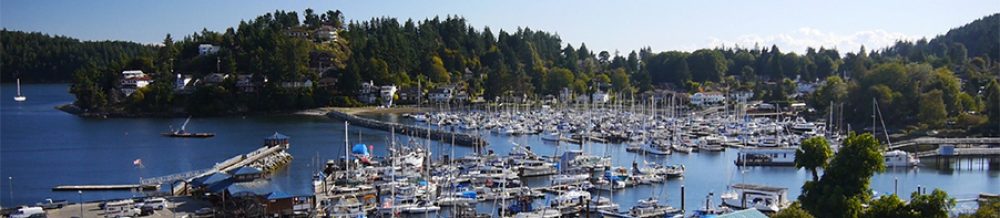
Beggars Brew


I arrived at ‘Grandma’s Pub’ and realized that I forgot my wallet somewhere, hopefully at home. I sat down and since Camp wasn’t there yet I took a chance on him and ordered a pint anyway. I was sure he’d show up eventually and take care of me. Halfway through my deliciously cold drink I looked up and there he was, shaking his head. He sat down heavy like he was carrying a sack full of worries.

“You wouldn’t believe what happened today,” he said and then paused, followed by another shake of his head, which was in dire need of some maintenance. Hair like Einstein, grey wiry bits sticking out in all direction. He combed a hand full of fingers through it making it even worse.

“Well, let’s hear it, what happen today that put you in such a dishevelled state. Hopefully nothing that a nice cold beer wouldn’t be able to relieve.”

“Well she did it now, the turncoat. Out of nowhere she suddenly turned 180 degrees.”

I thought he was talking about Maureen, his ex, and mumbled something noncommittal into my beer, fearing a soliloquy about matrimony and it’s inevitable downfall but instead Camp slapped his hand flat on the table and make the beers jump. “She promised me that she’d vote for the marina expansion and a new breakwater but something or someone must have got to her and she turned on me and voted to abstain. Now, it’s a tie vote and you can guess how Marshall will vote in order to break the tie.” Hank Marshall is the town’s major, real estate developer and Head Shriner.

“But isn’t he for development, for expansion of all kinds?” I asked, not understanding the intricacies of local politics.

Camp looked at me with pity. “He’s for development alright, but only if it’s private investment, not public spending, that might force him to ask for higher taxes.”

I was relieved that this was not about Maureen, but Council woman Muriel Bisset, who moved to the Sunshine Coast a few years ago from Montreal and is a big promoter of everything French.

“Beggars can’t be choosers,” I quoted a silly proverb. “You need to talk to Muriel, maybe ask her advice about carrying some French books in your store.”

“You know, that’s not a bad idea. Maybe take her out for some French fries and Camembert. I know she likes to eat.”

“Maybe some French wine with a little Edith Piaf in the background.”

“We both grinned at the picture that this evoked.

“Talking about beggars,” Camp said, “we seem to have a whole new batch of panhandlers and freeloaders in front of the mall. I understand that there are not a lot of jobs here on the Coast. It makes me hark back to the days when we had multiple government make-work programs that put young people to work building walking trails, cutting brush, cleaning up the beaches etc., I think they were called LIP grants, (Low Income Pools). They took a lot of youngsters off the streets.”

“Well today we’re looking at the people who have fallen through our altruistic safety net into a cesspool of misery where they are foraging their way through homelessness, drugs, mental health and any number of social and economic issues. No easy fixes I’m afraid.”

We both ordered another round and contemplated the universe, looking wistfully out at the open water and the boats bobbing up and down at the dock.

“This altruistic safety net used to have a much tighter weave,” Camp said, lifting his glass, ready for a nip.

“Did I ever tell you about John Vater the 3rd ?”

Camp looked at me with a raised bushy eyebrow pausing his glass halfway between the table and his thirst.” John who? the 3rd?”

“That was his name, Vater like father in German and the 3rd because he was named after his dad who was named after his granddad.”

“Crazy custom that, naming the kids after their dads. You never know who is being called or talked too.”

“Anyway, John travelled along with us in India – we’re back in the 70’ies now – and we often walked together through the maze of alleys and streets of New Delhi, between Connaught Place and Madame Colasso’s rooming house. We always passed a whole range of beggars, some with missing or twisted limbs, skinny, half naked kids with large eyes and many women no bigger then a child, their teeth missing or rotten from a life of chewing betel leaves. One such woman, who seemed younger than some others, was always squatted at the same corner of the alley leading out to the insane traffic mayhem surrounding the large square, which was more like a crowded park.”

“Beats me why large traffic circles are called squares,” Camp said, anyway carry on.”

I took a beat and a swallow, gathering my thread again. “I can still see her, sitting motionless on her haunches, holding a clay cup between her hands like in supplication, an old faded sari draped over her head, never looking up at us, as if not wanting to intrude. We were mere kids then, except John who had already done a tour in Vietnam and had seen a large part of the world. I would always drop a few coins into the woman’s clay cup and I carried a pouch full of coins just for beggars but John chose to ignore these human wrecks and never gave them anything. Then one day, just before we were leaving on a train to Lucknow en route to Kathmandu, John Vater III stopped in front of the tiny beggar woman who squatted in the same spot with her clay bowl and he got down on his haunches so he could be level with her. He gestured for her to look at him, which she did reluctantly. Did I mention, that John was one of those American giants, over six feet tall, which made the diminutive woman even smaller ? John then handed the woman two large rupee bills. I don’t remember what they were. He then put his hands together forming a customary small tent and bowed in front of her. She just stared at the large giant benefactor as if he was Lord Vishnu himself. I observed all this from a few paces away, mystified by this sudden act of generosity. When I asked John about it later he said: “Instead of giving a hundred people some worthless coins I decided to make a difference in one person’s life. She looks like she is smart enough to figure something out and I want to give her a chance.”

“That’s a different approach, I’d say,” Camp acknowledged.

“There is a follow up to this story,” I continued. “We parted ways with John Vater III in Kathmandu and when I came back through New Delhi a few weeks later I had forgotten all about this incident until I walked by the corner at the end of the alley by Mdm. Colassos and there sat the former beggar woman on a small stool, dressed in a clean yellow sari with a wooden box in front of her piled high with a bundle of News Papers which she was selling to the passers by. I never forgot the profound awe I felt.”

“Wow, she had her own little business now. That’s a great story, should be in economics 101,” Camp said. “I take it there is a moral to this tale ?”

“I suppose it is that to make a difference in one persons life beats giving meaningless pennies to many. I never like giving my coins to the panhandlers and beggars I pass on the street but I haven’t found my beggar women yet,” I said, casting my mind back all those decades for that gem of a memory.

“I don’t mind supporting them if they at least make an effort, play an instrument, juggle balls or sit motionless dressed like Napoleon or the Virgin Mary.”

“I can’t stand it when they lounge on the sidewalk with their dogs or cats. I feel sorry for the dogs. I even passed one the other day with a ferret on his shoulder.”

“And yet they’re our fellow brothers and sisters,” Camp said.

“Some crazy family, us humans.”

“Yeah, it’s hard to be a human. Every day takes an effort, if you’re rich or poor, old or young.”

“I’ll drink to that.”

“Oh, that reminds me Camp, I forgot my wallet, could you…?”

“Glad to help out a fellow homo sapiens.”


Brave New World


           I shook off my soaking wet jacket and sat down across from Camp, Campbell Roberts, recently elected Alderman and owner of ‘Coast Books’, right on the harbour here in lovely Gibsons on the Sunshine Coast. Camp refers to his bookstore as a non-profit business without any of the perks. Just non-profit.

            “They have this new Craft Beer for sale, maybe I’ll deviate from my usual pint of Guinness and try one of these Black Bear brews,” Camp suggested.

         “Ok, I’m in, let’s try this new beer, there seems to be another craft beer brewery around every corner. It’s either brew beer or grow pot. There is a certain amount of security in both those commodities,” I said.

         “No shortage of customers, that’s the key,” Camp pointed out the obvious. “Not like in the book business. Today I’ve had six people use the washroom, one old gal wanted to photocopy a recipe out of a cook book and two people tried to return their books which were obviously dog eared and used. How’s your day? You were in the city, dentist or doctor weren’t you?”

         “Yeah, dentist, haircut and Costco,” I replied and related the incident that had been bothering me all day. Actually it wasn’t even an incident, more just a chance encounter but it bothered me nonetheless. I was getting on the elevator in the high rise on Davie and Burrard where my dentist is located and there were about half a dozen people already waiting to go up when this older women, dressed in Salvation Army fashion, maybe between fifty and seventy, hard to say, squeezed past the closing door into the elevator. “How is everybody?” she cheerfully announced to all and sundry, “what floor is everybody getting off?” she asked standing purposefully with her index finger extended in front of the floor panel.  Everybody ignored her, staring at the ceiling or at a blank space on the chrome wall.

         “Nine,” I said and she promptly entered it. “That’s my floor as well,” she said brightly. “That’s a nice jacket you’re wearing, must have cost of pretty penny.”

         “What this,” I said, looking at my bright green rain jacket. “Oh, it was on sale in Lunenburg.”

         “Where is that?”

         “Nova Scotia. Last year”

         ‘Oh, that’s nice”

         The elevator stopped at almost every floor letting one person out, sometimes taking more passengers on, but during the whole ride up to the 9th floor not one person said a word or acknowledged our funny old lady who was eager to punch in the floor number for them. They all acted as if she didn’t exist or at was at best an embarrassment or an inconvenience. I felt ashamed, not for her but for the rest of us. All she was looking for was a human response. A word, a smile, an acknowledgement that she too was human. Camp, I tell you, it bothered me, this non-responsive attitude of all these people. They acted as if she didn’t exist.”

         “What do you expect,” Camp said, sniffing suspiciously at his Craft Beer. “Everybody is so wrapped up in themselves they don’t have time to acknowledge anybody else, especially if they seem somewhat off the mark and don’t dress like they do.”

         “Oh yeah, I guess I’ve been away too long. I tell you one thing, this wouldn’t happen in Mexico. I’ve seen plenty of vulnerable and challenged people all day long but they somehow belonged, there was dignity even in the most depraved of souls. People didn’t ignore them even if they told them to go away and not bother them but they weren’t aloof or disconnected. Rich and poor, lame or blind, they co-exist, they’re all human, some more fortunate than others but I never saw this kind of detached response. And there was a second incident this very morning that falls into the same category.”

         “Wow, you had an exciting day. Get out much?”

         “Ok, this was different. This old skinny girl with a wild head of curly grey hair holding on to her rolator sat across from me on the bus, giggling and grinning at everybody, obviously somehow compromised but she did know how to get on and off the bus so she wasn’t a complete basket case. The bus stopped, she got up and waddled to the front and that’s when I noticed that her gray, stained sweatpants were hanging halfway down her butt. Not unlike the meathead rapper dudes we used to see with their pants about to fall off so they could expose their boxers. In this case all she had on under those sweat pants were her diapers. And nobody said a word. By the time I was gong to say something she was already off the bus and people were grinning and chuckling behind their hands. Nobody had the guts to point out to the old girl that she should pull up her pants, which I’m sure she would have done. It was just so undignified and again, no normal human response from anybody. This was Davies Street for chrissake Camp. I felt like a stranger in a strange land, I tell you.“

         “Welcome to the brave New World,” Camp said. “It’s the big city, it eats everybody up and nobody has got time for their fellow human beings. That’s why they call it the rat race. Rats racing for the piece of cheese, just as long it’s not my cheese.”

            “Yes,  I’m aware of that but still it bothered me. Everybody is so wrapped up in themselves and their busy lives.”

         Neither one of us said anything for a beat, both looking out at the choppy water and the gray clouds hanging over Keats Island.

          “How do you like that beer by the way?”’

          “A bit to hoppy for my taste,” Camp said.
“Well the price is right and I don’t mind the hops. By the way did you know that Guinness uses a fish bladder by-product called isinglass to clear up their murky brew?

           “Too bad for all those Irish vegans.”


A measure of wealth


I came across an older item from April in 2012 when Campbell, Camp to his friends and foes alike, and I first started meeting regularly on Thursday evenings for a pint or two at ‘Grandma’s Pub’, down by the harbour. According to my notes this was a dreary, drizzly day and the snow capped mountains as well as the green islands were hidden behind a grey, wet wall of clouds that draped the whole world right to the water’s edge  below the pub. I shook off my soaked fleece and pasted my hair back on my scalp before I took my usual seat, in the corner under the TV, right next to the floor-to-ceiling glass enclosure, usually a scenic and coveted spot. Camp was already seated and into his first brew and looked at me as if I was something the cat had dragged in.

“Wet out there?” he said.

“Very observant,” was my curt retort, not in the best of spirits. “Sorry Camp, I meant to say: “We’re having another day of liquid sunshine here on the Sunshine Coast, or something like this.”

“Number one rule my friend: Never loose your sense of humour, especially not in the rain.”

“You’re right, but this weather is getting to me.”

“You’re not alone.” Words of wisdom.

“I tell you what’s bothering me Camp. A few days ago, I think it was Sunday night, a news item about the plight of Nigerians flimmered across the screen and a small detail caught my attention. Did you know that up to 50 people share a toilet in that country, not because Nigeria is poor but because every little bureaucrat there lives like a lord. I tell you it bothered me all night long and when I was relaxing on my throne the next morning I contemplated my own realm. 50 people per toilet! flushed through my mind. I started to count the toilets we own. Three in our house, one in the cottage, one in the rental house, one in my mother in law’s apartment and one in our town apartment. That’s a grand total of seven toilets and four mortgages. Seven thrones for just one peasant who lives like a king.”

“Well, you said it,” Camp said, sitting back with his hands open in front of him as if he was holding a large globe. “It’s in your favour that those are shared toilets, but you’re right, something is definitely out of sync here. Nobody needs seven toilets.”

“But these days teenagers must have their own en-suite otherwise they can’t properly grow up,” I said exasperated. “I tell you what Camp, I was constipated for a couple of days until I finally found release when we decided to get rid of at least 5 of these toilets, along with the walls, floors, roofs and mortgages. It’s time to scale down, divest, purge, free up space, get rid of debts and responsibilities. It’s time to sell up Campbell, but just now the market seems on a down turn and nobody is buying.”

“Such are the woes and worries of a king,” Camp said, not extending any amount of sympathy my way. I think this turned into a multiple pint session since I, as a king, had to buy the next couple of rounds.

Small Steps


“I envy people who have special interest and can loose themselves with passion in their hobbies. Doesn’t matter if it is stamp collecting or stained glass, miniature paintings or star gazing. They all can stop the clock and spend hours, days and weeks lost in their diversions,” I said to Campbell, or Camp to all who know him. We were sitting inside to our chagrin, under the blaring TV. Our usual table in the corner on the patio, directly above the water with an unobstructed view of the dock and Keats Island about a kilometer across the calm waters of the harbour was occupied. There was obviously some kind of a party being catered to on the patio. “Realtors,” Camp grumbled, rolling his eyes with a slow headshake. Camp’s nemeses, Hank Marshall, the present major elect, seemed to head the party.

“He probably gets city hall to pay for this,” I said.

“He better not or I have him impeached,” Champ said. “Anyways what were you on about? Hobbies? Hobbies are for people who don’t know what to do with their time.”

“Exactly, some even take it as far as university courses and degrees, like reading, writing, dancing and photography, even arts and crafts. Those endeavours can result in a profession and a livelong career. Lucky are those who are not distracted by the mundane nuisance that goes on around them and instead stay focused on their chosen craft.’

“Well, some claim that the subject chose them, not the other way around. Dancers and artists of all persuasions can claim that the art came from within and was not something they stumbled across in their daily wanderings,” Camp pointed out.

“I’ve always admired people who are never bored or at a loss of what to do with all their time because they cannot wait to get back to their model trains or stamp collections, studies or research.”

“That’s because you are one of those rare human beings who are spoilt by modern life into an existence with no real purpose other than to carry on, day after day, whiling away another endless stretch of time in mundane tasks like raking leaves or polishing doorknobs,” Camp said, apparently without irony.

“That’s a bit harsh Camp, don’t you think. I do have some legitimate interest, maybe not talents but some sort of aptitude. I mean, I can’t complain about my apparent lack of focus and interest because I know how good I have it and how miserable uncounted millions fight through every day, for every meal and can only dram of the things I take for granted. Like a fridge full of food and beer, a big screen TV that blares away all day long, a late model car, kitchen toys and tools for every task imaginable, down covers on my various beds, several bathrooms for my convenience, rooms that are empty or full of surplus furniture, boxes of books and utensils and sports equipment never used. But I would certainly not trade my comfortable, meaningless existence for anyone’s life, who is less fortunate than I, who is less blessed with material wealth. I do enjoy my status as one of the top 2%, if not of the exalted 1%,” I argued, apparently to the an audience that was more interested in what was going on the patio, where our illustrious mayor was giving a lusty speech, telling from the guffaws and cat calls from his receptive audience.

“ Ok, you’re feeling guilty about your social and financial status. It is something that you can come to terms with; it’s a fate you can easily accept, you can’t help it where you’re born and grown up. Ready for another pint?”

“I know it’s the surplus of time that bothers me now, being newly retired and a newby senior. The fact that I will have more time off with less things to do. Better strike me down in full flight then let me rot in my easy chair. I didn’t want to sound like a total whiner so I made a toast: “To retirement.” Some heads turned from the patio party at this sudden outburst of merriment and I quickly took a large swallow.

“Lucky for you to have a wife who has no such qualms and problems,” Camp pointed out.

“Don’t I know it, her life is so full of responsibility and purpose that she never has enough time. I wish I could give her some of mine but that is equally as impossible as banking sleep. Those two commodities are immutable, unstoppable and not refundable. Clare’s life is so full of challenges, so rich with possibilities that there is hardly time to sleep and only so because even she cannot do without. Her work is her passion and her passion is her work and then she has her garden.”

“It’s not about talent my friend, it’s about dedication to a cause and to recognize an opportunity, something that is hard to see from a reclining position on the couch with the telly on,’ Camp said. Point well taken, thank you.

Talent is a nice trait to have but with any such advantage over ordinary mortals, it brings with it added responsibility. One is to use that talent and foster it. I happen to have a talent for procrastination, constantly putting off the things I promised myself I’d do when I have time. Like learning Spanish, or doing my soccer referee course or joining a local charity. I’ll think about it some more and thinking is best done on my back, hands behind my head, staring at the ceiling. And time slips by and opportunities pass on by and still I am tired at the end of the day.

There are a few things in life that I like more then some others. One is soccer, watching and playing it, another is reading and writing, in itself an endless task with unlimited resources and then there is cooking and it’s active counterpart, eating. Between those three disciplines I should never be bored. If there isn’t a game to watch, I could cook something or I could read one of about 10 books presently on my night table or I could always take the ball up to the pitch and kick some penalties. Then why do I feel as if I’m wasting time, that there should be fare more important things to do then what I do with my days.

“So, when people ask what you do all day long what is your standard answer?” Camp asked.

“My standard response is simple. The days are packed and I’m busy and there is never enough time in the day.”

“In other words: a blatant lie,” Camp said, looking over the brim of his new pint. “Your answer should be: Nothing much and I’m bored a lot of time. Of course nobody would know what to say to such a reply and would look at you with pity, feeling sorry for you, which is something you just couldn’t stomach. So instead you decided it’s best to avoid the naked truth and offer a white lie, staying in the superficial realm where feelings are skin deep, the truth is never far from the surface and no questions remain unanswered.”

“In a nutshell, something like that,” I conceded and then tried to defend my position. “Look Camp, you know that I don’t like to be alone. In fact I don’t have a monastic bone in me. I much rather be among people and part of a team then muddle along by myself. I enjoy the company of others, sometimes more then my own.”

“The solution seems simple enough. You could join a church but that would entail believing in God or a set of doctrines,” Camp offered.

“There isn’t one believe system or cult out there that interest me in the least, same as you.”

“As far as I am concerned there is no God,” Camp said as a matter of fact. “Sometimes I wish there was a God, some ethereal being that pulled all the strings on all the puppets, that was responsible for this world, and Lord of the one after, but my brain just will not accept such simplistic and fantastical concepts. I much rather believe in an alien civilisation that came to earth, travelling at warp speed, and crossbred with some orang-utans, thus spawning homo sapiens. I could believe in that, which makes me an atheist and part monkey I suppose.”

“Why don’t you join a political party?” was Clare’s suggestion. Easier said than done. First of all I would have to fit in, again suspending reason and common sense, and accepting a doctrine or a philosophy, which is the foundation and guiding principal of every political party. Almost like a religion. I consider myself a fair weather socialists, meaning that I champion equality of the sexes, fair distribution of wealth, universal healthcare, environmental responsible energy policies and most of all common sense. That puts me somewhere in between the

Rhinoceros and the Socialist Party.

“I would have to compromise some of my own values, swallow my arguments and keep my doubts to myself, and keep my mouth shut if I was to actively take part in a political party.”

“Excuses, excuses,” Clare sneered. “You always find a reason not to do something instead of the other way around.”

Maybe she has a point.

Which leads me to consider NGO’s and charities.

I’ve searched the internet for the most efficient NGO’s and came across some interesting and rather discouraging information. It looks like most NGO’s mirror governmental programmes and do nothing more then supplement official relief in areas like food help, medicines and support services already being provided by various governments including Canada. Medicines Sans Frontieres stands out as does Amnesty International but the later has very little impact on policy but has individual successes to it’s credit while ‘Doctors without Borders’ is fighting a multi headed monster in the shape of never ending wars and conflict, as well as unsupportive governments to the point of being deliberately bombed. Which leaves some local charities like Humanitas, an organisation dedicated to the building of homes and schools for underprivileged locals as well as in exotic places like Central America. That would be better matched to my skill set and I resolved to check it out. Soon.

Again I received a dose of Clare’s wisdom when I voiced my doubts about joining Humanitas. “Instead of finding a path toward a glorious goal, search inside and discover that’s where the secret to happiness hides.”

“Did you just make that up?” I said.

“It’s a common truth that the path to happiness starts from within. Small steps add up to a long walk. Waiting for it to come to you will take all your life and it might never come. I suggest you start with fixing the fence and cutting the lawn. I also love the way you cooked the spaghetti the other day.”

“Small steps, one at a time just like beer, one at a time,” Camp said, waxing philosophically which is not like him. He always has a definite opinion, something I count on. He’s probably wondering why it’s not him, sitting over there in the mayor’s chair, regaling the sycophants and bottom feeder, as he calls them. He lost by a couple of hundred votes against Mr. Realtor and head Shriner but he still retained his seat as one of the five counsellors. He still has a seat at the table.

“Time to go home.”

“See you next week.”

Over a few Pints


       Once every week, on Thirsty Thursday, Campbell, or Camp as everyone knows him, and I meet for a pint or two at ‘Grandmas’ the local pub, overlooking the picturesque harbour and Keats Island. We discuss sports, the weather and the future of mankind. Sometimes we veer off into dubious territory like politics or religion but since we both hold similar convictions and beliefs, we are each other’s most benevolent audience. Camp has a tendency to launch into diatribes and I have been known to be equally opinionated. Clare calls us the beer philosophers. She has a point. Here are our profound insights during yesterday’s discussion.

“Politics is the one domain where self-serving idiots outnumber common sensical, moral, smart, compassionate and humorous human beings,” Camp said, the moment he sat down, while taking a healthy swallow. He should know, being a politician himself. An Alderman, recently re-elected for another 4 year term. “It’s also the arena that attracts devious, power-hungry, egocentric aspirants, mostly ex-lawyers and real estate agents who use politics as a way to improve their self esteem, win new and important friends, line their pockets and secure themselves a future with a fat pension and possible seats at boardroom tables.”

“None of that applies to you of course,” I said, “definitely not the part of the fat pension. I don’t think aldermen in a small towns get any pension. Not even free drinks at the pub.”

Camp carried on. He was on a roll now, proselytizing. Something had got his goat, probably a difference of opinions, must have occurred at the council meeting that afternoon.

“Politics also carries the elusive promise of historical significance and the dangerous but tantalizing possibility of shaping and changing the world for good. In most cases this ambition metamorphoses into the exact opposite. Very seldom do people enter politics for the common good or because they want to improve the lives of other, ordinary people. Although everyone pays lip service to those noble causes, most enter the political arena to nurture and foster their own and their rich friends agenda. The socialist view of shared resources, decent labor laws and fair division of capital is not a popular platform these days when even liberalism is circumspect and cowers behind euphemisms. It remains a paradox that social democrats are generally regarded with suspicion and a certain degree of derision like they want to take away something when in fact they’re the only ones that have managed to add to the common person’s lot.”

I agreed with Camp and said so: “I totally agree with you. I also feel like an idiot when I voice my support for the ordinary people, who want nothing more then security at home, at school, at work and in their neighborhoods.”

“Yes, and security comes from benevolent policies that entrench rights and choices – not the kind that is enforced with uniforms, guns and barbed wire fences. Is it so hard to see the difference? Am I naive to believe in the security that springs from a well educated, fairly regulated and equally opportune society, which also includes the right to make money, earn profits, invest and get rich?”

“You’re preaching to the choir,” I said, “or to quote Clare, my no frills, down to earth better half and conscience: “A society that cannot look after its old, sick and poor in a dignified fashion is not a modern civilization.”

“Exactly, Camp agreed. “A society that does not tolerate diversion and division does not deserve to be supported by modern, thinking people. I’m not asking for utopia or nirvana, but simply for the only cause worth entering politics for. Maybe I’m just a day dreamer, an idealistic simpleton trying to make sense of Orwellian doublespeak, the preferred language of modern politics.”

“You should run for prime minister instead of the town counsel,” I said and Camp just laughed. I could tell he was a bit frustrated, having just been elected counselor. He really wanted to run for mayor, but was out muscled by Hank Marshall, Mr. Real-estate and most popular Shriner in town. Hank drives around in big silver Escalade with a sheriff’s star emblazoned on both front doors with the name Marshall in the center.

I consider myself reasonably well read, adequately educated and I do feel compassion and pity for the less lucky and less privileged then myself. I also have some fairly strong ideas about how a just and fair society should be structured and governed. Another pint later I launched into a diatribe of my own that only a likeminded fellow drinker like Camp could tolerate: “I’m not suggesting anarchy and armed uprising,” I pointed out, holding my hand up in mock surrender, “nothing too radical, but we need to get rid of the free enterprise think tanks that write the rules from Washington, London, Ottawa and Victoria. This includes the present gang of thugs in the White House who claim to get their modus operandi directly from the Almighty who directs them to subvert the will of the people with propaganda, lies and empty promises.”

“Hear, hear!” said Camp, accompanied by a generous burp.

“Ignorance, fear and greed makes up the three headed monster ruling the world from Washington D.C.” I doubled down, unstoppable now. “Of course, all with the help of the mainstream media, born again, fundamental religion, the industrial war machine and the privatized security and military industry. This kind of autocratic, paternalistic government makes idiots of us all.”

I was out of beer again and the hour was getting late. Clare would not be pleased by my absence and probably had ordered out by now. Camp, recently divorced did not have any such qualms and for him the matter was far from finished. “Democracy is the best political system, with all its faults and downfalls. It’s better then a monarchy or a parliamentary dictatorship, but like you, I feel we have been duped and bamboozled for the past 30 years. The fact is that we live under the yoke of a plutocracy, a rule of wealthy elitist who cleverly managed to buy themselves into positions of power. Only millionaires are able to buy the propaganda and management machinery that enables them to run for office. These are the days when movie stars and sports personalities have the best chance to get elected. It’s all about recognition. Superficiality over substance.”

“You don’t have to look far,” I said. “Just look at Hank Marshall, your own nemesis.”

Camp nodded his head and after a short pause said: “I fear a return to the dark ages, a sort of byzantine empire, ruled by electronic profiling and computerized governments run by immoral men in windowless rooms.” He morosely stared into his empty glass.

“Maybe I should step into politics myself,” I offered, “but I’d be in a brawl within the first five minutes. I think politicians should all be forced to study a crash course in Plato and Machiavelli, economics by John Adams and John Maynard Keynes and then write an exam before they are allowed to run for office. And no, Machiavelli is not one of the Sopranos.” I was coming to my closing argument with the help of my sober, moral compass in the back of my mind but also waiting for me at home. “Clare thinks the world would be better off if it was run by women: At least the wars would be fought with words rather then bombs and motherhood issues like social justice, fairness and equal opportunities would rise to the top of the agenda and would not remain utopian, socialist concepts.”

Camp agreed with Clare. “It’s true, we should let the presidents and prime ministers leave it to their wives and daughters to sort it all out and send their husbands on a yoga retreat, a place remote and private enough to exist naked on a diet of fruit, nuts and water.”

“Yes, my friend, enlightenment always starts in the dark. Where else could you see the flicker of a candle? Certainly not in the glare of klieg lights. And what does anything mean anymore?”

“Gobbledygook and blabbermush,” Camp offered, “We’re past Orwellian newspeak. Fake news are the new propaganda tools. Just look at what’s happening in the Philippines.”

“Yes, social media politics are here to stay. Rule by twitter, news by Facebook.”

Camp just shook his head. “And on todays menu you’ll find: positivism cloaked in possiblilism; pessimism disguised as realism; confusion as modern epitaph with a twist of subterfuge. And for desert: Fake news served up in real time. Maybe I’m the idiot who doesn’t get it. Check please.”

“See you next Thursday.”

One of Them


“Where are you going?” Clare asked as I was just about out the door.

“It’s Thursday love and I’m already running late.”

“Oh, how could I forget, its Thirsty Thursday.  Say hi to Camp. Are you going to make it back for dinner or should I even ask?”

“If you want I’ll bring back a Pizza.”

“What’s that in your hand?”

“Oh, I just printed this off. Camp will love it. It’s at least good for a couple of pints.”

“Have fun.” Clare looked at with a mixture of pity and admiration: Pity for my foolishness and admiration for my enthusiasm. “Pizza sounds great.”

When I walked into ‘Grandmas’ Campbell, or Camp as everyone calls him, was already down half a pint.

“Look what I just printed off.” I handed Camp the printout and he scanned it in short order. He was ready with his response by the time my pint arrived. Perfect timing is everything.

He didn’t waste any time and pontificated: “In order to feel any pain one has to get hurt, and to feel any joy, happiness has to be present, but to feel overwhelmed one just has to turn on the computer these days.”

Here is what my printout said:

If we could compress the earth’s population into a global village of precisely 100 people, it would look like this:

57 Asians

21 Europeans

14 from the Western Hemisphere, both north and south

8 Africans

52 would be female

48 would be male

70 would be non-white

30 would be white

70 would be non-Christian

30 would be Christian

89 would be heterosexual

11 would be homosexual

6 people, all from the USA would possess 59% of the village’s wealth

80 would live in substandard housing

70 would be unable to read

50 would suffer from malnutrition

1 would be near death

1 would be near birth

1 (yes, only 1) would have a university education

1 would own a computer

In a modern and medieval village such as this the need for acceptance, tolerance, understanding and education becomes tantamount for the survival of the less fit and the whole village.


And then it goes on.

If you woke up this morning healthy

you are better off than the million who will not survive this week.

If you have never experienced the danger of battle

the loneliness of imprisonment

the agony of torture

or the pangs of starvation

you are ahead of 500 million people in the world.

If you can attend a meeting

without fear of harassment, arrest, torture, or death

you are more privileged than three billion people in the world.

If you have food in the refrigerator and clothes on your back,

a roof overhead and a place to sleep

you are richer than 75% of this world.

If you have money in the bank, in your wallet, and spare change in a dish you are among the top 8% of the worlds wealthy.

and if you can read this message

you are ahead of over two billion people in the world

that cannot read at all.

“Well what do you think Camp? Pretty awesome, what?”

“And if you can drink several pints of beer in a pub and solve the problems of the world you surely are better off than anybody else,” Camp pointed out, raising his glass in a toast.

“Amen,” I said.


The 5 Cs of Outer Dress


            The wind drove the rain sideways and since I wore neither hat nor a rain coat I got soaked just running from the bus stop to the heavy wooden door that led into a dryness and warmth and music at ‘Grandmas’ pub. Campbell, or Camp as everyone calls him, was already seated at our usual table by the window, which was all that separated us from the nasty weather. The boats in the harbour had all their hatches battened down and were grinding their fenders against the undulating docks.

            “Miserable out there,” Camp said. “You need to get a raincoat.”

            “I was never one for dressing up for any occasion but I think some rain protection might be the prudent thing to do,” I admitted, still dripping.

            I didn’t take long for Camp to latch on to the theme and offer one of his diatribes. One can wear a plaid quilt or a fedora and cape, a turban, scull cap or chador or one of those silly scarves or numbered shirts sports teams sells to their fans. They are all made up of the five C’s of outer wear which define all clothing.”

            “The five C’s of outer wear? What kind of theory is that Camp. Never heard a crazier idea,” I shook my head, spraying the table with drops of water.

            “It’s not as crazy as you think it is. Clothes make people. As the saying goes.”

            “Heinrich Keller wrote that some 200 years age: Clothes make people,” I said.

            “What, who?” Camp said, stopped in his tracks. “Never mind. The five C’s are: Culture, like for turbans, skull caps and head scarves;  Cult for biker jackets, safran robes, hoods or nihabs and then there are the Clubs for sports jerseys, baseball caps and jock ware. Most popular is Casual wear like jeans, T-shirts and sneakers and then of course there is the Conventional dress: suit, tie and loafers and for the ladies, fashion attire.          

            “Ok, I get it but do any of these outer accruements define, unite or divide people?” I asked.

            “ You bet,” Camp said, slapping his hand on the table.  It’s all about appearances. You can tell social status from their clothes; from the quality of the fabric, the fashion of the shoes or the brand of watch people wear. Religion, allegiances and even country of birth can be declared and recognized by the way some people dress. Different coloured sports shirts will fight each other before, after and during a game, turbans do not like chadors and people with scull caps have been discriminated against for millennia. People in suits don’t like to do business with people in jeans.”

            “But when the lights go out nobody can tell the difference,” I pointed out,  “let’s not forget that underneath all those garments we are all naked and when cut we all bleed red. “

            “Another pint?” I asked. It was a rhetorical question. “You’re right about one thing Camp, I might have to stop into Mark’s Workwear and get myself one of those Australian oil slickers.”

            “You know, that always puzzled me. How come the Aussies make all that rainproof outerwear, in a country where it never rains.”

            We both shook our heads. We just touched on another one of life’s mysteries.


0
0
1
458
2615
STROM
21
6
3067
14.0

Normal
0

false
false
false

EN-US
JA
X-NONE

/* Style Definitions */
table.MsoNormalTable
{mso-style-name:”Table Normal”;
mso-tstyle-rowband-size:0;
mso-tstyle-colband-size:0;
mso-style-noshow:yes;
mso-style-priority:99;
mso-style-parent:””;
mso-padding-alt:0cm 5.4pt 0cm 5.4pt;
mso-para-margin:0cm;
mso-para-margin-bottom:.0001pt;
mso-pagination:widow-orphan;
font-size:12.0pt;
font-family:Cambria;
mso-ascii-font-family:Cambria;
mso-ascii-theme-font:minor-latin;
mso-hansi-font-family:Cambria;
mso-hansi-theme-font:minor-latin;
mso-ansi-language:EN-US;}


A room full of Baskets


Over a few Pints

          Once every week, on Thirsty Thursday, Campbell, or Camp as everyone calls him, and I meet for a pint or two at ‘Grandmas’ the local pub, overlooking the picturesque harbor and Keats Island. Campbell is an Alderman, one of five counselors in our small town. It’s a thankless gig with no pay or perks but he likes it. He is also the owner of ‘Coast Books’, the legendary bookstore on the harbor. “The only bookstore accessible by boat,” he likes to point out.

We discuss anything from sports to the weather and the future of mankind. Sometimes we veer off into dubious territory like politics or religion but since we both hold similar convictions and beliefs, we are each other’s most benevolent audience. Clare calls us beer philosophers. She has a point.

       Camp was late so I ordered only one pint. I stared out the window and got lost in the large fog, which is my mind.

I pride myself of having read countless books, watched a myriad of movies and continue to watch the ‘daily news’ but hardly remember titles of books, names of flicks and never mind specific characters, actors, authors or quotes. As far as the news go, it’s sound bites and repetitive propaganda that sells itself as news and usually is of no use to form an informed opinion. Not only do I not remember what anybody said but according to Clare, my partner and alter ego, apparently it is usually of no consequence. I wish my memory wasn’t just a personal version of Trivial Pursuit but actually a record of knowledge and information that is relevant and solid, able to be recalled at any time on a whim. Not so much.

I read all the fashionable classics of the time in my pre- and post twenties and became a big fan of Jack London but don’t ask me to remember any of the characters or even quotes. It’s the same with movies. I scarcely remember the content or the actors but as soon as a couple of frames flicker across the screen I know for certain if I’ve seen this flick before or not.

Certain people, like my good friends Bill, Toni and David seem to remember historical data, battle lines and players in multiple wars, anecdotes and facts from a legions of books, articles and various forms of media. They can recall names of books, characters and even quote lines from some obscure book they read ten years ago. These guys also seem to remember how to divide and multiply by hand, how to draw roots, where to find the relevant facts and who is responsible for the global mess we’re in. I can barely remember the restaurant we ate in last week, never mind the name of the waiter who served us.

Maybe it’s my cluttered mind that is at fault, maybe I’ve stuffed too much information into my grey cells, like cramming too many clothes in the washing machine that nothing gets properly cleaned. In other words I should stop adding useless bits of info, give away the TV, and empty my mind of all the rubbish it contains. How to do that? In the old days we had several well known gurus and yogis like Shri Aurobindo or Guru Maharaji, who bamboozled us with the recipes for personal fulfillment and happiness until all that navel gazing spirituality came crashing down in Jonestown. Today we have motivational speakers and learned experts (mostly self proclaimed) TED talks on every subject from [not] eating wheat to how to get rich quick and we have lectures and self-help video clips and books on every subject, readily available on our smart gadgets. Or should I just listen to Clare who has no such existential doubts and insecurities and marches through the days with a purpose and focus that makes my wanderings a bewildered stagger through life’s labyrinth.

We are born selfish and self-centered and some of us never grow out of that infantile self-absorption. Altruism has to be learned and acquired and separates adults from teenagers and children. It requires an inclusive view of the world and other people, not just family and friends but humanity. It’s a constant struggle to not let our egos take over for the important decisions. It requires team work and listening to other’s points of view. Benevolence, altruism and compassion didn’t enter my psyche until my early 30ies; these traits were certainly not evident in my teens and early twenties when my mind was preoccupied by physical concerns.  I’ve since come to the conclusion that all our differences, our wars and fights would go away if we would all park our egos in the basement and either throw away the key or give it to our loving and understanding partners for safe keeping.

Here is a good bumper sticker, Clare said to me to other day: “When all else fails, lower your standards.’ Isn’t that just perfect.” I had to admit this was funny but did she tell me this with a hint and a nudge. My own standards couldn’t possible go any lower. I set the bar at eating regularly without bias or prejudice, drinking one or two beers a day, and regular bowel movements. When all that happens without incident then I’m a happy camper. Life is really that simple, and happiness is a full tummy.

While Clare was reading a book about the morals of death and dying I was heavily involved in a thriller by Deon Meyer, my new found author from South Africa. Should I feel bad about indulging in fantasy when I could improve my mind by studying a language or finding out about ocean acidification or the latest theory on nuclear fusion? Life can be so darn complicated. I hardly know where to start and certainly don’t have any idea where to stop. And should I feel guilty if I laze about and do nothing all day but eat, nap, read and watch some mindless TV? Is wasting time a cardinal sin or a luxury? The banality of everyday life continues to baffle and mystify me. Being a non-religious, non-believer in any sort of higher power I tackle every day as a newfound opportunity. If I wake up healthy, refreshed and hungry in my comfy bed with a fridge full of food and beer I have nothing to complain about. The world might be spinning out of control, humanity might be just a blip on the horizon of eternity but I’m feeling fine and it’s a privilege to be alive. I live, eat, drink and travel like a king, even though I’m just an average working stiff. It’s fantastic and I have nothing to complain about. “Keep that in mind,” Clare reminds me regularly.

I used to have ambition. As a boy I wanted to either be a clown because I liked to make others laugh; a priest because they only worked on Sundays or a pilot because he gets to fly around. As a teen I aspired to be a gymnast, then a rock star and then a playboy and even a super hero but all my ambitions were thwarted by the mundane curse of having to go to school. I was taught by mean, short sighted, ex-Nazis and my only motivation was to get out of school as fast as possible.

During those formative years I graduated to class clown and goaded on by my mates I was constantly in the teacher’s crosshairs, vilified as a trouble-maker. In their eyes I was most certainly bound for a life of a petty criminal or an anarchist or a politician, maybe even all three. Despite their dire predictions I evaded jail, dabbled briefly in hippie anarchy and I avoided politics because of my inability to hide emotions. Also the fact that I always babbled on about anything or as my friend Paul would say: “Loose lips sink ships.” I have been known to say the wrong thing at the wrong time like when I was stopped for speeding by a police woman and I called her Sir, mistaking the moustache for masculinity or when I asked Clare’s boss at the Christmas party if he knew the difference between a bottom feeding sucker and a lawyer. “There isn’t any,” I quipped, “except one of them is a fish.” “I’m a lawyer,” he said, looking at Clare with a raised eyebrow.

It occurred to me that maybe life is a chain, a series of events on a time line, events that sometimes repeat themselves and therefore become predictable. In order to understand some of life’s puzzles I decided to group issues, queries and findings in variable sized baskets, not boxes but baskets because you can always add more or take out something from a basket. I’ve labeled these baskets and placed and grouped them in a round space, representing a finite life. There are no corners in a round room, no right angles, nor beginning or end. I think these rooms need to be three dimensional, bubbles or spheres with the baskets floating in a vacuum, sort of like stars and planets in our universe. There are different sizes of bubbles, for each their own. Sometimes two spheres are attached like Siamese twins. Some bubbles are large, other’s tiny, some are empty, others crammed. In some rooms the baskets spill over into each other creating chaos and need to be cleaned up and sorted out, one by one. My own space is reasonably well organized. There is always room for more with plenty of empty space. Many of my baskets are full of common facts, shared experiences and mundane insights. Some of them are filled with odd stories; others with speculative opinions. There are little groups or pods of baskets that are related like love and sex or health and diet or money, investments and debts. There are other baskets like events and anecdotes. By this method I hoped tcome to terms with the ambivalent meaning of life and the elusive nature of humanity: why we fight and love, aspire and despair, hope and prevail and how fools and wise man co-exist in a world full of wonder and mystery.

Just at that moment Campbell walked in. “Sorry, had to listen to somebody bitch about water meters. I told her it’s a good way to discover leaks and actually save water. I see you’re already down a pint. What’s on your mind ?”

“Baskets,” I said and then I told him my theory.

“You really need to get a life,” Camp said.