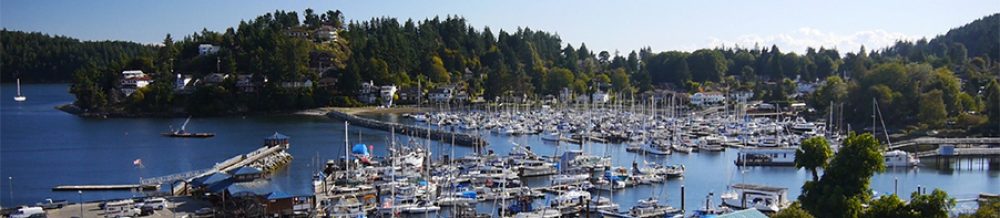
“I envy people who have special interest and can loose themselves with passion in their hobbies. Doesn’t matter if it is stamp collecting or stained glass, miniature paintings or star gazing. They all can stop the clock and spend hours, days and weeks lost in their diversions,” I said to Campbell, or Camp to all who know him. We were sitting inside to our chagrin, under the blaring TV. Our usual table in the corner on the patio, directly above the water with an unobstructed view of the dock and Keats Island about a kilometer across the calm waters of the harbour was occupied. There was obviously some kind of a party being catered to on the patio. “Realtors,” Camp grumbled, rolling his eyes with a slow headshake. Camp’s nemeses, Hank Marshall, the present major elect, seemed to head the party.
“He probably gets city hall to pay for this,” I said.
“He better not or I have him impeached,” Champ said. “Anyways what were you on about? Hobbies? Hobbies are for people who don’t know what to do with their time.”
“Exactly, some even take it as far as university courses and degrees, like reading, writing, dancing and photography, even arts and crafts. Those endeavours can result in a profession and a livelong career. Lucky are those who are not distracted by the mundane nuisance that goes on around them and instead stay focused on their chosen craft.’
“Well, some claim that the subject chose them, not the other way around. Dancers and artists of all persuasions can claim that the art came from within and was not something they stumbled across in their daily wanderings,” Camp pointed out.
“I’ve always admired people who are never bored or at a loss of what to do with all their time because they cannot wait to get back to their model trains or stamp collections, studies or research.”
“That’s because you are one of those rare human beings who are spoilt by modern life into an existence with no real purpose other than to carry on, day after day, whiling away another endless stretch of time in mundane tasks like raking leaves or polishing doorknobs,” Camp said, apparently without irony.
“That’s a bit harsh Camp, don’t you think. I do have some legitimate interest, maybe not talents but some sort of aptitude. I mean, I can’t complain about my apparent lack of focus and interest because I know how good I have it and how miserable uncounted millions fight through every day, for every meal and can only dram of the things I take for granted. Like a fridge full of food and beer, a big screen TV that blares away all day long, a late model car, kitchen toys and tools for every task imaginable, down covers on my various beds, several bathrooms for my convenience, rooms that are empty or full of surplus furniture, boxes of books and utensils and sports equipment never used. But I would certainly not trade my comfortable, meaningless existence for anyone’s life, who is less fortunate than I, who is less blessed with material wealth. I do enjoy my status as one of the top 2%, if not of the exalted 1%,” I argued, apparently to the an audience that was more interested in what was going on the patio, where our illustrious mayor was giving a lusty speech, telling from the guffaws and cat calls from his receptive audience.
“ Ok, you’re feeling guilty about your social and financial status. It is something that you can come to terms with; it’s a fate you can easily accept, you can’t help it where you’re born and grown up. Ready for another pint?”
“I know it’s the surplus of time that bothers me now, being newly retired and a newby senior. The fact that I will have more time off with less things to do. Better strike me down in full flight then let me rot in my easy chair. I didn’t want to sound like a total whiner so I made a toast: “To retirement.” Some heads turned from the patio party at this sudden outburst of merriment and I quickly took a large swallow.
“Lucky for you to have a wife who has no such qualms and problems,” Camp pointed out.
“Don’t I know it, her life is so full of responsibility and purpose that she never has enough time. I wish I could give her some of mine but that is equally as impossible as banking sleep. Those two commodities are immutable, unstoppable and not refundable. Clare’s life is so full of challenges, so rich with possibilities that there is hardly time to sleep and only so because even she cannot do without. Her work is her passion and her passion is her work and then she has her garden.”
“It’s not about talent my friend, it’s about dedication to a cause and to recognize an opportunity, something that is hard to see from a reclining position on the couch with the telly on,’ Camp said. Point well taken, thank you.
Talent is a nice trait to have but with any such advantage over ordinary mortals, it brings with it added responsibility. One is to use that talent and foster it. I happen to have a talent for procrastination, constantly putting off the things I promised myself I’d do when I have time. Like learning Spanish, or doing my soccer referee course or joining a local charity. I’ll think about it some more and thinking is best done on my back, hands behind my head, staring at the ceiling. And time slips by and opportunities pass on by and still I am tired at the end of the day.
There are a few things in life that I like more then some others. One is soccer, watching and playing it, another is reading and writing, in itself an endless task with unlimited resources and then there is cooking and it’s active counterpart, eating. Between those three disciplines I should never be bored. If there isn’t a game to watch, I could cook something or I could read one of about 10 books presently on my night table or I could always take the ball up to the pitch and kick some penalties. Then why do I feel as if I’m wasting time, that there should be fare more important things to do then what I do with my days.
“So, when people ask what you do all day long what is your standard answer?” Camp asked.
“My standard response is simple. The days are packed and I’m busy and there is never enough time in the day.”
“In other words: a blatant lie,” Camp said, looking over the brim of his new pint. “Your answer should be: Nothing much and I’m bored a lot of time. Of course nobody would know what to say to such a reply and would look at you with pity, feeling sorry for you, which is something you just couldn’t stomach. So instead you decided it’s best to avoid the naked truth and offer a white lie, staying in the superficial realm where feelings are skin deep, the truth is never far from the surface and no questions remain unanswered.”
“In a nutshell, something like that,” I conceded and then tried to defend my position. “Look Camp, you know that I don’t like to be alone. In fact I don’t have a monastic bone in me. I much rather be among people and part of a team then muddle along by myself. I enjoy the company of others, sometimes more then my own.”
“The solution seems simple enough. You could join a church but that would entail believing in God or a set of doctrines,” Camp offered.
“There isn’t one believe system or cult out there that interest me in the least, same as you.”
“As far as I am concerned there is no God,” Camp said as a matter of fact. “Sometimes I wish there was a God, some ethereal being that pulled all the strings on all the puppets, that was responsible for this world, and Lord of the one after, but my brain just will not accept such simplistic and fantastical concepts. I much rather believe in an alien civilisation that came to earth, travelling at warp speed, and crossbred with some orang-utans, thus spawning homo sapiens. I could believe in that, which makes me an atheist and part monkey I suppose.”
“Why don’t you join a political party?” was Clare’s suggestion. Easier said than done. First of all I would have to fit in, again suspending reason and common sense, and accepting a doctrine or a philosophy, which is the foundation and guiding principal of every political party. Almost like a religion. I consider myself a fair weather socialists, meaning that I champion equality of the sexes, fair distribution of wealth, universal healthcare, environmental responsible energy policies and most of all common sense. That puts me somewhere in between the
Rhinoceros and the Socialist Party.
“I would have to compromise some of my own values, swallow my arguments and keep my doubts to myself, and keep my mouth shut if I was to actively take part in a political party.”
“Excuses, excuses,” Clare sneered. “You always find a reason not to do something instead of the other way around.”
Maybe she has a point.
Which leads me to consider NGO’s and charities.
I’ve searched the internet for the most efficient NGO’s and came across some interesting and rather discouraging information. It looks like most NGO’s mirror governmental programmes and do nothing more then supplement official relief in areas like food help, medicines and support services already being provided by various governments including Canada. Medicines Sans Frontieres stands out as does Amnesty International but the later has very little impact on policy but has individual successes to it’s credit while ‘Doctors without Borders’ is fighting a multi headed monster in the shape of never ending wars and conflict, as well as unsupportive governments to the point of being deliberately bombed. Which leaves some local charities like Humanitas, an organisation dedicated to the building of homes and schools for underprivileged locals as well as in exotic places like Central America. That would be better matched to my skill set and I resolved to check it out. Soon.
Again I received a dose of Clare’s wisdom when I voiced my doubts about joining Humanitas. “Instead of finding a path toward a glorious goal, search inside and discover that’s where the secret to happiness hides.”
“Did you just make that up?” I said.
“It’s a common truth that the path to happiness starts from within. Small steps add up to a long walk. Waiting for it to come to you will take all your life and it might never come. I suggest you start with fixing the fence and cutting the lawn. I also love the way you cooked the spaghetti the other day.”
“Small steps, one at a time just like beer, one at a time,” Camp said, waxing philosophically which is not like him. He always has a definite opinion, something I count on. He’s probably wondering why it’s not him, sitting over there in the mayor’s chair, regaling the sycophants and bottom feeder, as he calls them. He lost by a couple of hundred votes against Mr. Realtor and head Shriner but he still retained his seat as one of the five counsellors. He still has a seat at the table.
“Time to go home.”
“See you next week.”