“Camp,” I said, as soon as I sat down at our usual corner table on the patio, “I’ve just had a lovely walk along the shore and it occurred to me that we’re very fortunate to breathe such clean and fresh air here on the coast. I’ve come across an article this week on the dirtiest cities on earth and it staggers the mind how nasty those places are to breathe and live in.”
“Yes, I’ve seen some stats from the WHO as well, which are rather depressing. According to their latest study, nine out of ten people breathe in polluted air and seven million people die yearly due to their poisoned atmosphere.”
“Of course, once again the worst places are in the poorest countries,” I said “like India and Africa.”
“Yes, the worst air quality measurements come from Varanasi, the holy city along the Ganges which attracts millions of pilgrims each and every year. In fact India has the dubious honour of the six filthiest air metropolises in the world. Next to India are China and Pakistan, Nigeria and even Haiti.”
“What about Europe and North America?”
“Well, we have Mexico City and there are some very polluted European cities, worst amongst them Milano and Ankara but they only measure a quarter of the nasty particles in compare to places like New Delhi or Cairo. Worldwide over three billion people, or 40% of the earth’s population, have no access to clean air technology.”
“I just talked to a friend who’s just returned from Egypt. He said that Cairo was just a cesspool of garbage, humanity and pollution. Not a place fit to live in and yet 20 million people crowd into a place with infrastructure for 3 million.”
“I remember being in Nanjing some twenty years ago and I couldn’t even make out the building across the street from our hotel, just a fogy silhouette and everybody was wearing face masks,” I said. “Probably because, then as now, most of the people still cook and produce light from kerosene, coal or wood.” I took a sip from my beer trying to wash some of the bad taste away. “Considering that the earth atmosphere is like an onion skin around the planet and rather thin.”
“Yeah, about 500 km but most of the atmosphere is contained closest to earth and gets thinner as it moves up. A tenuous separation between us and outer space,” Camp said.
“I heard outer space,” Vicky, who was just floating by, said, “anything I should know about?”
“We’re just talking about the abundant and lovely fresh air here in Gibsons,” I said, “and how we take it for granted.”
“Yes, and it’s even better since pubs are smoke free environments,” she said.
“I remember when bars were smoky dens with overflowing ash trays on every table,” Camp said, shaking his head at the memory.
“And being able to smoke on flights. Smokers at the back of the plane,” I said.
“Like a peeing section in a swimming pool,” Camp quipped, “or a smoking corner in a restaurant.”
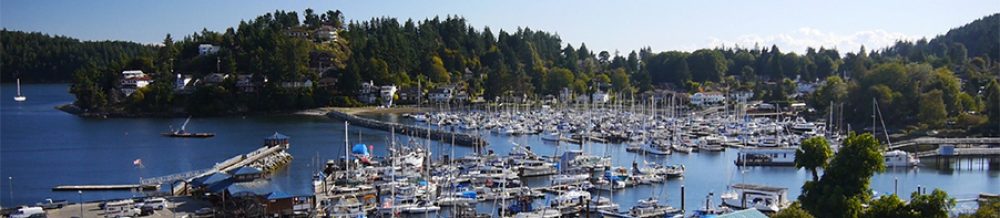
We both took a deep, refreshing breath. “We should be contemplating the natural beauty of the scenery right out front of our lair here instead of being weighed down by the universe at large,” I said.
“Apropos the universe. Stephen Hawkins last publication before his death claims it is a lot simpler then he previously assumed,” Camp said.
“And 18 republicans nominated Trump for the Nobel peace prize.”
“What on earth for?” Camp said and then emptied his mug in one long draught.
“I almost feel guilty living in our little paradise by the sea,” I said.
“Just feel lucky, not guilty. Lucky because of where we’re born and live, not because we rolled the dice and came up winners or losers.”
“I’ll drink to that.”
 Bruno's point of view