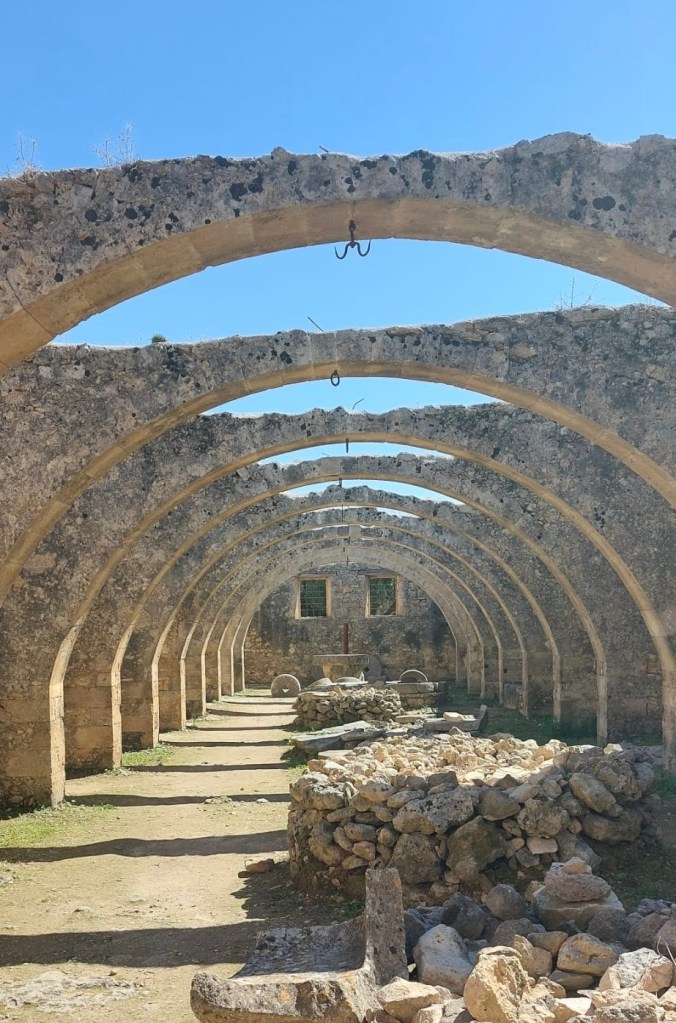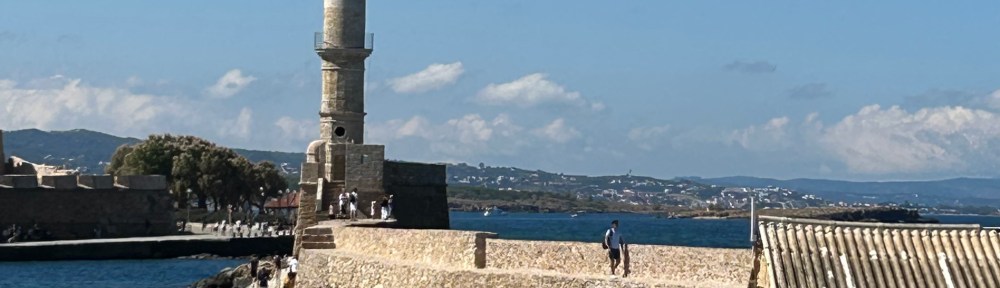
Crete is a rocky island on the edge of Europe, facing the Maghreb across the Mediterranean. The island has a turbulent history of occupation and changing civilization from the Ionians to the present-day Greeks. Not long ago the Ottomans were in charge from the mid-17th century until just before the 1st World War. Remnants of fortresses dot the island, from the ancient ruins of the Knossos Palace near Heraklion to the Venetian Harbour with the iconic lighthouse in Chania. I was reading all that while on a two-hour layover in Athens en-route to Chania, on the northwestern part of the island.
Although part of Europe and EU, Crete has old world charm mixed with modern ways of life like the new beachside resorts and villas dotting the coastline. The roads on the other hand are narrow and windy, built along old trade routes and goat paths. There are no shoulders but that doesn’t stop the young guns from racing their scooters and motor cycles, weaving in and out of traffic. Not bicycle-friendly in my view although there are still bike enthusiasts who are a dangerous nuisance on these curvy roads. Our taxi driver complained that there are over half a million cars on the island considering it has a population of about 650’000. He might have been exaggerating but there is no place to park anywhere. Finding a place to park in Chania is a game of chicken and luck and then you need to remember where you left your car in the maze of streets and alleys.
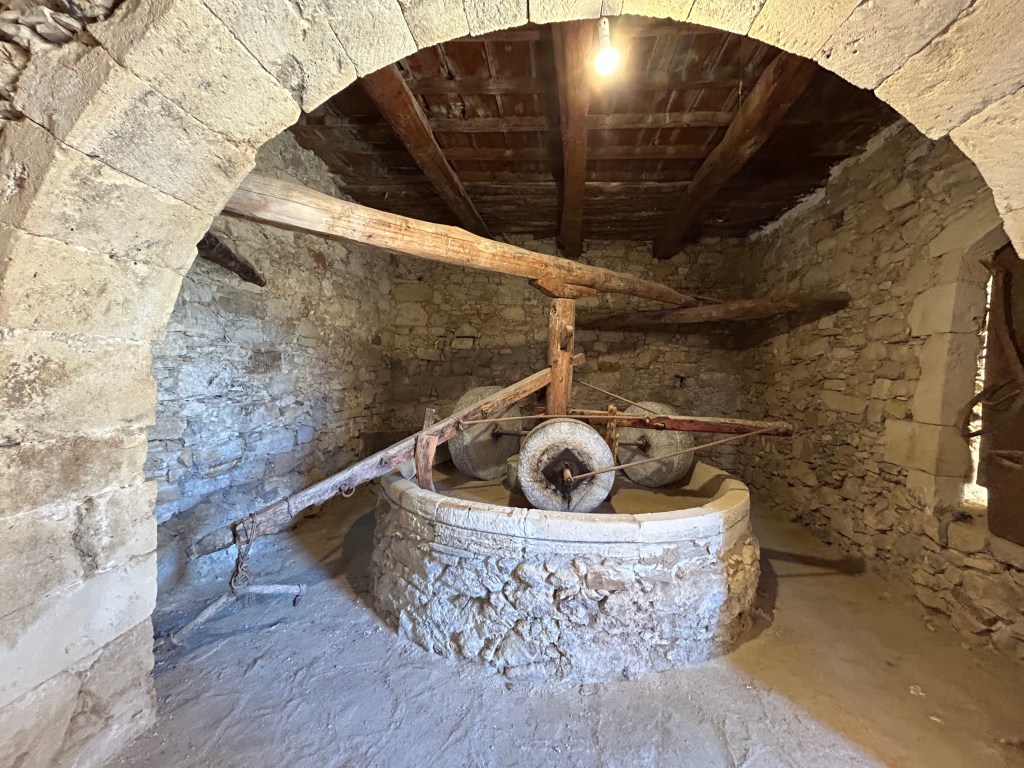
We stayed in a modern house near the old village of Vamos, up the steep rocky rise, about a 40 minute drive from Chania. It’s a sleepy village that has woken up from a depressing slumber thanks to the tourists who populate the few restaurants on Mainstreet and roam the surrounding hills on bikes, hikes and group tours. There is an olive oil factory near-by, olives, along with grapes, being the life blood of the region. We had an informative tour from old olive presses, where donkeys were the prime movers and the workers slept in a loft just above the press, to the modern, automated facility that turns out cold pressed virgin oil in hectolitres. They also offer an innovative product line form candles to soaps and creams, oils and salves for every body-part.
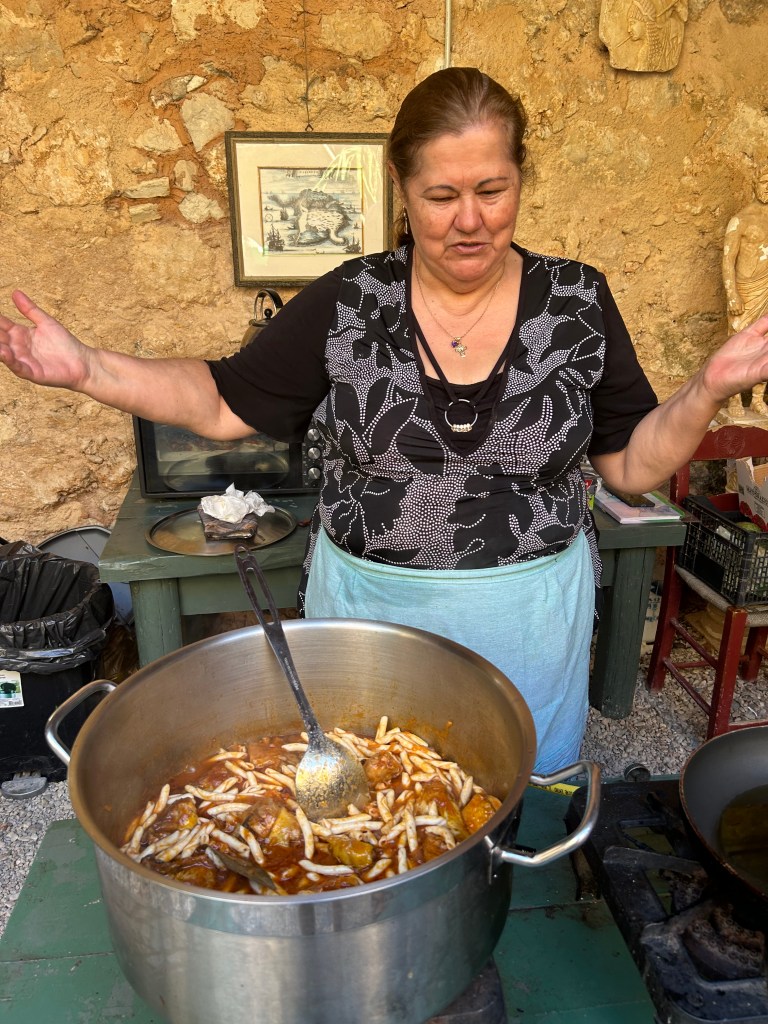
Olive oil is also the main ingredient in all the food. We took a cooking class from a very well versed and organized cook and she poured and splashed olive oil liberally from frying pan to cooking pots to salads and even over bread. She must have gone through a litre of oil for our six-person class. The food was authentic and spiced with handfuls of oregano, sage, garlic, dill and parsley. We made zucchini fritters and eggplant dip, a tasty rooster (not a chicken) and tomato stew, dolmades with grape leaves stored in a brine and red roasted peppers stuffed with feta and anthotyro (kind of a ricotta) cheese. For the vegetarians we cooked a tasty stew of string beans, red onions and potatoes in a tomato sauce. All was washed down with limitless local white wine. A veritable feast.
Since this was the beginning of October, we expected the weather to still be sunny and summery and in fact it was but only after the first couple of days of epic wind and rain storms that brought down slides onto the roads and washed away bridges. “Never seen such extreme weather”, Effy, who runs a pizzeria in Vamos, said, shaking her head. It seems to be the new normal everywhere, especially this year of death-valley temperatures in Europe. Even in Switzerland the mid-thirties, stifling, stagnant heat wave persisted for weeks on end. Air-condition in homes was unheard of. That is about to change.
Crete is used to heat and the old stone houses with clay tiled roofs are the perfect cool dwelling solution for hot summer weather. Many of these old stone buildings are in various stages of renovation and modernisation but considering that some of them are hundreds of years old makes our stick houses in Canada seem rather temporary. They have rocks and stone and we have trees and wood.
Greek food is of course famous for its goat and sheep cheeses – there are no cows – and their abundance of herbs. Oregano, thyme, tarragon, dill, parsley, mint and plenty more that I was not familiar with are present in every dish. The way to eat in a restaurant as a group or family is much like in Spain: order a slew of appetizers like Dolmades and cheese stuffed peppers, zucchini fritters, roast potatoes, meat balls and calamari, always with plenty of Tzatziki and Humus with a basket of bread and a bowl of Greek salad. You can’t go wrong and you can always order more. After every meal comes the complimentary ice cream or sweet yogurt with fruit and to finish off a shot of raki, a kind of grappa, which is mandatory. We soon got the hang of it.
We had a Sunday afternoon meal in a nearby restaurant in Kefalas, a sleepy, medieval stone village. A hind of pork, a half dozen chickens and hunk of lamb were turning slowly in their own juice on the rotisserie and the place soon filled up with locals who seemed to spend all afternoon eating and drinking, talking and laughing. We just came in for a lunch which turned into a two hours feast. Dinner was subsequently cancelled.
We also discovered a couple of nearby beaches, Georgioupolis and Almyrida. Shallow and sandy they were ideal for kids. The waterfronts were lined with lounge chairs and umbrellas for rent. Restaurants, beach-gear boutiques, condos and resorts were all along the bay. Parking again was a crap shoot.
We did make one long excursion, a two-and-a-half-hour drive to the Knossos Palace near Heraklion. The road which was half a highway at times, meandered along the rocky coast which was interspersed with modern resorts and beach villas. Not very Greek we thought. The Knossos Palace is an Ionic ruin and tourist attraction and basically a maze of rocky foundation walls spread over a terrain the size of a couple of football pitches. There were a few replicated columns and frescos of Egyptian looking figures. There were no sentries or guides, only a few plaques with vague descriptions of what we were looking at. There was a long line-up at one place and we thought it was for the bathroom but it led into a chamber with a couple of wall paintings that weren’t very exciting. In my humble opinion.
It was a long drive back, almost the whole length of the island. Was it worth it? It wasn’t the Alhambra or the Akropolis but alas, it was on the must-do list.
We visited Chania for a day and once again the first challenge was parking. We lucked out as a car left a spot just in front of us and we squeezed in, right by the park in front of city hall. We walked down to the busy, touristy waterfront and joined a single file column along the narrow defense wall all the way to the iconic Venetian lighthouse. Even though it was almost the middle of October it was blistering hot. We were fully exposed to the midday sun in the clear blue sky.
Dozens of restaurants and souvenir venders lined the ancient port built by the venetians in the 14th century and the maze of alleys in the old town was a regular bazar of boutiques and shops catering to the thousands of visitors. There was an old mosque turned into an art gallery and several hangar-like vaulted stone storage buildings which today house markets and galleries. Chania is a busy and pretty city of about 100’000 residents with lovely, generous parks with new and old buildings side by side lining the narrow streets, made even more narrow by the uninterrupted line of parked cars on one side.
Driving in Crete can be a nervy experience and I was glad to have a small car. I felt like a rally driver, downshifting in the curves and squeezing through the narrow, cobbled streets in the villages, in the hope of not meeting a truck or even another oncoming car. At one time we were stuck for several minutes behind a van parked in the middle of the street. The driver was delivering vegetables to his customers in the neighbourhood and in no apparent hurry.
That about sums it up. Nobody seemed to be in any hurry.