Books & Memories


Fall is here and summer is just 8 months away. Kind of depressing unless you like rainy, cold weather and five o’clock twilight. Clare diagnosed me with s.a.d., seasonal-asshole-disorder and I tend to agree. Nevertheless I put on my sunglasses and head out into the rain towards the village, the pub and a couple of frosty pints.

“Camp do all of us go back to our childhood days to figure out why we are the people we are today, afraid of commitments or driven to succeed, maybe resentful and bitter or over protective of our space, even depressed and unable to hold down relationships and jobs or even addicted to a smorgasbord of vices and delusions?”

Continue reading

The ‘Base’ and the origin of Beer


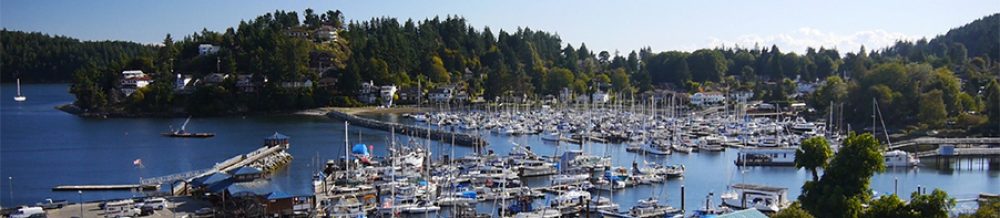
Looks like we have a spell of Indian Summer after two weeks of November like weather. Our new rain barrels are overflowing and gone are the drought worries, relegated to next year.  I could see Campbell, Camp for all who knew him, was already in his customary seat, facing the water and Keats Island in the near distance. Must have been a slow day at Coast Books, his ‘non-profit’ bookstore. Vicky, our clairvoyant waitress, who had been elevated to bar tender, already had two pints of lager at the ready and Rosie brought them to the table.

“You look like you got something on your mind,” Camp said after we both toasted the sunny weather. He was right. I wondered what his take would be to my query. “We’re always hearing about ‘the base’, as in ‘Trump appealing once again to his base with his latest tweet’, blah, blah, blah or ‘Doug Ford counting on his ‘base’ to push through his conservative agenda. Who is that ‘base’? that’s what I want to know,” I said.

Camp leaned back in his chair, took a sip and commenced his soliloquy: “The base is that core group that supports their man or woman through thick and thin; in Trump’s case even if he shot someone on 5th Avenue. It makes up about a quarter of the people who actually voted for him. They are not swayed by any of his lies, false claims or insults and oppose all and everything that does not agree with them. Also they are predominantly white and male.  I personally think they are ‘a basket of deplorables’ to quote Hillary in one of her more unfortunate assertions.”

“Well yes, the so called ‘base’ is made up of mostly rural folks, without higher education, most likely religious and predominantly male, older and white. Not the kind of people that frequent book stores either,” Camp said dryly, emptying his first pint of the evening.

“And driven by cheap, unsubstantiated misinformation, masquerading as news,” I added.

“The key word there is cheap, because fake news are easily made up, therefore cheap, while reliable news are researched, back checked and well written, therefore more expensive to produce. I don’t understand why people buy expensive clothes, cars and accessories, demand quality in food and services but then gobble up cheap, fake news like candy.  Quality is more expensive then trash, the same goes for news.”

“I couldn’t agree more,” I said, “but ‘the base’ isn’t going to change its allegiance by being dazzled and showered with facts.”

“No they aren’t,” Camp agreed, “you need to convince them with a better story; a narrative they can understand and identify with. You have to show them that the environment, nuclear war and migration are global problems that cannot be solved by retreating into nationalistic fortresses and prayer and you have to make them understand through education and examples that empathy, compassion, understanding and altruism are human traits more beneficial to the community then hate, revenge and blame. It will take years and is a never ending job”

Camp was punctuating his arguments with palm down slaps of the table, making the empty glasses jump. He was on a roll, preaching to the choir.

“You boys solving the world’s problems once again? Ready for another one,” Rosie asked and quickly added: “sorry that was a dumb question like: is the pope Catholic?”

“Do you know who invented beer Rosie?” Camp asked.

“The Irish?” she answered with a wink in my direction.

“Not exactly,” Camp said with a chuckle, “it was the Sumerians about 7000 years ago in Mesopotamia in what today is Iraq. A 6000 year old tablet shows people drinking beer with reed straws from a communal bowl and a 3900 year old poem contains the oldest beer recipe.”

“How do you know all this stuff?” Rosie asked, shaking her head.

“Well, last Sunday I attended a play reading at the Heritage Playhouse, written by a friend of mine, called: Relax Gilgamesh, a modern interpretation of the ancient poem. Gilgamesh, a Sumerian king abdicated his throne in order to become a god and was helped by Siduri, the goddess of wisdom and beer. Very funny and enlightening,” Camp said.

“Drinking beer with straws from a bowl ought to do the trick,” she said. “Relax indeed.”

“Here is to the Sumerians, who if not invented the wheel were at least the first to record it, like the chariot, writing, the plough, the sailboat, the division of time into sixty units, math, maps, astrology and to top it all off: beer,” Camp said.

“That is surely the empirical evidence that civilisation could not exist without beer,” I said.

“And you two are the living proof of that theory,” Rosie said, plunking down two ice cold fresh draughts.


Pod Casts and Beer Philosophy


We’ve had a lot of rain in the last week but nothing like in Wilmington or Manila. For once that rain got us out of the dog house again as far as water restrictions go but we, that is the local politicians, need to deal with it, once and for all. Clare and I installed two 300 L water barrels, which are full now. Water cisterns in the rain forest is a bit oxymoronic but hey, Clare and I feel we did our small part.

Campbell, Camp to us all, just raised his bushy eyebrow when I told him about our water conversation effort. “Good on you,” he said, “maybe you should write a letter to the paper as well. If everybody had a cistern, we wouldn’t need a water distribution system.”

“Are you being a cynic now, living water-worry-free on your most excellent Gibsons aquifer.”

“It was voted the best water in the world in 2005,” Camp dryly remarked, “and we never had any restrictions.”

“Lucky you,” I said, taking a draught from my pint.

“By the way our neighbours turned me on to a couple of pod casts and I thoroughly enjoy them. One is called ‘Desert Island’, it’s British, BBC, and features interviews with well known persons. If you now somebody famous, they’ve done it. The premise is they have to pick 8 pieces of music, one book and one luxury to take on a desert island. I’ve listened to Keith Richards segment. He’s 75 years old now and still having a lot of fun. Actually a lot smarter than you might think.”

“Must be nice to be retired and listen to other people go on about themselves. What’s so different from reading the tabloids or watching day time soap operas,” Camp said.

“Come on Camp, you can’t be serious, it’s not only educational, it’s highly entertaining. What pieces of music or songs would you take on a desert island? Let’s have it then,” I said.

“Ok, how about something from Vivaldi’s four seasons. Let’s pick Summer.  Puccini’s ‘Nessun Dorma’ by Andrea Boccelli has always impressed me as quintessential Italian passion. Maybe an early Leonard Cohen song-poem like ‘Famous Blue Raincoat’, and how about ‘Desolation Road’ by Dylan; definitely something by Nina Simone like ‘Wild is the Wind’. How many we got so far.”

“Five.” I said.

“Ok, ‘La Promesa’ by Lila Downs, floors me every time I listen to this simple but powerful song. Redemption Song by Bob Marley would be a must. That makes seven. One more: How about ‘Dock of the Bay’ by Otis Redding. I can always listen to that song.”

“Alright, what about a book?”

“I’d take the brothers Grimm’s collection of fairy-tales. Archetypical to all stories and infinitely entertaining.”

“You can take a luxury item. What’s it gonna be?”

“Luxury, I’m not much of a luxury guy. Maybe sunglasses because it would be bright on a desert island.”

“Well Camp you get the gist now. You should give this pod-cast a listen. The other pod-cast is called: ‘The Daily’, current affairs interviews by the New York Times. I just listened to Bob Woodward talking about his new book ‘Fear’ dealing with the Trump administration. Very interesting and revealing. Add to that my daily Swiss newspaper and the odd soccer game and the days are always packed.”

“If we all could just have modest desires like you we’d live in a much kinder and simpler world,” Camp said with a sprinkle of sarcasm.

“Who needs more?” I asked, “a game, a beer, a chat, some news and a good story, the love of a good woman, health and some spare change.”

“You sound like you’re selling something,” Rosie quipped on her way with two refills.

“I’m not selling, I’m giving it away,” I said.

“Who is lining up?” Rosie said, “to make your well rounded beer philosophy a bit more alluring, you need some spice in there. A bit of mystery, some laughs, a measure of suspense. Life is not a happy gold fish bowl but an adventure and a caravan ride of dreams, goals and desires.”

“Hear, hear,” Camp said, “our wise friend Rosie here has the full measure of life. What would you take onto a desert island?”

“A hat, some sunscreen, a kayak and a fishing rod.”

“What about music?” Camp laughed.

“I have a head full of Irish shanties. That should do me for a while.”


Bad Weather and Trolls


We’ve had a few days of welcome rain but it does feel like summer is already over. No point to complain about the weather though, especially not to Campbell, my friend and sparring partner over our weekly pints.

“The rain here is welcome relief,” Camp said, but do the names Olivia, Mangkhut and Florence mean anything to you?”

I had to confess my ignorance.

“Mangkhut is a typhoon, presently bearing down on the Philippines; Olivia is a massive tropical storm that made landfall on Hawaii’s island of Maui yesterday morning and Florence is that monster storm that’s about to slam into North Carolina’s coast as we speak. Epic and devastating is what this hurricane is; like never seen before. Over a million people displaced, a foot and a half of rain, supposedly to continue for days.”

I shook my head in dismay at the tragedy such a storm creates for the people in its path. Nothing Camp or I could do about it. I changed the subject to something we could both get involved in, even if it was just on an argumentative and opinionated level.

Camp, did you ever hear about a Russian news service called Rossija Segodnja (RT)? It’s an umbrella organisation that owns TV stations and the online news platform ‘Sputnik’. They’re financed and controlled by the Kremlin and their aim is to undermine western institutions and at the same time promote the authoritarian Russian system.

“I can’t say I’m surprised,” Camp said. “Putin needs all the help to distract from the catastrophic financial situation in Moscow. Only a desperate government is cutting pensions. Russia doesn’t have the economic and military might of the west therefore they use disinformation and propaganda to compensate their weakness.”

“Apparently RT has a large and diversified audience. They claim over 600 million hits. They produce U-tube and Facebook segments in many languages including Arabic, Spanish and of course English. According to Dimitri Kisseljw, RT’s boss, they produced over 70’000 videos in the past two years. They’re called trolls.”

“Another reason why I’m happy not to subscribe to any social media platform. I can get all the misinformation from the mainstream media and I see trolls in my sleep.”

“It’s more like information overload,” I said, “which leads to information fatigue and cynicism if not outright lethargy. The interviewer asked Dimitri if they really were able to influence the USA elections.  He said that what they were able to do was use the already deep divide in the American society and pour gasoline on the fires like abortion and gun ownership, therefore increase mutual distrust between people and therefore weakening their societies.”

“Russia considers world politics a zero-sum game. The more they can weaken the west, the stronger Russia appears in the international system,” Camp said, echoing Dimitri’s opinion.

“It seems to work,” I said “and the secret of the Soviet propaganda and disinformation lies in the fact that it is very entertaining, sort of like intercontinental gossip.”

“Not much different from the tabloids you can buy at the super market checkout. Even if you don’t believe their content, the message is subliminal and the Russians aren’t the only ones to use trolls and misinformation to influence opinions. Just look at Cambridge Analytica, a British company that does exactly the same with Facebook and Instagram  and they have been implicated in the US elections and the Brexit vote.”

“Watch out for trolls,” I said, taking a refreshing swig.

“We’ve recently come across a bundle of letters, handwritten, between Clare and myself,” I said. “Dozens of them which we wrote over a period of eight months during which time we were separated.  I remember waiting impatiently for days for a reply to my latest missive and agonizing over a turn of phrase or something I shouldn’t have written.”

“Yes, the written word is a powerful tool,” Camp said. “I should know, being in business to sell the stuff.”

“You two boys enjoying the cooler weather?” Vicky asked while serving us our refills.

“Not as much as I enjoy this new beer, Life Lager is it?”

“Yes, very refreshing with a hint of citrus I’m told.”

“You don’t drink beer?” I asked.

“No, I don’t drink alcohol,” Vicky said. “I’m into sparkling water and vegetable juices. You should try my beet and carrot juice some day.”
“I’ll stick with barley and hops thank you,” Camp said, “but only after 4 PM. It helps me to transition into the evening.”

“Transitioning,” Vicky said, shaking her ponytail. “You two never fail to amuse me.”


Summer’s End


Camp was already seated at our usual table, looking out at the tranquil harbour. “You’re here early, “ said.

“It’s the transition to fall, “Campbell said, “one of those in-between times in the retail business, especially book stores. The only traffic is people trying to return their unread summer reads.”

“School is back and apparently there is a lack of teachers in many places, especially up north and in rural communities. A combination of a vast number of  boomer-retirees and not many millennials interested in teaching,” I said.

“It’s a shame, because teaching is a rewarding job, it’s a an important part of shaping the future. We all know that education leads to knowledge, which in turn leads to proper decision-making. Not something that is evident in the White House these days. “

“Yeah, but the more the wolf is cornered the more he lashes out,” I said. “Take that latest anonymous op-ed in the New York Times or the interview at Bloomberg’s. We have a lunatic in the most powerful office on the planet and his gold plated yacht is floundering on the shoals of truth, freedom and dignity,” I pontificated, raising my glass in a mock toast.

“You’re right,” Camp said, “but Woodward’s book and this anonymous letter will only further incite the bully in the White House and make him more defiant, reckless and dangerous, to quote David Frum,” Camp said. “And anonymous accusers are cowardly. Afraid to lose their positions and reputations.”

“Which doesn’t mean the allegations are not true,” I said. “Even here in Canada whistle blowers have no protections despite legislations to the contrary,” Camp pointed out. A Vancouver women who was an EI fraud investigatorhad to find half a million in annual savings by denying people EI claims and when she blew the whistle she was fired for breaching the government’s communications policy.”

“Well, if you blow the whistle on your boss or employer you might as well look for another job. Kind of a no-brainer, Camp said, ”and we all know Trump is not the lodestar or the sharpest knife in drawer.”

“The stupid don’t know they’re stupid, that’s because they’re stupid,” I said.

“That’s pretty funny,” Rosie said, putting a plate of crostinies on the table. “From the management to our regular customers. It’s a new menu item and we would like your opinion.”

“Are they free?” Camp asked, “because in that case I love them already.”

“How about on a scale from one to ten.” Rosie said.

We both concentrated on the free treats, feeling rather special. “I love free stuff, “ I said, savouring the complimentary appy.

“We take our freedoms with too much complacency,” Camp said, always the cynic while guiding the last crostini home, “and before we know it they will be gone. We’re already seeing an erosion of our basic liberties like the freedom of free speech, mutating as hate speak, or ‘unlawful assembly’ as in demonstrations and protests, or the denial of choice to women to control their own bodies.”

“I guess freedom comes with responsibilities,” I said

“And respect, honesty, tolerance and a modicum of compassion for others, less fortunate,” Camp added.

“Like sympathy for your poor waitress,” Vicky said, setting down a couple of frosty pints, “who has to toil every night for minimum wages and be dependent on your tips. I’d rather make a proper wage.”

“Yes, tips are not an effective incentive for performance in servers,” Camp agreed. “A mandatory service charge built into the item price would be fairer to all, the server, the customer and the establishment.”

“How were the crostinies?” Rosie asked. “I see you’ve demolished them.”

“I give them a ten because of the great value and price point,” Camp said.

“I have to be honest,” I said, “a dribble of Balsamico would make the difference. I give them an 8.”

“An honest 8 and a compromised 10.”

“Just like the two of us,” Camp laughed.

Fire – Water -Oil


Last evening felt like fall was just around the corner. We can see the mountains and islands once more and the smoke has moved on. Leaves are floating to the ground and the blackberries are done. It’s harvest time, a time of abundance. Farmers’ markets up and down the coast, apples and berries by the buckets and everybody, including Clare and I, are  swapping canning and drying recipes with our neighbours and friends.  Camp and I even exchanged blackberry jelly Clare made for  peaches Muriel canned. At our local beer farm we can also swap hops picking for beer. How lucky we are.

“We still need the rain,” Camp said as Vicky served us our first round.

“This year is the worst wild fire season on record in BC, over 2000 fires and 13’000 square km burned and no rain on the horizon.”

“I can’t believe we don’t have better water management here on the coast. Our sports fields look like parking lots and water restrictions are the norm at this time of year,” I said.

“I should know,” Camp said. “We’re always talking water supply improvements, reviews and proposals, anything from new wells to lowering the intake on Chapman Lake.”

“How about raising the dam instead of lowering the intake?” I ventured.

“You should attend some of the town’s or district meetings. It’s not about doing the work, it’s all about process, regulations, agreements, approvals and more consultation,” Camp said.

“Yeah, it’s all about consultation, dialogue, interest groups, stake holders, levels of governments etc. Just look at the Appeal Court’s thumbs down on the Kinder Morgan pipeline. Apparently not enough of the above has been done.”

“It’s called the ‘rule of law’ and democracy,” Camp said.

“I call it too much bureaucracy,” I countered. “This decision, framed as Trudeau’s failure, will be exploited by the conservatives but transporting bitumen by rail leaves a bigger energy footprint and is less safe than a pipeline. And not all First Nations are against it. Not in my backyardseems to be the main argument.”

“We’re addicted to oil, we do need water and there is fire all around us. Sounds like a Shakespearean drama,” Camp said, taking a much needed swallow of beer. I did the same.

“Let me get back to the local water issue,” I said. “ The talk is all about drinking water supply and management but there are other sources of the precious liquid we could harness besides lakes and aquifers, like rainwater for example.”

“Exactly, Brother’s Park, the one and only sports field for the town of Gibsons, sits right beside the new recreation center and ice rink. We could and should collect the rain water from its large metal roof into a cistern which could then be used to water the sports fields.”

“You’re preaching to the choir Camp. My neighbour installed a 1000 gallon water tank to do just that. Collecting the rainwater from his roof to be used for outdoor watering. It’s done all over the world.”

“You’re right,” Camp said, “I’m going to adopt this concept for my upcoming election platform, along with the harbour expansion and a controversial proposal to move the town hall to upper Gibsons. There is no need for the old municipal buildings to straddle the best view property in the lower village.”

“Oh, and what should be in it’s place? Another hotel development?  a park? or how about a seniors residence? I would like to have that lovely view when I’m old and immobile,” I said. “Almost as good as the view from here.”

“Good luck with that,” Camp said, “in order to finance a new town hall we would have to sell that property. I doubt if a developer would build a seniors residence,” Camp said.

“Unless of course it was part of the deal,” I countered. “I would like to point out that seniors are a large part of our local economy and they deserve a room with a view.”

Camp shook his head of untamed grey curls, which he hasn’t maintained for several months. When I asked him if his unruly head of hair was a deliberate look that he promoted for his upcoming re-election, he replied kind of tartly: “Muriel likes it.  ‘Makes you look like Einstain’she said, ‘smart and distinguished’.”

“How about wild and crazy?” I laughed.

“I like it,” Rosie said as she brought us a refill. “We have enough guys in suits and buzz cuts telling us how it is.”

“There you go,” Camp said smugly, looking like the cat that swallowed the canary. “I’ll drink to that.”

Voodoo Economics


The hazy pea soup engulfing most of British Columbia is persisting and made me think of the nuclear winter scenario that was bandied about in the 70’s. I know the birds are freaked out and the trees are going into early fall mode, due to the diffused light and cooler temperatures. I can stare directly at the orange sun but not see the mountains or the islands. Somebody told me that it’s like smoking half a dozen cigarettes a day. I used to smoke a pack a day back in the day when you could still smoke on planes. But we all go on about our daily activities and watching the news makes me feel even more helpless than usual.  Campbell, my Thirsty Thursday beer buddy, has matters far removed from the Gibsons weather on his mind.

“Did you hear that Maduro in Venezuela has created the new Soverano Bolivaro, tied to a crypto currency called Petro which in turn is dependent on the Ayocucho 1 oil field that is deep underground and has neither been developed nor accessed. He’s also striking 5 zeros off the old Bolivar. He calls it a ‘magic formula’ to solve the hyperinflation in his country. He might as well wave a magic wand and sacrifice a chicken. It’s about that effective I think.”

“I read that one coffee that used to cost 450 Bolivars now cost one million and that 4000 people per day are fleeing into Ecuador. Apparently over one million have crossed into Columbia in the past year,” I said.

“Yes, it’s a disaster and Ecuador is now enforcing a passport requirement for anyone coming into the country. Many Venezuelans only have ID cards which will not allow them entry.”

“But Maduro had himself a big military parade last week and claims he was attacked by a drone.”

“More theatre of the absurd I think,” Camp said.

We both concentrated on our drinks, trying to think of something upbeat for a change but nothing came to mind. I wanted to mention an article I read waiting at the bank in line for a teller.

“Did you know that households directly own 36% of the $46 trillion U.S. equity market, and indirectly through mutual funds over 50%; not portfolio managers or other professional market participants. Think about it Camp, day traders and mamas and papas sitting at their laptops trading stocks according to their whims, fears, horoscopes, tips from neighbours, even advice from their priests and rabbis. It’s a gigantic casino and nobody is in charge.”

“That’s very interesting my friend but it means diddly squat to me since I don’t have casino money and even less control of what goes on in the stock market.”

“I think we’re all influenced by it by way of pensions or currency fluctuations.”

“That may be true but the voodoo economics practiced by the US lately has far more influence on our daily lives,” Camp said. “Between Wilbur Ross –

Trumps commerce secretary – Maduro and  Erdogan we have an unholy trinity. If I had a crystal ball my prophecy would be: If you didn’t change your misguided, self serving policies and refused to listen to reason, you will be remembered as the chief architect of the failure of the international trade and monetary system and are therefore to blame for the 2020 recession. But then again maybe that’s what they want to achieve. Maybe they’re all secret anarchists in capitalist cloaks.”

“A bit harsh don’t you think,” I said, “since economic theory is just that: a theory, from Adam Smith to Keynes on one side and Hayek and Friedman on the other side, all are preaching from their ivory towers. Try and explain to a Venezuelan why his cup of coffee costs a million bolivars.”

“How about Doug Ford’s promise on twitter that ‘a-buck-a-beer’was coming back to a shelf near you.”

“Beer politics at its basest,” Camp said.

“You boys ready for a refill,” Vicky asked. It was a rhetorical question since she swiftly exchanged our empties for two fresh pints.”

“Happy International Beer Day,” I toasted.

“You’re a couple of weeks late,” Vicky pointed out. “That was on August 3rd.”

“He means to say every day is beer day,” Camp said, raising his glass.


Hot days of Summer


The water of Howe Sound is a dull green and the mountains and the Islands are obscured inside a shroud of smoky haze, like a Chinese watercolour painting, evidence of the 600 fires ravaging the province, displacing thousands of people. The sun is a fiery orange and the shadows are faded and an acrid smell permeates the air. It’s the new normal every summer it seems. Welcome to hot house earth, I thought, feeling a bit down.

I could see Campbell was already seated at our usual table in the corner, intent on his smart phone until he spotted me when he swiftly tucked it away. I was wondering what my friend Camp had to say about the ongoing spat between Saudi Arabia and Canada.

“King Salman of the house of Saud completely overreacted to a tweet from Ms. Freeland,” he said dismissive.

“Foreign policy by twitter? Like the prez?” I said.

“Not a good idea but nothing wrong with the message,” Camp pointed out. “I’m fully behind her asking for the release of jailed political dissidents. We all know that the Saudis human rights record is deplorable and the Wahabi interpretation of Sunni Islam and sharia law is not helping. Saudi Arabia is pretty well dead last when it comes to gender equality and they don’t want to be told by a woman – Ms Freeland – what to do.”

“Not on twitter,” I said. “She could have chosen a more appropriate method of communication.”

“Yes, maybe by diplomatic envoy, maybe asked some of our so-called allies to support us before delivering the message. It would have had more impact.”

“They now allow women to drive,” I said “and access medical and social services without the permission of a legal guardian, say husband.”

“Great, how are they going to get a drivers license covered with a hijab?” Camp said, “and how are they going to access services if they’re not allowed outside their house without a male family chaperon?”

“Pulling out 1600 students and their families and over 200 medical internists is kind of punishing their own kind. Imagine quitting your apartment, studies and friends you’ve made just because your irate head of state is having a hissy fit,” I said. Camp held up two fingers for Rosie or Vicky to see. This hot weather makes for a mighty thirst.

“The real shame is that no other country is supporting Canada on this. Nobody, except Amnesty International. Human rights take a back seat to petro dollars and oil,” I said.

“It probably also has to do with the proxy war in Yemen, Sunni Saudis against Iranian Shiites. The house of Saud wants to keep the upper hand on the peninsula and feels it cannot afford to be publicly shamed, by a woman of all people.”

Rosie brought two fresh pints, which we instantly attacked.

“Here is another question for you Camp,” I said, setting down the half empty mug. “Who or what is the real enemy of the people?”

Camp raised one of his bushy eyebrows. “This a trick question? We know it’s not the news media or the free press. You want a name? Comrade Stalin? Dear Leader? Trump? I tell you what is the real enemy of the people. Hubris! That’s what will bring about the downfall.”

Just at that time two couples, large, boisterous tourists, rose to their feet, laughing and guffawing loudly, like people do after a few drinks on a muggy summer evening. They left behind a battlefield tabletop littered with dishes, ketchup, spices, half eaten fries, empty chip bags, napkins, several glasses, bottles, straws, cutlery and other assorted garbage. Both Vicky and Rosie came to clean the mess while we looked on.

“Lousy tippers,” Vicky grumbled, “but large eaters,” Rosie said.

Camp laughed. “I read somewhere that today is the first time in history that rich people are thin and poor people are fat,” Camp said.

“Indeed,” I said.  “Corpulence was always a sign of well-to-do and signified that he bearer of all this fleshy weight has recourses and means while the poor people were scrawny, overworked and underfed,” I said.

“Exactly and now it’s turned around, at least here in North America. Thanks to fast food and sugery pops,” Camp said.

“It’s an upside down world. I guess we somehow fall in the middle, not rich, not poor, not thin, not fat.”

“Not pop, just beer.”

“Cheers!”


Refugees


“Apparently Trudeau is not handling the illegal migration, mostly from the US, very well. Canadians want a more conservative approach,” I said after Vicky brought us a couple of beers. Camp was unusually pensive and thought about a response for a few beats.

“Not sure what they want? More armed border guards along the 7000km, mostly open border and how do you stop them walking into Canada, claiming refugee status? Many of them have no IDs or papers, either tossed them or lost them. You can’t turn them back since the US will not let them back in and you can’t shoot them and you can’t ignore them.”

“When Trudeau tweeted that ‘all those fleeing persecution, terror and war are welcome, regardless of faith’ he scored an own goal since at the same time Trump told those with temporary status to leave. So they came to Canada.”

“Yes, we now have more illegal asylum seekers then legal ones,” Camp said, “and it’s not getting better. It seems that the rule of law has broken down and the process has been completely derailed. There was already a backlog of legal claims which now has exploded with the influx of illegal claimants. The waiting list today is up to 20 months for a claim to be heard.”

“The federal government says ‘we’re dealing with a challenge’while the conservative opposition calls it a crisis,” I said.

“Globally we’re nowhere near crisis level,” Camp said. “Only 0.2% of the worldwide refugee population has ended up in Canada according to the UNHCR. Transfer that number to the Sunshine Coast with a population of say 30’000; that would be 60. I don’t think that constitutes a crisis. Globally the refugee population rose to 25 million last year, half are children, the highest number since WWII. On a percentage basis we’re not in the top ten and for that matter neither is Germany. Sweden received 170’000 claims last year, which in Canada would be the equivalent of 600’000. Lebanon, Jordan and Turkey are the top three destinations and in those countries the unprecedented influx of refugees is a crisis.”

“How do you know all this?” I asked.

“Well I get most of that from this article in the Globe and Mail from last week. Here it is.” Camp shoved the paper in front of me. While I concentrated on the article he focused on his pint.

“It says here that there is nothing illegal if someone crosses the border by whichever means is taken or goes to a port of entry. The term ‘illegal border crossers’ stigmatizes people as law-breakers when there is nothing unlawful at the point of entry. So what’s the fix? How can this be addressed without appearing xenophobic or cruel?” I asked, shaking my head.

“Trying to cut the wait time in half by some means would be a good start,” Camp said.

“And separating refugees from immigrants and migrants in the public’s mind would be another step.”

“You two ready for a refill?” Vicky asked. “You seem awfully busy. What is it this week that keeps you two so agitated?”

“Refugees,” Camp said, handing her his empty glass, “and I don’t mean the song by Tom Petty,” Camp said.

Vicky looked perplexed. “I don’t know any refugees personally,” she said. “Do you?”

“Not really,” I had to admit, “but apparently it’s a calamity in Ontario and Quebec.”

“I have to feel sorry for anyone running away from their home and country for whatever reason. I can’t even imagine what that’s like.”

“You’re right Vicky, none of us do. We travel around the world as tourists and avoid places of conflict. Refugees escape those places and then are treated as outcasts wherever they land.”

https://www.theglobeandmail.com/canada/article-asylum-seekers-in-canada-has-become-a-divisive-and-confusing-issue-a/

Swiss Rösti

Featured


Rösti is an all time favorite ‘poor man’ left-over recipe and is served for dinner or lunch – never for breakfast – in most Swiss homes and restaurants, including the high-end gourmet palaces like the ‘Dolder Grand’ or the ‘Kronenhalle’, usually as an accompaniment to seared calf liver or ‘Zürich Geschnetzeltes’which is scalloped sirloin in a cream sauce with mushrooms. 

 Here is how it goes:

Boil half a dozen whole potatoes (yukon or white) until cooked (ca. 15-20 min)

drain water and let the potatoes sit for a couple of days (2-4) on top of the fridge or out of the way, no need to refrigerate

 Now the potatoes are firm and easy to peel, then grate or shred them into fettuccini sized strips

heat 2 tbsp of bacon fat or butter in a frying pan  (cast or stick-free)

add the shredded potatoes, turn over two or three times on high heat

turn heat down and let sit for a few minutes (2-3)

gently mix a couple more times

now leave it alone and let it cook on medium heat for ca. 8-10 min, until the bottom is brown and crisp

Cover the potatoes in the frying pan with a plate and flip the whole works over so the Rösti comes to rest on the serving plate with the crisp, browned side up

You can also add bacon cubes and/or finely chopped onions to the mix but fry them first before adding the potatoes

When I was a kid I always garnished the Rösti with a couple of fried eggs over top and my mom insisted on a green salad on the side

Rösti goes well as a side dish with veal stroganoff (or Zurich Geschnetzeltes) sausages or pork cutlets or seared calf liver or just green salad.


Politically Correct?


It is already August and the days are cooling off. I like this month the best because the days are still long, and summer is in its languid stage. The tide was out when I walked to my weekly Thirsty Thursday meet-up with my cohort Campbell or Camp for short. He was already seated at our usual table talking to Rosie, who was sharing the floor with Vicky during the busy summer.

“Did I miss anything,” I said jokingly when I sat down.

“Not yet,” Camp said, “we’re just talking fishing, more precisely crabbing. Rosie puts out a crab trap in the evening on the Hopkins wharf and picks dinner up the next morning. Now that’s my kind of fishing. No wasting any time waiting for the fish to bite.”

“It’s not about catching alone Camp, fishing is a state of being, sort of a Zen thing. At one with nature, in the zone.” I said.

Rosie just laughed. “I’ll be right back with a couple of pints.”

“Talking about fishing,” I said, “I ran into an acquaintance the other day who just returned from the Queen Charlotte Islands where he was employed as a guide in one of those exclusive fishing lodges.”

“Haida Gway,” Camp said.

“Oh, yeah right, I keep forgetting. All these name changes. Anyway he told me that there were no fish, no salmon and that this is the worst year ever. They had thirty boats, each with three rods in the water and out of those they caught 2 salmon, maybe one small halibut. Even the local Indians don’t know what’s happening.”

“First Nation people,” Camp corrected. “You can’t call them Indians anymore or Eskimos for that mater. There are First Nations, Inuit and Metis.”

“Ok, I’m confused,” I said. “What can you call who anymore?”

“Well, you can’t call the Chinese chinks, or the British limeys, or the Italians waps or the French frogs or the Japanese japs. Those are all defamatory labels. Unacceptable today. You should know that.”

“But you can call Canadians Canucks and the Scots Highlanders and the Norwegians Vikings?”

“Sort of. It’s best to keep it simple and not use any labels,” Camp insisted.

“What about those sports teams like the ‘Edmonton Eskimos’ or the ‘Cleveland Indians’? They’re not going to change their names,” I said.

“Yes, they claim those are brand names and have historical significance. Beats me really. I just know that you have to be careful what you call a group of people. It’s all about being sensitive and politically correct.”

“Do you think all this correctness helps to reduce racism?”

“There you got me, probably not, telling by the recent rise of right wing demagogues who want to keep their populations ‘pure’ and keep the aliens out.

That sort of rhetoric always leads to hate of others, name calling,  blaming  ‘the others’ and racial violence like Nia Wilson’s murder last week in Oakland.”

“Sounds like a repeat of history.”

“Yes, and regrettably racism is alive and well, not just in the USA but here in Canada as well according to Stats Can,” Camp said.

I took a sip from my beer, which was in danger of going flat. “Long weekend coming up, B.C. day I think.”

“Yes,, commemorating 160 years of being a crown colony. And did you also know that the first settlers led by the Hudson Bay Company’s veteran James Douglas weremainly Indigenous people, Orkney Islanders, Hawaiians, Metis and Scots. Douglas who was Colonial Governor of Vancouver Island was himself part Irish Cree and his mother was a ‘free coloured woman’ from British Guiana. He invited Chinese immigrants as well as African Americans from California with their friends and families to settle on Vancouver Island. Just a bit of local history that you as an immigrant might be interested in.”

“I’ve always considered myself a DP,” I said, “half here, half there and not a day goes by without being asked where I’m from.”

“A displaced person?” Camp said, surprised. “I hope you find yourself soon because nobody else is really interested. As far as I’m concerned you have found your place, right here at the pub.”

“I’ll drink to that.”


Finland

Featured


The LNG powered ferry from Tallinn, Estonia, to Helsinki takes two and a half hours and is a glitzy, floating restaurant, lounge, bar and garden patio with several large TV’s, a kids era, a live band and a whole floor dedicated to shopping.  You can buy a fancy watch or designer clothes while drinking a glass of champagne. Living in a ferry dependent community as we are here on the Sunshine Coast, this was a jaw dropping luxury cruise compared to the old rusty and creaky, diesel powered boats plying the waters of B.C. Mind you that crossing cost $ 50.- p/person as in compare to $ 17.- or free for seniors during the week.

Continue reading

Senior Stoners


“Did you read Trudeau’s announcement that Marijuana will be legal by October 17th,” He needs one good news story and I think Canadians in general will be pleased,” I said after I joined Camp who was already seated at our usual table at the pub.

“Yeah, except all the small growers, the experienced specialists who have been refining the art of the perfect Ganja, will be gobbled up by the big corporations or be left to remain underground,” Camp said. “Not good for all the small towns where these Grow-ops have contributed to their local economy for the past 30 years.”

“There will be problems with quality, standards, taxation and distribution,” I said. “and people who rely on medical marijuana will be taxed just like recreational users. Not fair, they say, since it should be treated like any other medicine.”

“Yeah, it will also be interesting to see what our bullish neighbour to the south thinks of this and should we even care?”

Vicky brought us two cold ones and I couldn’t help myself and asked her opinion about this issue.

“I don’t indulge, but it should be up to the people to decide what they consume, not the government. Most people are smart enough to decide what’s good for themselves, without the government getting in the way,” she said while giving the table next to us a perfunctory wipe.

“Exactly,” said Camp. “It smacks of legislating morality.”

“Guess which is the fastest growing population segment that indulges these days.”

“Teenagers?” I ventured.

“Seniors!” Camp said triumphantly, smacking the table with the palm of his hand for emphasis. “It’s senior stoners which are the biggest new Cannabis users according to a New Yorkerarticle. A US government survey found that cannabis use for those 65 years old and up increased by 250%. It’s simple demographics. Seniors today are the boomers, the first generation to seriously embrace Marijuana and now that they’re retired they’re taking up old habits. Remember those lids of Mexican weed or the Thai sticks?

“Yes, I remember,” I said. “You could tell a toker by the holes in their T-shirts from the exploding seeds.”

“Those were the days,” Camp waxed nostalgically.

We both concentrated on our beers for a couple of beats.

“I guess between the old stoners and those looking for health benefits you can add those who follow the law and are now free to get high and then there are those who never stopped,” I said.

“It’s not the teens but the geezers who will drive the green wave,” Camp said, “and the market will be driven by edibles, not smokers. Gummibears and popcorn, brownies, candy and vaporizers.”

“Amen,” Camp said and we finished our pints which didn’t last in this summer heat.

Vicky brought around a fresh round of cold ones and said. “While you two are concerned with recreation and high times, I’m more worried about the smoke covering much of the Okanagan. Over 120 wild fires are burning right now in B.C. and there is no rain in sight. I don’t even want to think about the horrible fires in Greece. My boyfriend just signed up with the fire fighters. He’s off to Kelowna today.”

We both looked a bit pathetic with our silly pot concerns in view of this real devastating threat to property and lives.

“I remember the awful Mountain Park fire in 2003,” I said.

“Or the Fort McMurray wild fire that destroyed 2400 homes and took 15 months to put out,” Camp added.

“Vicky you’re right of course, we’re very worried and fully support your boyfriends commitment,” I said rather lamely.

“You two don’t worry, I didn’t want to spoil your happy hour. Enjoy the breeze, the super weather and the free second pint.”

“And may the rain come soon,” I said, not believing I just said that.

Baltic Impressions


Before we embarked on our Baltic holiday this June we watched ‘The Singing Revolution’, an Estonian documentary chronicling the subsequent occupations by Tsarists, then the USSR followed by Nazi Germany and back to the Soviets. The only weapon the Estonians brandished in their ongoing protest against the tyranny of the occupiers were their song festivals. Over a hundred thousand Estonians gathered to belt out patriotic songs led by conductors and dozens of united choirs, embraced by old and young. In August 1989, these singing protests culminated in a human chain, two million people holding hands, 630 km long, linking the three Baltic states from Tallinn in Estonia to Riga in Latvia all the way to Vilnius in Lithuania. This was before Facebook or smart phones. Two years later Estonia declared formal independence during the Soviet military coup against Gorbachev, when Yelstsin, standing on a tank, dissolved the USSR.  The film culminated in the heroic feat of two policemen defending the TV tower in Tallinn, against the Russian tanks who retreated when their command structure broke down.

Continue reading

Only Change Endures


         It has been a hot week here on the coast. Perfect temperature, always a cool breeze off the water and no bugs. We eat outside, all the kids swim and play off the Granthams Wharf all day long and we leave every window open. Rich man’s weather, Clare calls it. She is out in her garden at daybreak when it’s still cool and only the birds are up. I live in T-shirts, short and sandals while my friend Campbell has to wear a proper shirt and pants, looking respectable in his bookstore. He sits down with a sigh of relief, looking for the shady side at our usual table.

         “It’s been a cooker,” he said, “and to Vicky who like a mirage set two ice cold lagers in front of us. “And how was the holiday my dear?”

         “It was a family reunion for my boyfriend’s tribe. We drove 2500 km from here to Winnipeg and then back again. I had no idea how big this country is and that wasn’t even half way across. He drove and I watched the scenery pass by. We got to talk a lot.”

         “Well, we’re glad you’re back although we really like Rosie as well,” Camp flustered. He’s just not good with compliments. His strength is more in criticism.

         “Enjoy the summer,” he said, “you know it won’t last,” but Vicky was already gone, missing his last comment.

         “So much for positive thinking,” I said but in response Camp warbled philosophically.

         “There is change in everything,” he said. “Climate change, change of partners, seasons, change of the guard, change of everything including the change in my pocket.”

         “It’s what it is Camp. Change is here to stay,” I said offhandedly. “What’s on your mind? Trouble with Muriel? Trump’s treasonous betrayal in Helsinki? or is it too many book browsers and too few book buyers?”

         “No, not really. I can deal with reality since I don’t expect too much, definitely not from Trump. I shouldn’t complain but I need a holiday, put my toes in the sand, gaze at the sky, maybe even read a novel in the afternoon. All work and no play makes Camp a dull boy.”

         “The Shining?” I asked.

         “King borrowed the saying from James Howards Proverbs, published in 1659,” Camp said dismissively. “I just could use a change of scenery I guess.”

         “Yes, change is a good thing, except climate change of course,” I said, taking a long thirsty swallow.

          “Without changing climates we wouldn’t have any seasons, any different fauna’s or temperate zones. The hysterics about climate change are a bit like the fears and complaints about stress. Here it is: Stress is normal; distress is not. Climate change is normal; Climate destruction is not.”

         I was a bit taken aback by his passionate response to my off the cuff remark. “I agree whole heartedly,” I said. “We need to curb our opinionated, emotional reasoning and replace it with sober, scientific and factual assessments and solutions.”

          “Yes, and we need to reduce our toxic emissions, manage our recourses, curb our population growth and educate, educate, educate. Education is the key to empowerment; it supplies the tools to change to a better world. Recognition of a problem is part of its solution. And in the end: Only Change Endures.”

       Camp’s diatribe resulted in a mighty thirst and there was Rosie bringing us two refills. “Vicky told me you’re ready for these,” she said.

         “Is it still happy hour?” Camp asked.

         “For you two lucky guys, it never changes.”

         “It’s a wonderful world,” I said, raising my glass in a universal toast.   

Sad New World


We live in the best part of the world I thought to myself as I walked along the pebbly beach towards our village by the sea and my weekly chin wag with my pal Campbell, simply Camp to all of us. I was early, worried that we wouldn’t get our usual table because of all the summer traffic. I needn’t have worried because Rosie, like Vicky, knew our habits and was holding the spot. I sat down, ordered and there was Camp walking in, his shoulders a bit slumped and his head slightly inclined, not his usual forward and upright stance. I immediately knew what ailed him. England lost against Croatia and even if he didn’t admit it, he had secretly been hoping for England, The Three Lions, to bring home the golden cup.

“Sorry about the loss,” I said as soon as he sat down.

He gave me a surprised look and then the quarter dropped. “Ah, yes, but you can’t win if you can’t kick the ball at the goal,” he said, shaking his head in sorrow.

Just then Rosie arrived with our pints. “Why so glum,” she asked. “Did you know that we now have Happy Hour in the summer. Two for one. And you two lucky guys just made it in time.”

“Fantastic,” Camp said, regaining some of his old composure.

I tried to change the subject towards something positive. “It’s amazing that all 12 teenagers and their coach have been brought to safety by a spectacular rescue operation in Thailand. I can’t believe that it took over 5 hours to bring each of the kids through 2.5 km of murky cold water and tight dark passages. This is surely a good news story,” I said.

“Yes, it’s fantastic and heroic,” Camp said but then added: “What on earth were 12 ill equipped teenagers and a young coach doing so far into an underground cave? Trying to find the arc of the covenant? A rite of passage? Anyway, you’re right, we’re all very happy they’re safe. I guess what I’m trying to say is that this was a welcome distraction from the usual smorgasbord of miserable news.”

Boy, was he in a foul mood. “Like what?” I said, “Merkel’s fight against the rise of the neo fascists or Trumps pick of supreme court judge or his latest verbal gymnastics at the NATO summit and in England or his ludicrous trade tirades or more importantly: how about those devasting floods in Japan or the sauna like temperatures in Montreal.”

“Yes, yes, all of the above but I just read the latest stats on refugees by the UNHCR.”

“That sounds uplifting,” I said with a whiff of sarcasm knowing that I was in for one of Camp’s lectures. Those usually made him feel better in inverse proportion to his audience.

“Just to clarify the refugee part: According to the report, one out of every hundred humans is on the run from war, famine or persecution, in other words a fugitive and potential refugee and asylum seeker in a safer part of the world. All together about 66 million people but the impression that the rich countries are the most impacted is simply wrong. About 85% have fled to countries close to home like Jordan, Lebanon and Turkey but 3 out of 5 fugitives have remained in their own country but fled conflict zones.” Camp was on his soapbox, finger wagging and nose in the air.

“It’s a sad world when we start talking about closing boarders and building fences, going back to a medieval model of fortresses mentality,” I said. “Considering that all of North America’s ancestry came from Europe and other parts of the world in search of a better life. How quickly we forget and how convenient to blame the victims.”

“It’s about sharing responsibility,” Camp carried on, “and about finding common solutions. We should be concentrating on solving the causes of wars instead of managing the dire consequences but there goes Trump calling for doubling military spending as if there weren’t enough weapons in this world already.”

I couldn’t argue with that. “Closer to home we are not doing a great job either,” I said, staring into my empty beer. Vicky would have sensed that moment, but Rosie needed to be signalled with the customary V sign for a refill. “I was in town the other day on Commercial, known to be a trendy, fun neighbourhood full of cafes and funky stores but not so much anymore. The old hood seemed a bit downtrodden and stressed. And then I took the # 20 bus along East Hastings, that sad corridor of human misery. Everybody should take a ride on that bus once a year to see what I mean. It is depressing and infuriating how many people there are just barely existing. While stopped at a red light I watched three geezers dressed in Salvation Army fashion share a joint on a bench. That was one of the brighter sights.”

Rosie put down a couple of free and happy pints in front of us, which helped considerably to improve the mood.

“When is Vicky back?” Camp asked a bit offhandish.

“She’s due back next week, but you’ll have to put up with me for the summer,” Rosie said, giving me a conspiratorial wink.

“Oh, that’s great, I didn’t mean it to sound like I prefer Vicky. In fact, I love both of you,” Camp warbled and wiggled.

“And the feeling is mutual,” Rosie said, “You remind me of my dad. Mind you he ran away when I was a young teen.”

Camp was going to say something, but then he thought better of it.

“May you always have love in your hearts and beer in your belly,” Rosie said.

“We’ll drink to that,” I laughed.


No Home – No Health


“You know Camp, we’re lucky to have a permanent roof over our heads, unlike the over 3’000 homeless people in Metro Vancouver.”
Campbell or Camp for short was just putting away the local paper while Rosie, our new Irish waitress, arrived with two ice cold pints of happiness. “Yes, but luck should have nothing to do with shelter and health in our rich society,” Camp said, “the right to healthcare is universal but impossible to achieve without proper shelter and housing.”
“Exactly,” I agreed. “The reason I bring this up is I came across a year old report by the EU housing organization ‘Feantsa’ which concluded that every country in the EU is in the midst of a homeless crisis with one exception: Finland.”
“Really, so how has Finland done it?”
“By giving homeless people permanent housing as soon as they become homeless, rather than muddling along with various services that may eventually result in an offer of accommodation,” I quoted from the article. “They enacted a policy called ‘Housing First’ dedicated to ending homelessness instead of managing it. With Housing First people do not have to earn their right to housing by proving their capability to manage their lives. Instead, they are provided with a stable home and individually tailored support.”
“That sounds almost utopian and why can Finland do it but we cannot?”
“That’s the multimillion dollar question,” I said. “It’s quite simple really. They made Housing First a national homelessness policy, making it possible to establish a wide partnership of state authorities, local communities and non-governmental organisations.”
“There must have been problems and opposition to this common sense but albeit radical approach?” Camp said.
“Not really since the plan included concrete objectives and resources to meet them. However some attitudes did have to change I’m sure.”
“But how does it work? It all sounds so simple?” Camp said.
“From what I read the tenants pay rent and are entitled to housing benefits, depending on their income. The rest is covered by the municipalities or services they buy from NGO’s. It costs money for sure but there is plenty of evidence that shows it is more cost effective to end homelessness instead of trying to manage it, to say nothing of the human and ethical reasons.”
“Why didn’t the outgoing major of Vancouver look at this policy or was he too busy building bicycle paths? Imagine how many homes they could have built for the 400 million dollars they spent on bicycle lanes in the past 10 years,” Camp said. “Nothing against bicycles but isn’t housing a more pressing priority?”
“How about 1600 quarter million dollar apartments?” Rosie said – who was just swooshing by with a tray of drinks – while we were still trying to figure out the math with our smart phones. “I did study 2 years of engineering before I switched to the arts,” she informed us. “That’s why I need this summer job here.”
“I think Moonbeam, as the mayor of Vancouver is sometimes referred to, tried to address the crisis and he certainly started the conversation but he was up against developers, too many levels of government and independent organisations getting in each other’s way,” I said.
“It’s not too late but there needs to be a political will and a change in attitude. Homelessness is not a shame, it’s a personal disaster,” Camp said.
“Or as Juha Kaakinen pointed out, the chief executive of the Finnish Y-Foundation, which provides 16,300 low cost flats to homeless people in Finland: Helping homeless people starts with giving them homes.”
“Yes, that makes sense to me,” Camp said, “but as long as housing is seen as a speculative real-estate market instead of a fundamental right, we will not be able to duplicate what Finland has done.”
Just then Rosie showed up with our refills and Camp had to ask her what she thought about housing and homelessness. “Well, I stayed with my single mom, first in the Kootenays and then in Roberts Creek with my step day until I was 22 and then moved into a shared flat with two other class mates from Emily Carr. Now I stay with my mom and Robert – my step dad – during the summer. I’ve never had a home of my own. Most of my friends share and many stay with their parents until their thirties.
“And the flipside is the kind of new subdivision like behind us,” I pointed out to Rosie and Camp. ‘There are now a dozen new million dollar houses and only in one house is there a family with 2 kids, all the others are dream homes for baby boomers. 4000 sqft, or 370 m2 of ten shades of Hardyboard mansions with four bathrooms for two people. Something is out of sync in this picture.”
“You’re preaching to the choir,” Camp said while Rosie cleaned the table next to us. “And all they do is clean all day long like me,” she said with a chuckle. “At least I get paid for it.”


Alone we fail


“Summer still isn’t here yet,” I said to Camp, taking off my windbreaker.
“It was warmer a month ago,” Campbell, as he refers to himself, agreed with a sigh. “It’s the end of the month, the kids are out of school and I’m starting to see a few tourists in the book shop. It can only get better,” he added, while a new waitress asked us politely what we would like to drink.
“The usual, I mean two pints, one ale, one lager please,” Camp said.
“Where is Vicky?” I asked.
“She’s off on holidays with her boyfriend. Winnipeg I think. By the way my name is Rose or Rosie to my friends.”
“A proper Irish name,” Camp said.
“Yes, my mom is Irish. Immigrated to the Kootenays in the seventies.
“The good old days,” Camp said, “when life seemed somewhat simpler or we were just more ignorant and less informed and distracted by all this electronic information and propaganda.”
“Or time plays tricks with the memory,” Rosie said. “My mom said that money was scarce but people looked out for each other. I remember lots of potlucks and neighborhood parties. Now it’s everybody for themselves and money is still scarce. Two pints coming right up.”
“She has a point,” I said. “We are much more focused on individuals than on the community.”
“Speak for yourself,” Camp retorted. “I’m trying to do my part at the town hall. We have a recreation center, parks – even for dogs – soccer fields, indoor swimming pools and ice rinks, mountain bike and walking trails.”
“How about the German loss last night? An epic defeat and the whole of Germany is in mourning,” I said.
“It’s the one big surprise so far. South Korea beating the mighty Germans. Unheard of. But that’s what I like about the game. You just never know. Plenty of drama and excitement and it’s all unedited, uninterrupted live broadcasts. No fake news there.”
We both took a sip from our cold drinks and contemplated the universe.
“What about those primaries in the US and Judge Kennedy resigning from the Supreme Court. Now Trump can really put his stamp on the future. Probably re-open Roe vs. Wade for starters.”
“Maybe he’ll appoint his sister. She’s a judge.”
“Yeah, but maybe too old and not as radical as he would like.”
“You know Camp,” I said, “maybe we’re doing this all wrong. We’ve all fallen into the Trump trap. Exactly what he wanted. It doesn’t matter what he says or does, how much he lies and cheats, we lap it up like free beer. Instead we should all just ignore him and focus on the real important things in life, like healthcare, education, the environment, energy and helping each other out.”
“You’re such a romantic,” Camp laughed, “how can you ignore the elephant in the room?”
“I think we should just close the door on the room and concentrate on the rest of the big house we all live in,” I said. “Trumpism isn’t a way of life, it’s an aberration like Nazism or Communism.”
“Dream on my friend,” Camp said. “People seem to want a strong leader, not a philosophy. They want somebody who articulates all the things they dare not say themselves, somebody they can identify with and somebody that blames everybody else but themselves.”
“Somebody as ignorant, as biased, as prejudiced, as uncouth and as bigoted as you know who?”
“I’m afraid so. It’s starting to look like a civil a war. The people are so divided and the Democrats so disarrayed that they are starting to attack people personally. It’s not what will inspire anyone to change their minds. We need to completely shift focus away from personality to policy,” Camp said. “Alone we will fail, together we may yet prevail.”
“Sounds like you two guys are sorting out the world,” Rosie said, “sounds like my mom’s friends.”
“What we need is more pot-lucks and neighborhood parties,” Camp said.
“That’s a good idea,” I said, “These days people will think it’s a pot party and to bring your own luck.”
“We used to have a dog named Lucky. He had one leg and one eye missing and one lame ear,” Rosie said. We both looked at her not knowing if to laugh or to cry. “And what you two really seem to need right now is a refill.”                                                    In perfect synchronicity we passed Rosie our two empty mugs.

Money 101


“Camp, I just read that article in the Coast Reporter that points out that 30% of local renters spend over 50% of their income on rent, putting them at risk of homelessness,“ I said as soon as I sat down at our corner table on the glassed in veranda, loosing no time in airing what’s been bothering me.
“Yes, I read it,” Campbell or Camp to us patrons at ‘Gramma’s’ said, “and just as many people are one payday away from being broke.”
“We are the lucky ones Camp,” I said, “we have money to drink, eat and buy stuff. I’ve been thinking that money has a lot to do of how we look at the world, each other and the future.”
“You’re right there,” Camp said. “Money, or the lack thereof, is what rules our existence. Money has been called many things from the curse of mankind to its saviour. Some are born into it, most of us work hard for it; millions of people never have any, no matter how hard they work.”
“I know, but being born rich doesn’t guarantee personal success in life but on the other hand nobody sympathizes with a depressed millionaire.”
“The majority of the planet’s 7 billion homo sapiens are born into poverty and into a life of drudgery, toil and subsistence. Common clichés like: Money isn’t everything or Money can’t buy you love is not the kind of wisdom that serves the poor dirt farmer in Uttar Pradesh or South Sudan. We also know that money breeds snobbery and self-aggrandizement to the point where some meatheads equal being rich with being favoured by God himself,” Camp stated unequivocally, downing half his pint in one go. He was either very thirsty or agitated. Probably both.
“Money can buy almost anything except Immortality, Youth or Truelove,” I said, taking a long drought from my mug as well. This warm weather makes for a healthy thirst.
“Except from exactly those three – the holy trinity you might say – the most money is made,” Camp insisted. “The cosmetics and fashion industry cater to everlasting youth, religions extol and guarantee eternal after-life and love is for sale in the guise of sex, drugs and happiness, promised by a myriad of potions, books and dating sites.”
“But where does money really come from.,” I asked, knowing Camp would have an answer.
Camp sat back in his chair and rubbed the side of his nose, a telltale sign that he is about to step on his soap box. “A government or a bank prints a quantity of money and then they hire and pay a group of people to dig a hole. When the hole is deep enough, they hire another group to fill it in, while the first group digs a new hole. Now two groups have money and income with which they can buy things, which prompts others to make stuff and add value to various commodities as well as create services like clothing, transportation and yes, even pubs. Commerce and industry is now in full swing,” Camp lectured with one professorial finger pointing in the air while balancing a half a pint with the other hand.
“Personally I like having enough money so I don’t have to worry about it.,” I quipped.
“How much is that?” Camp said. “I don’t desire millions because that amount of money implies responsibilities. I would have to invest, divest and probably hire people like lawyers, advisers and servants to manage the millions. It gives me a headache just thinking about the implications of being filthy rich.”
“Well, I have a working wife whom I fully support with cooking, shopping, washing and cleaning. The kind of responsibility I can handle and according to Clare is the perfect division of labour, which cannot be expressed in simple monetary terms. You’re priceless, she told me the other day. I’m not sure if she referred to my invaluable domestic services or my lack of ambition.”
“Likely both,” Camp said.
“There was a time when I thought I could make some money for nothing, you know, invest in the big casino called the stock market. I got this tip standing in line at the grocery store. ‘Opportunities like that come once or twice a lifetime,’ I argued with Clare who was adamantly shaking her head. “Let me quote you a guy in the know love, she said. Warren Buffet famously said: ‘When everybody else gets in the stock market, it’s time to get out.”
“What does that tequila head from Margarita Ville know about the stock market?” I retorted. No need to explain why Clare’s mouth wouldn’t close for lack of air. I was confusing Warren and Jimmy.
“Even if you behave like the perfect idiot, I can’t help it, I still love you,” she said. Which makes me the luckiest – not the richest – man in the universe.”
Camp chuckled and said: “All the money that passes through my life, I never see any of it. It disappears down the rabbit hole of bills and debts and just leaves enough left over for a couple of pints every now and then.”
“Let the government buy the next round,” I offered. “I just got my tax rebate.”
“You two talking high finance?” Vicky said. She has ears that can hear the sound of an empty glass being set down from a mile away. “I advise investing into a refill which will earn you instant benefits.”
We couldn’t argue with that.