Theatre of the Absurd


“This was quite the week”, I said to Camp who was sitting in my seat as arranged a week ago.. “We had the theater of the grotesque in Singapore.”

“Yep, a photo op for a mass murderer who killed his uncle and poisoned his half brother in Malaysia. Just a week ago he was the dictator of the most brutal regime on the planet with over 200’000 prisoners in the gulag.?”

“And then Trump made him into a pop-star. For what? Did anything of substance result from this depressing charade,” I asked.

“Not really, no time plan for denuclearisation, no concrete agreements, just a publicity coup for Kim the pariah and an embarrassment for world politics.”

“All hype and bluster, theater of the absurd,” I said. “He insults Trudeau, the host of the G-7 club in Quebec, and then calls Kim his new best friend.”

“That’s what you get when you let the lunatics run the asylum.”

“On another sad note, Anthony Bourdain stepped off this world last week. He was one of my heroes ever since ‘Kitchen Confidential’, the book that started the whole food and chef fascination. “

“Yes, quite sad really,” Camp said, “he is the one who said: our bodies are not temples but amusement parks, enjoy the ride.”

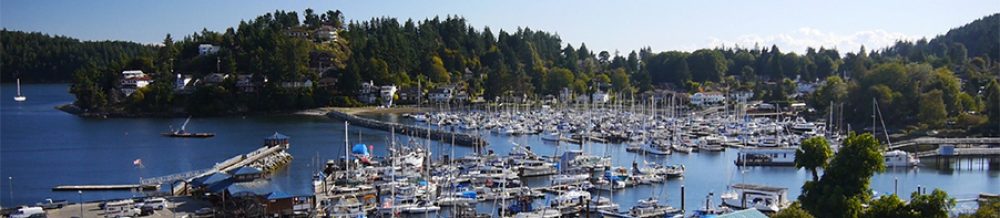
We quietly toasted Anthony and paused for just a few beats taking in the summery vista out front our perch above the pebble beach of Gibsons Harbour.

“How is business these days,” I asked Camp, owner of Coast Books, one of the few independent bookstores left and an anachronism of sorts.

“The tourists are here already, every ferry is overloaded and the store is always full of browsers,” Camp said, “but hey, I’m not complaining about a fate of my own making. There are still people who buy books.”

“I personally enjoy nothing more then reading a book when I find the time,” I said, “mind you, more often then not I’m staring into my small or big screen instead, consuming the latest news clips. It’s a bit like an addiction. You can never get enough and it’s always the same. You think the sun would still rise and the tides would still go in and out if I would go cold turkey and not watch the news for a month?”

“The world would never be the same,” Camp laughed, “but you might feel left out. I for one will be glued to the screen for the next month, waiting to catch that magic move or brilliant pass to stop time. It’s the world cup in Russia, that’s what I’m talking about, sure to distract, entertain and provide drama, tears and glory.”

“I might stop by and join you for a few games. Maybe I’ll even buy a book from you. How many books do you think are out there?” I asked. “Must be a challenge to keep up with the latest.”

“I can tell you. According to Google, some 130 million books have been published and every year, in the US alone, there are between 600’000 and a million new books. About half of them are self-published and sell less then 250 copies each. I stock about 1’000 titles and some of those haven’t moved in years. It’s a fickle business and I’m constantly second guessing myself. My perennial bestsellers are children’s books, mostly purchased by grandmothers. My personal favourite this season: Ferdinand, now a major motion picture cartoon. You should watch it.”

“A cartoon?” I said, somewhat baffled.

“I watched it with my niece,” Vicky said, having overheard Camp’s recommendation while refreshing our beverage. “It’s a great story and a fun film about a gentle soul inside the wrong body. A flower loving bull who doesn’t want to fight.”

“Wow, sounds like they should screen that at the White House,” I said.

“Right after they show that bizarre Destiny Pictures propaganda video for the hundredth time, the one Trump presented to Kim. ‘Out of the dark can come the light and the light of hope can burn bright. Leni Riefenstahl would be jealous. Guess who the two main protagonists are.”

“Dear Leader and Manchild? Are people really that gullible,” I asked.

“People love nothing more then fantasy, especially when the reality is a disaster. Give me Laurel and Hardy any time,” Camp said, finished his beer and got up. “I’m taking Muriel to the new pizza place,” he announced.

“Pizza, cartoons, soccer? What happened to the Campbell I knew, the recluse and naysayer of yesterday, now suddenly the man of the world,” I wisecracked.

“You need to get out more often. See you next week,” he said with a wink and a smile.


Who we elect and Why


Camp was already into his beer when I got to the pub. I wasn’t late, he was just early. “Slow day at the old book store? I asked.

“You could say that. I just didn’t feel like hanging around any longer, staring out the window and twiddling my thumbs. It’s one of the privileges of running my own small business. I can come and go as I like.”

“It’s almost like retirement,” I said.

“Yes, without the pension and the discounts and plenty of responsibility.” Camp retorted.

“Did you watch the Ontario election last night?’ I asked.

“As you know I don’t have a TV but I saw it on my computer. No surprise there except in the broader sense. It puzzles me how people can elect a guy to run the province and yet he cannot even run his own family business and has no legislative experience.”

“Why do the people keep electing governments that go completely against their interests like poor people supporting a candidate who is owned by the rich.

We keep electing leaders and parties who have no interests in the ordinary people but they get elected on simplistic promises that nobody expects them to keep.”

“Yes, it’s a riddle. Maybe it’s leadership by resentment. Working class whites are frustrated and resentful and perceive social programs geared towards ethnic minorities. So they elect populists who promise to go against the political establishment and change everything.”

“Everybody wants change for the better, mostly for themselves and their own economic position. Everybody wants more money and more rights. The poor as well as the rich,” I said.

“People vote emotionally and the young aren’t interested it seems. Just look at the Brexit analytics. The ones with the least education and the poorest voted for Brexit or look at the Hungarians and Poles. It’s called nationalistic, populist illiberalism but they voted for it, against immigrants and EU policies.”

“The EU is mostly about money.I’ve read that in Poland EU money represents over 60% of infrastructure spending while for Hungary the figure is 55%. Why bite the hand that feeds you?”

“Somebody once said: Democracy is not a paradise, democracy offers the possibility to change what’s bad. With the erosion of democracy that possibility for positive change goes away as well,” Camp said.

We both stared glumly into our stale beers. Luckily Vicky took pity on us and without asking brought around two fresh pints.

“It’s a crazy world out there,” I said, shaking my head. “We have a summit between a mass murderer and a misanthropic man-child touted as the biggest news and now we have Doug Ford in charge of Ontario. It’s driving me to drink,” I said.

“Don’t let me stop you,” Vicky joked, “you’re at the right place.”

“Is there any good news?” I said and then remembered. “Oh yeah, the Senate passed bill C-45 yesterday, the recreational marijuana bill by a vote of 56-30.”

“That’s right and all against were conservative, overpaid non-elected legislators,” Camp said and then added: “Now the House of Commons will have to decide what to do with the over 40 amendments. Then it will have to go back to the Senate for a second vote and it will also require Royal Assent.”

“This will take months I said, “and it will be so complicated and restrictive that it will barely change anything.”

“We should just concentrate on what’s important like the upcoming World Cup in Russia and the sunny weather,” Camp said. “I even got myself a TV from the thrift store in order to watch a few games at work.”

“You’re right of course. It’s no use getting frustrated and depressed by events and situations outside our limited sphere of influence and control. As Clare puts it: It’s the small things in life that count: a blooming flower, a dinner with friends, a decent bottle of wine, a good night sleep and a clear conscience.”

“I second all that but I still can’t believe they voted in Doug Ford as premier of Ontario.”

“It is democracy at it’s worst,” I conceded, drowning my disappointment.


Trade Wars


I love these bright early summer evenings. The tide was going out and I walked along the beach to my usual Thursday meeting with Campbell at ‘Gramma’s Pub’ on our quaint Gibsons harbour. Camp as I’ve called him for years, is my friend and occasional verbal adversary and sparring partner but this time I came with an agenda.

“I’ll trade you seats,” I offered Camp as soon as I sat down, “I think you have the better view.”

“Oh,” he said, taken aback, “that depends on your point of view. Tell you what, I’ll trade seats with you if you pay for the first round, and the one after that.”

“Now is that fair?” I asked, “you not only get to have the better view but now you have free drinks as well.”

“We can always go to a court of arbitration, hoping to get a fair ruling.”

“We’ll ask Vicky, she’ll give us her wise counsel.”

Just at that very moment Vicky was striding over to clean off the table next to us, a perfect time to ask her while she was working.

“Vicky, who do you think has the better seat here?” I asked, “Camp with the frontal water view and the harbour and the island or I with my back in the corner and the view of the whole terrace and a bit of the dock and the water off to the side.”

Without interrupting her chores she said: “Depends what you want to see: The far and serene view of the water, Keats Island and the leisurely boat traffic or the busy circulation of people coming and going, whose drinking what and with whom and how much. I’d say you both have the best seat in the house and I call it even. How about you swap seats every other Thursday.”

“That’s the longest speech I ever heard from Vicky,” Camp said, after she wiped the table with a bit of extra gusto and vanished into the interior of the pub.

“Brilliant solution really.”

“She must have watched the news last night about Trump’s trade wars. Upsetting every ally and apparent friend. What does he hope to gain?”

“Notoriety and longevity,” Camp said.

“How to do you mean?”

“He doesn’t want to be remembered for just a different kind of president, he wants to go down in history for the one who upset the balance of power and brought the world to the edge of the precipice, just to try and bring it back and thereby win the Nobel peace price.”

“Like a poker player? Is it all a bluff?” I asked.

“No, I don’t think so. He has surrounded himself with likeminded people and sycophants who love nothing better but to make history and if it takes a war then what better way then to have a trade war, at least it’s some kind of war. It’s simple hubris.”

“Maybe it’s just a side show and Iran and Korea will be the main feature.”

“Maybe, but he will blame the rest of the world for the uptick in prices and commodities which are sure to follow all these new tariffs. I told you so, he’ll say, they all have it in for us.”

“At least Trudeau stepped up to the plate and called for common sense to prevail,” I said.

“About time, but he only made it to first base, a long way from the home plate.”

“I don’t get it. Everybody will lose, meaning everybody is you and I. If there is a sudden tariff on hops and malt then the price of beer goes up. Very bad news and if for every $ 100 of aluminum the Canadians are charged a $ 25 tariff then that cost gets added on at the production end and passed on to the customer like Boeing and Ford who then roll it on to the consumer.”

“And in retaliation an equal punitive tariff gets imposed on a bottle of Bourbon and a Harley bike, which will put out the Hells Angels, surely a core part of Trump’s base. That will have its own consequences. Might even lead to a world war, sort of like the butterfly effect,” Camp mused.

“That’s Trump for you, chaos theory in action. You think he knows what he is doing?” I asked, shaking my head.

“Does the emperor know he has no clothes, believing he’s wearing the finest and most magnificent cloak?  And did any of his advisers or his loyal legions of admirers tell him that? No, it was a little boy that cried out: “But he has no clothes.”

“Who has no clothes,” Vicky, who just appeared at the perfect moment, asked surprised, “you two naughty boys having indecent thoughts?”

“No, not at all,” Camp cried out, throwing up his hands and laughing, “we’re just picturing Trump appearing naked on Fox News while everybody claps and applauds his fantastic new outfit.”

“I think you two maybe need something stronger than beer, how about a shot of Jim Bean, I hear the price is going up.”


Democracy at its Worst


“Camp, did you follow the elections in Venezuela last Sunday? What a sham and disaster for the people of that country. ‘Maduro would beat Jesus’is how Venezuelans lament the rigged system.”

“I’ve come across a few articles but Venezuela is not exactly hot news here in the Great White North. We have floods in BC, the ongoing NAFTA theatre and Lord Stanley’s cup to keep us distracted. The Gaza-Israeli border war, the Venezuelan election or the ongoing refugee crises in Europe are too far away and too depressing to affect our day-to-day lives.”

Not to be deterred I said: “According to the UN, last year alone Venezuelan’s economy shrank by 13% and the hyperinflation is at 13’000%. Imagine that. Maduro’s brilliant solution: strike three zeros. Still, today a dozen eggs cost an equivalent of $ 150 and some 5’000 citizens leave their country every day.”

“Vote for Maduro if you want food, starve if you vote for somebody else, he proclaimed without shame,” Camp pointed out.

“You could be Major of this town Camp if you handed out free beer,” I suggested.

“That’s been done before. It was called the Beer Hall putsch.”

“What about our own pipeline wars between Alberta, British Columbia and the federal government.  Who is right there?” I asked. “Premier Notley claims that thousands of jobs in her province depend on it.  Horgen shouts that the B.C. coastline is in danger from increased tanker traffic and Trudeau yammers on about national interest and energy security,” I said.

“All three seem to have a point,” Camp said.

“Let me ask you this Camp, how many tanker accidents have occurred on the B.C, waterways? I tell you: none. A quick overview on the B.C. government site lists all the oil and gas accidents  have occurred on land involving trucks, trains, and processing plants and one pipeline. No tanker accidents, no spills at sea, not from any double hulled tankers, not even in Strait of Hormuz. So what is Horgan talking about?”

“He has to pander to the Green’s, his coalition partners who secured him a tenuous hold on government. It’s first and foremost a political position.”

“An April Angus Reidpoll has 58% of British Columbians in favour of twinning the Kinder Morgan pipe line and 34% against. What happened to democracy?” I asked, playing the devil’s advocate, “are interest groups and stalling tactics through the courts the new way to determine our policies and actions?”

“Imagine, two NDP governments fighting each other like the Hatfields and McCoys, Camp said. “Makes for a mighty thirst, all this shouting and finger pointing,” he mused, holding up two fingers of his own for Vicky to see who was already on her way with two new pints.

“And did you know that on two days this past February it was actually warmer at the North Pole than it was in Zurich, Switzerland,” I said, trying to change the subject.”

“Yes, and the Gulf Stream is slowing down, the Greenland ice is receding, the oceans are rising and Kilauewa, like Trump, keeps belching lava and toxic gases. I’m not worried about the planet,” Camp said, “It will survive. I’m concerned about the 8 billion people trying to live on it.”

“On a lighter side, did you see the Royal Wedding?” I said, desperately trying to steer our stormy conversation into some calmer waters.

“No, but Muriel told me all about the hats or head sculptors which are called fascinators. Some looked like birds nests while others could have come off the Vatican’s Christmas tree.”

“Fascinating,” I said, while Vicky set down the refills. “Did you watch the Royal wedding?” I asked her.

“No but I wish them well. I wouldn’t want their lives of endless protocol and permanent smiles. Gives me a face cramp just thinking about it.”

“You know Maghan Markle was a waitress once,” I pointed out.

“You telling me I could be a princess?” Vicky laughed, “and maybe Camp here could be  Pope while you could be an astronaut, shooting for the stars with your flights of fancy.”

“Leave the running of the world to us,” Camp said, “and we would make a mighty scrambled mess of it.”

“Depends how many of these you had,” Vicky said, pointing at the two foamy golden pints in front of us.


Shopping


“Camp, you’ve seen that T-shirt that says: ‘Shopping is my Happy Place’?” I asked my learned friend as soon as I sat down at our usual Thursday table in the pub by the sea.

“Well, not in my bookstore,” Campbell said.

“Over the past weekend Clare and I found ourselves with a few hours to kill and like two drifting boats washed into the Park Royal mall carried on a tide of eager shoppers. We were snared by the lure of enticing bargains displayed in glamorous, glittering settings.”

“Of course you ended up with clothes and stuff you didn’t know you needed,” Camp said with a knowing grin taking a sip of the ice cold draught.
“You know that I do most of the shopping for our small household while Clare still brings in a few shekels and takes care of nurturing me and the garden, not necessarily in that order,” I said with a wink.

“Yeah, so what’s this about? I only shop if absolutely necessary. Luckily I get to share most of my dinners these days with Muriel who seems to enjoy my company,” Camp said. “For lunch it’s a dash across the street for a sandwich while watching the front door of the store, which usually remains untouched.”

“I actually like shopping,” I said, somewhat defensively, “because I get to meet people in the store and usually end up chatting to at least one neighbour or acquaintance. Shopping is also a reliable source of local news and I’ve even received investment tips in the checkout line. Mind you those didn’t pan out as promised.”

“You mean it’s a place for gossip, not news, sort of like the town square. You do live an interesting life my friend,” Camp said, “if finding out about the latest discount offer or who just came back from a holiday is considered news.”

I ignored the snide remark and tried to explain, tongue in cheek. “I meet the guys in the meat department and run into women friends in the baking or detergent aisles but I’ve also had interesting chats in the fruit and vegetable department with both. ‘You’re not squeezing that avocado!’ or ‘look at the prices of the asparagus!’usually initiates a conversation. I even promoted your bookstore,” I pointed out. “I saw a guy who I play soccer with looking at a book in London Drugs. “Don’t buy a book in the drug store,” I said, “buy a book in the book store.”

“Thanks for that. I need all the help I can get.”

“And then there is seniors day. First Thursday of every month. Clare got pretty miffed when the cashier asked her if she was entitled to the discount.”

“I realize we’re a consumer society but shopping is definitely not my happy place,” Camp emphasized. “I target-shop or avoid it all together. In fact I wear the same shirt until it disintegrates.”

“I noticed,” I said, “we have a rule that I strictly enforce: something new in – something old out. We always have a bag full of clothes ready for the thrift store. It never fails to amaze me how much stuff we accumulate: clothes, shoes, gadgets,  electronics, paper, tools, souvenirs.”

“Don’t forget books and bills,” Camp said.

“And then there are the shopping channels on TV or racks of magazines dedicated to shopping. It makes the world go around as the saying goes but it can also be an addiction,” I said. There is probably a shoppers anonymous.”

“It’s a crazy economy that revolves around buying stuff that we don’t need, accessories that only decorate and shoes that we only wear once. I have one suit that serves for weddings and funerals,” Camp said, “and one tie for all occasions.”

“And what about those high-end fashion stores that offer thousand dollar handbags and handmade shoes for the price of a small compact car.”

“Don’t forget the sports brands,” Camp said.

“Or the fifty jeans makers and work clothes franchises.”

Just at that moment Vicky drifted by checking on thirsty customers like us.    “Vicky, where do you do your shopping?” I asked.

“Well now,” she said, cradling a tray of empties. “I eat here at work or at my boy friend’s but for clothes I prefer Sally Ann over the Thrift store.”

“We must have met shopping,” Camp said, “that’s where I buy my clothes.”

“Probably from garments Clare and I donated,” I said. Vicky’s white, sleeveless blouse looked suspiciously familiar.

“You two fashinistas talk shopping?  I think you need another beer to calm you down.”

Clean Air


“Camp,” I said, as soon as I sat down at our usual corner table on the patio, “I’ve just had a lovely walk along the shore and it occurred to me that we’re very fortunate to breathe such clean and fresh air here on the coast. I’ve come across an article this week on the dirtiest cities on earth and it staggers the mind how nasty those places are to breathe and live in.”

“Yes, I’ve seen some stats from the WHO as well, which are rather depressing. According to their latest study, nine out of ten people breathe in polluted air and seven million people die yearly due to their poisoned atmosphere.”

“Of course, once again the worst places are in the poorest countries,” I said “like India and Africa.”

“Yes, the worst air quality measurements come from Varanasi, the holy city along the Ganges which attracts millions of pilgrims each and every year. In fact India has the dubious honour of the six filthiest air metropolises in the world. Next to India are China and Pakistan, Nigeria and even Haiti.”

“What about Europe and North America?”

“Well, we have Mexico City and there are some very polluted European cities, worst amongst them Milano and Ankara but they only measure a quarter of the nasty particles in compare to places like New Delhi or Cairo. Worldwide over three billion people, or 40% of the earth’s population, have no access to clean air technology.”

“I just talked to a friend who’s just returned from Egypt. He said that Cairo was just a cesspool of garbage, humanity and pollution. Not a place fit to live in and yet 20 million people crowd into a place with infrastructure for 3 million.”

“I remember being in Nanjing some twenty years ago and I couldn’t even make out the building across the street from our hotel, just a fogy silhouette and everybody was wearing face masks,” I said. “Probably because, then as now, most of the people still cook and produce light from kerosene, coal or wood.” I took a sip from my beer trying to wash some of the bad taste away. “Considering that the earth atmosphere is like an onion skin around the planet and rather thin.”

“Yeah, about 500 km but most of the atmosphere is contained closest to earth and gets thinner as it moves up. A tenuous separation between us and outer space,” Camp said.

“I heard outer space,” Vicky, who was just floating by, said, “anything I should know about?”

“We’re just talking about the abundant and lovely fresh air here in Gibsons,” I said, “and how we take it for granted.”

“Yes, and it’s even better since pubs are smoke free environments,” she said.

“I remember when bars were smoky dens with overflowing ash trays on every table,” Camp said, shaking his head at the memory.

“And being able to smoke on flights. Smokers at the back of the plane,” I said.

“Like a peeing section in a swimming pool,” Camp quipped, “or a smoking corner in a restaurant.”

We both took a deep, refreshing breath. “We should be contemplating the natural beauty of the scenery right out front of our lair here instead of being weighed down by the universe at large,” I said.

“Apropos the universe. Stephen Hawkins last publication before his death claims it is a lot simpler then he previously assumed,” Camp said.

“And 18 republicans nominated Trump for the Nobel peace prize.”

“What on earth for?” Camp said and then emptied his mug in one long draught.

“I almost feel guilty living in our little paradise by the sea,” I said.

“Just feel lucky, not guilty. Lucky because of where we’re born and live, not because we rolled the dice and came up winners or losers.”

“I’ll drink to that.”


Pizza Bbq

Featured


         Who doesn’t like pizza ? Nobody. It’s the ultimate universal meal or snack and ranks in popularity right next to bread and chocolate.

         Here is an easy recipe for home made pizza which tastes so much better then anything you order in a restaurant or that comes in a cardboard box. And it’s soo easy to make and so adaptable to your personal tastes and likes. Just look in the fridge.

         If there is some left over spaghetti sauce or salsa, maybe half a jar of pesto, some mozzarella or marble cheese, tomatoes and onions you already have all it takes to build a basic pizza. Add any other ingredients you have, like olives, mushrooms, garlic, any kind of peppers, spices and if you like a meaty pizza add ham, salami, pepperoni or my favorite, prosciutto.

         Of course there is no pizza without the base and here is how you can really impress yourself (and your guests). Make your own dough! Do you have flower in the house? How about some salt and maybe a packet of east? That’s it. Just add water and a bit of olive oil.

         Of course the real secret to the perfect pizza is where and how you cook it. Nothing is easier and soo perfect. Not everybody has a pizza oven but almost everybody owns a bbq ! It helps if you have a round pizza stone on which to bake your pizza. I’ve used 12” tiles from the building supply (clay or granite, some tiles will crack from the heat) and they worked just fine.

 Here is how you make the dough for one large  delicious pizza:

3 cups (450 gr, 1lb) flower (unbleached white or whole wheat)

1 tsp  yeast (you can skip the yeast if you want a really thin crust)

1/2 tsp salt

1 tsp olive oil

add some rosemary

1 cup (2.5 dl) warm water

mix and knead by hand, form into a ball , cover it with a tea towel and let sit at room temp for a couple of hours

roll it out into the size and shape you like

sprinkle some corn meal on the stone (helps to prevent sticking) and lay out the dough, curling up the edges.*

Spread the sauce, salsa or pesto. Next comes the grated cheese, be generous and cover the whole dough, then add whatever else you want over top of the cheese

Heat the bbq tp to 500° (hot !) and slide in the pizza.

Have a look after 12-15 min. It’s ready when the edges go brown and the dough is stiff. Check it by lifting it with a spatula. Watch you don’t burn it.

Oh, so delicious !

Merlot (from the Okanagan) will go great with any pizza !


Fitness or Obsession


Campbell or Camp as everyone on the Coast knows him, owner of ‘Coast Books’ – ‘a non-profit book service’ as he likes to call it sauntered in just as Vicky set down a couple of ice cold for us. After taking the first sip – which is always the best one – I confessed without delay. “Clare and I have joined a spin cycle class twice a week,” I said, “one hour of intense pedaling and sweating to 80’ies disco music.”

“Whatever on earth for would you subject yourself to such torment?”

“To counteract gravity and get our un-toned bodies into presentable shape for a bicycle holiday. It’s quite the workout and I’m proud to say I did no worse than all the other participants. Eight women and one lone guy. Me.”

“Therein lies the mystery. Women worry much more about their bodies than men do while we worry too much about money and politics.”

I ignored Camp’s comment and said: “ It’s not that I’m worried about my physique but I was dismayed when I started huffing and puffing when we walked up to Soames Hill last Sunday.”

“You walked up Soames Hill?  Good for you. As for myself I walk to and from work every day, except on Thursdays when I take a detour through the pub. I also lift boxes of books and do my stretches reaching for the books on the top shelf and bending for the lower rows and sometimes I bow and scrape at the bank.”

“That’s just everyday activity which doesn’t count as exercise,” I said.  “It’s like me claiming that doing dishes and the laundry are exercise. Maybe mowing the lawn or digging up rocks qualify but Clare decided we’ve become lazy and delinquent in the physical department and advocates for a regular exercise schedule. You know, daily push-ups, sit-ups, squats, regular swims, walks; hiking and biking. Good for the core, the back, the tummy and the appetite.”

“I think this fitness craze is just another obsession with our bodies,” Camp said. “We’re told by the fitness gurus that we all need to have flat stomachs, tight asses and calves shaped like drum sticks. When they talk about six packs I’m thinking Heinecken and Corona, not stomach muscles.”

“Well, I guess being fit is healthier and looks better than hanging guts, wobbly butts and legs shaped like sticks,” I said, “and a new study says that exercise reduces the risk for developing depression.”

“It’s all part of our glamourized body culture,” Camp retorted, “And no matter how much we jog, bike and exert ourselves in those torture chambers they call gyms, we cannot change our body types. That is always the illusion people want to buy into,” Camp said.

“Are you part of a fitness club, Vicky?” Camp asked our attentive server who was just passing by with a full tray of empties.

She raised a quizzical eyebrow and said: “I walk for miles and lift trays of liquids every day at work but I take yoga classes twice a week. What’s this about? You two boys planning to go to the gym?”

“Oh no, nothing as drastic as that,” Camp said, holding up his hand, palm out,  and shaking his head, “we’re just talking about the fitness craze sweeping our foolish western world. More gyms and Pilates studios than pubs and bars.”

“Don’t forget the joggers and speed walkers,” Vicky said, moving on.

“Not to mention the billion dollar fashion industry built around jogging, hiking, biking and yoga outfits. Fitness is big business, just like diets, weight control and ageless aging,” I said.

“Goes hand in hand with organic diets, yoga classes and light beer. It’s all because we eat and drink too much and have to shed those extra pounds by artificial means, while the other half of the world worries about their next meal and does not have a child obesity problem.”

We drank to that and looked out at the sparkly water and lush green islands framed by the snow capped coastal mountains and the baby blue sky, and it occurred to me once again how lucky we were to live in such a paradise.

“All this talk about exercise makes me thirsty,” Camp said. “I should have bought a spandex franchise instead of a book store.”

Like magic Vicky set two refills in front of us and said: “I have friends who live right on False Creek and the only sounds they hear is the swoosh of rubbing spandex and the slap of running shoes going by their house.”

“And all that rubbing of synthetic jogging outfits probably creates enough static electricity to set off a minor explosion,” Camp said.

Vicky almost dropped her tray doubling over with laugher.


Art Talk


“It’s like summer,” I exclaimed as I sat down across from my cohort Camp at our usual table overlooking the sparkly waters of Gibsons harbour. Campbell, know as Camp in this town, was himself still dressed in woollens and a jacket while I was sporting a T-shirt and a pair of zany sunglasses borrowed from Clare.

“It’s a fake summer and we could still have a frost,” Camp said.

“You’re right Camp and where I grew up in Switzerland we waited for the three ice saints to pass before planting – Pankratius, Servarius and Bonifatius,’ followed by Cold Sophie.”

“Oh yeah, here you’re going medieval on me again. When do these three eh…Saints come to pass?”

“Somewhere in the middle of May,” I said.

“Old wives tales,” Camp said, “but not without a hint of truth. Anyway it’s cool standing in the book store all day long.”

“Can I interest you two in a ‘Blonde Logger’? Vicky offered.

“A blonde what?” Camp asked.

“It’s a new local Craft beer we’re starting to carry? You know, support the local economy.”

“Absolutely,’ I said, holding up two fingers in a victory sign.

Of course Vicky already knew our answer and had two pints at the ready.

We took a sip and smacked our lips in appreciation while Vicky gave us a conspirational wink.

Camp started right in on a topic that obviously bothered him. “Did you hear about that the Vancouver Art Gallery (VAG) mounted a show called ‘Bombhead’ about a month ago, exhibiting paintings depicting the horrendous, scary power of the atom bomb,” Camp asked.

I had to confess my ignorance.

Camp carried on: “But what was most noticeable about the exhibit was the absence of one of BC’s, and indeed Canada’s, most prolific artist and resident ‘Bombhead’. I’m talking about the iconic paintings, which make up Art Nuko.”

That rang a bell with me. “How could this happen?” I said. “I thought curators work in an objective and inclusive world, above the morass of politics and favouritism?”

“Well, think again. Art is not above politics. I believe one of Art’s function is to challenge the status quo and sometimes even shock the viewers out of their complacency as in ‘Bodies’, the exhibit showcasing real, plasticised human bodies or in the ‘Art Nuko’ depictions of the mushroom cloud over Buckingham palace, Disneyland or the Kreml, amongst many landmarks and locations including one over Vancouver called EXPLO 86. Disney sued over the painting of a fiery mushroom cloud over Disneyland with Mickey looking on. That of course made it even more popular than any other form of promotion could have achieved.”

“I remember the Art Nuko postcards. Kind of cartoonish and very colourful and blatantly explicit.”

“The originals were large paintings, like 3×4 feet, and I think they’re stored in a bunker somewhere in northern B.C. ,” Camp said.

“It’s like leaving Picasso out of a cubist exhibit.”

“Exactly. Guess what the curator said about Carl Chaplin’s, aka Dr. Nuko’s work. He called it ‘inferior…and he doesn’t deserve to be on the same wall as the other artist in the exhibit’.”

“That’s a pretty nasty judgment call for a curator,” I said shaking my head. “A little closer to home we have our own controversy involving art. Due to a scheduling change the annual children’s music concert coincided with the life drawing exhibit at the SC Arts Centre. Apparently there are still some parents who do not want their children to knew that we are all naked underneath our clothes. Words like ‘dismayed, insensitive, inappropriate, unfortunate’ were bandied about.”

“Yes, it’s hard to believe that this kind of prudish puritanism still exists in our midst. Just walk by any magazine rack at the grocery store and kids of all ages can see the sexualised and glamourized versions of body images that look nothing like their moms.”

“Would you agree to subsidise art and artist with your tax dollar?” I asked Camp, knowing the answer already.

“Of course, art is the soul of civilisation, without art there is no culture and if a society does not nurture and support its artists and their art, society fails and disintegrates into randomness without meaning and history.”

“Strong words indeed, but yes I agree that our artist use their talents, mediums and techniques to enrich our world.”

“From the earliest cave drawings to the latest graffiti, art is what makes us human and it is what endures over time,” Camp said rather passionately.  He took a large swig from his brew to douse the fire. “How could we live without music, dance, stories or pictures?  Art is nourishment for the soul and the mind, without it we shrivel up and atrophy; basically turn into technocratic zombies.”

“We’re very lucky here on the Sunshine Coast where Art is alive and well and dozens of creative people work and play,” I said and then cut to the chase: “So what is the difference between art and craft?” I asked, knowing that Camp would have an answer at the ready.

“It’s very simple,” Camp said. “Art inspires and provokes; craft decorates and is utilitarian.”

“Ok, so what about Craft beer? Why isn’t it called Art Beer?” I said.

“It’s where the twain shall meet,” Camp said with a lopsided grin. “It’s the art of making Craft beer.”

“How did you two like the ‘Blonde Logger’?” Vicky asked with a mischievous smile.

”I prefer the ‘Golden Goddess’ by the other brewery,” Camp quipped.

“It’s a silly name,” I said, “but decent beer.” We take a refill.”

“One ‘Blonde Logger’ and one ‘Golden Goddess’ coming up.”


War or Peace


“I can’t wait  for some warmer weather,” I sad to Camp who was already seated, staring into his smart phone which he quickly put away when he saw me. We have an unspoken rule that no electronic devices are allowed at our Thirsty Thursday chinwag. We both have fancy phones but we’re also two of the five people on this planet who don’t subscribe to Facebook, Instagram, Twitter or any other social platforms. I admit to this blog, which is my way to let the universe know what the two of us blab on about every Thursday at ‘Gramma’s Pub’ on the serene Gibsons harbour. It’s amazing that we never run out of topics but part of this we blame on the instant news flashes that bombard us at a dizzying pace from all over the world. Sadly, most of it is about disasters, crimes and wars.

“I’m also ready for a spring thaw, in the weather and in international relations,” Camp said rather cryptically. “All this sabre rattling between the west and east is very worrying and reminds me of a schoolyard where the bullies rule and everybody else huddles in a corner crying out for common sense.”

“Teresa May is looking to bolster her flagging political career, Trump thinks he’s still in a reality TV show, Putin wants to be the smartest guy in the room, Trudeau doesn’t seem to know whose team he is playing on which leaves Angela Merkel who, although the chancellor again, now has to make decisions with her eyes closed and holding her nose,” I pontificated.

Camp gave me disapproving look over top of his spectacles, which he forgot to take off. He doesn’t like to wear them in public. “I don’t want to spoil my eyes,” is his vain excuse. “You’re ranting,” he said. “Let’s take it one at a time. The airstrikes last weekend for the alleged chemical attack on Douma did nothing towards ending the civil war in Syria. Nobody will win this war with weapons, chemical or otherwise, and the people of Syria suffer the consequences of this nasty conflict.”

“Well, who do you believe Camp? The white helmets, Amnesty International, the UNCR or Trump or Putin.”

“Nobody has the whole truth but the fact is that the butcher of Damascus is slaughtering his own people. There is no doubt about that.”

“Will there ever be peace as long as Assad remains in power?”

“Doubtful, not as long as both Iran and Russia support him, albeit for different reasons.”

“And there is Yemen whose war is no less disastrous for it’s people, caught between entrenched Islamist groups and blockaded by Saudi Arabia. It’s a big mess, considering Yemen is an impoverished country living next to some very rich neighbours. “

“No peace then in the middle east but thousands of refugees washing up on Europe’s shores, a crisis which will only get worse before it gets better I’m afraid.”

“A lot of doom and gloom for one beer don’t you think?” I said.

“In the end it’s always about resources and  energy like oil, gas or water. Mix in ideology and religion and you have a deadly cocktail of misery,” Camp said.

“We have our own war of words here in Canada over this Kinder Morgan pipe line. What do you think of that?” I asked Camp.

“It’s the twinning of an existing pipeline, a no brainer really if you want to get the oil to a different market than the USA and off the rail to make room for the prairie farmers to ship their grain. The Tarsands Campaign wants to land-lock Alberta oil and prevent it from reaching international markets to fetch international prices. The protesters are backed by the US based Tides and Rockefeller Foundation.  Just go to 350.org. to find the culprits,” Camp pointed out. “They coordinated a laudatory press release after the BC NDP government announced its plans to restrict bitumen coming into B.C. I call that dirty politics.”

“It’s a war of interest groups fighting the majority of Canadian, B.C. and Alberta citizens. So much for democracy,” I said.

“Sweden has Lego and IKEA, Norway has oil and gas just like Canada, which is also a resource based economy,” I said. “ No getting away from lumber, fish, water and minerals.”

“We’re also the bread basket of the world and then there is the film industry and tourism,” Camp said, “we have everything.”

Just at that point Vicky appeared with a couple of sorely needed fresh pints.

“What do you think Canada’s biggest resource is?” I asked her.

She cocked her pretty head to the side and gave us an amused look. “It’s the people of course and maybe the beer?”

“I’ll drink to that,” both Camp and I responded in stereo.


Self-Help


I picked Campbell, or Camp to all his regular customers, up at his bookstore because I was early. He closed up and we sauntered down to ‘Gramma’s Pub’ on our lovely Gibsons harbour.  Before we were even seated,  he had something on his mind that he wanted to talk about.

“I have just read a review of a book ‘Stand Firm’by Swend Brinkmann, a Danish psychologist, who claims that all these self-help books are inefficient and leave us worse off, confused and inadequate. They are no help at all,” Camp said. “He has some interesting points. People are fed up with self-optimisation and the constant pressure to better oneself, to change, to be flexible, creative, to learn new things, to be a better version of yourself, to fulfill your potential. He points out that all these goals are laudable but they are concentrated on the individual and therefore have lost any kind of ethical foundation.”

“Why? Because we should focus on reaching out and being inclusive rather than self absorbed navel gazers.”

“Yeah, something like that. Self-realisation was the big demand of the youth revolt in the late sixties but today this alternative culture has segwayed into the consumer society of today. Of course it was necessary to revolt against the static and old fashioned societal structures of the forties and fifties , Brinkman claims; to fight for freedom of expression, sexual liberation and emancipation but now that opposition has become the foundation and legitimizes the same old system. Today it’s fashionable to be conservative.”

“Self-realization as an integral part of the market and consumer economy?”

“Exactly, society today wants us to be flexible, adoptive and mobile. Maximise your potential and you are a good worker bee.”

We both took a long swig and thought about all those changes in the past fifty years.  Music, attitudes, values.

“I remember being fascinated by all this lore and spiritual smorgasbord coming out of the east and India in particular,” Camp said.  “That whole fad about the Maharishi Mahesh Yogi, the Beatles and transcendental meditation.  Let go of your material attachments and embrace the inner light.”

“Exactly, give him all your money, close your eyes, add some incense, sitar strumming and hashish and float away into blissful oblivion. Except I never bought into the craze, it just didn’t seem very, how should I say, adventurous.  And besides I liked rock’n roll and the blues and could never get excited about eastern music.”

“You mean to say, you didn’t want to give up your worldly belongings.”

“Which consisted of a record collection, some books, an Omega watch and a cool leather jacket,” I said, laughing at the memory. “But I thought the self-help section is the best money maker in any book store. Anything from the idiot guides to the Venus and Mars books to yoga and diets,” I said. “This Danish guy’s book might cut into your profits.”

“What profits? But you’re right, without the self-help section there would not be a bookstore.  Autobiography of a Yogiby Yogananda is still a bestseller, even though it was published in 1946. It kind of started the whole fascination with eastern mysticism.  Meanwhile I’ve come to view Hinduism as the dogma to uphold the fascist cast system and Buddhism in it’s latest brutal incarnation in Maynamar isn’t very inspiring either. And then there is the other side of the self-help spectrum like ‘The Power of Positive Thinking’ by Norman Vincent Peale. He was the pastor at the Marble Collegiate Church in Manhattan, the church Trump attended as a boy. Peale’s main ideas are: Believe in yourself and everything that you do; never accept defeat and when the reality is different then refuse to believe it. “

“Basically a blueprint for Trump’s philosophy if you want to call it that.”

“Yep, he got it from the master of persuasion. But I do agree with Brinkmann. We’re much too self-absorbed and are constantly checking ourselves for flaws in the proverbial mirror of vanity. He states that it is more important to be a sincere and polite human being than a self-improved version of yourself.”

“Speak for yourself,” I said. I’m quite happy with myself and instead of a mirror I have Clare to point out my flaws. They don’t change much either. They’re pretty consistent and reliable.”

“Let me guess: opinionated, impatient, a worrier and drinking too much.”

“Did you and Clare make this list together?” I protested just in time for Vicky, who overheard this last comment, to add her ten cents.

“You guys don’t drink too much but you both worry and talk to much but hey, there is always room for improvement.”


Walls


“Camp, did you read about the firewall the Chinese government put up last week?” I asked my compadre as soon as I sat down at our favourite table on the covered patio. “I thought it was an April fools joke but apparently they are seriously restricting internet access for their own people. No more Facebook, no Google, no New York Times or The Washington Post or The Guardian.”

“Censorship apparently works if the censored have no need or desire for the material being blocked,” Camp said. “The Chinese have always been good at building walls, just look at the 20’000 km long Great Wall built about 2000 years ago. Did it keep anybody out? Not sure but it kept about half a million soldiers and peasants busy for hundreds of years.”

“What is it with these walls,” I asked. Are they to keep people out or in? To separate the haves from the have-nots; to keep ‘aliens’ or foreigners out?”

“Good question. Answer is: all of the above. The Berlin wall kept the free people walled inside a hostile East Germany, separating families and friends, while the 700 km long wall along the Green Line in the West Bank is supposed to keep Palestinians out of the holy land,” Camp said.

“Why is it called the West Bank if it’s in the east?”

“It’s only been called that since Jordan annexed it after the Arab-Israel war in 1948. Before that it was called Judea and Samaria. Israel has occupied that territory since the six day war in 1967,” Camp explained.

“I was there just days after that war ended. I still remember the burned out tanks along the road from Tel Aviv to Jerusalem. It was a grad trip from my Swiss Highschool. We sailed from Genoa around Italy and visited Greece, Turkey, Cyprus and Israel. I was probably one of the first visitors at the newly accessible Wailing Wall. I pulled out a slip of paper from a crack as a souvenir and almost got killed by some very upset Jews. I was a seventeen year old idiot and didn’t know that I was removing a prayer from a direct line to god.”

“This Western wall is the last remnant of a temple which was destroyed by Titus and his roman legions in the year 70. The rest is superstition and religion.”

“Is there ever going to be a solution for those people and their shared ancestral lands?”

“Probably not in our life time. Of the 6 million Israelis, about 20% are Arabs but between the Jordan river and the Mediterranean there are about equal Jews and Arabs, about 11 million altogether.”

“How do you know all this Camp, you’re like a walking encyclopaedia,” I said.

“I’ve looked it up last week, after tens of thousands of Palestinians gathered along Gaza’s border with Israel to vent their pent-up frustration against their longstanding blockade of the territory and in support of their claims to return to homes in what is now Israel. “

“We both know that will never happen but many more will die. And then there is the infamous Mexican wall Trump wants to build,” I said, shaking my head in frustration.

“And we all know that is the most stupid wall of all. There are already 800 km of existing walls along the 3200 km border and none of them can stop a quarter million guns finding their way south each and every year from California, Texas and Arizona, where they are legally purchased but end up in the hands of the cartels. Juxtapose that against $ 25 billion in drugs going north.”

“Guns for drugs, once again,” I said, taking a long sip. “On top of that we’re looking at a trade wall or war between the Chinese and the US.”

“Trump plays poker, Xi Jinping plays chess, everybody loses,” Camp says.

“On the other hand there are walls I really enjoy,” I said, “like the Stanley Park sea wall, 10 km of pristine walking or bicycle path along the edge of the park and English bay. I also love the sea wall walk in West Van from Ambleside Park to Dundarave Park.”

“How about our very own sea side walk from the Granthams dock all the way to the Yacht Club and the Gibsons Public Market. A bit rough in spots but surely along the most pristine vista anywhere. I’m advocating of making it an officially and designated walk with park status. I’m going to ask for approval from the Squamish Nation, since it crosses their territory,” Camp said.

“That’s a great idea. Walking and hiking are the best tourist draws for the Coast, and that path leads right by our favourite watering hole.” We both finished our first pint and like magic, Vicky, reading our minds, brought around two fresh pints. Camp couldn’t help himself and asked her: “What do you think about the wall Vicky?”

“Pink Floyd?” she said, “that dirge about education and thought control? You two need to get with the times a bit more. Every heard of Bruno Mars or Drake?”


Taking to the Streets


I walked along the seashore to the pub, enjoying the fact that the days were longer and a whiff of spring was in the air. But still I wore a whole wardrobe from socks to shoes to jacket and scarf, envying those who could escape winter and the daily ritual of getting dressed. T-shirt, shorts, sandals. Those are my three metaphors for a sunny winter.

“Look at the lovely bluebells and over here the lilies of the valley are out and see there, the daffodils are coming up.” Clare’s excitement over the crop of colourful spring flowers was a perfect counterpoint to my monochromatic state of mind. My head was filled with images of all those young people out marching for a better world. And yet they are inheriting a ravaged environment, the possibility of an overheating planet, a political landscape that resembles a wasteland, void of fruitful and invigorating forms of life. I didn’t even want to think of the millions of refugees fleeing war and weather ravaged homelands, only to be turned away, drowned at sea or in the best cases swept to the fringes of western societies. “How wonderful,” I said, taking a sip of coffee, hiding my true feelings but I couldn’t fool Clare who gave me a pitying look. “You really should get some rose tinted glasses.”

I was hoping to get some positive vibes from my learned friend over a pint but before I finished taking off my jacket and scarf, Campbell or Camp to all who hold him dear, embarked on a track not unlike my own.

The march for our lives’ campaign is galvanizing a generation that feels betrayed by the generation that went before them, “ Camp said. I sat down and before I could respond he said: “The deafening muteness from the golf course at Mar-a-Lago was totally eclipsed by Emma Gonzales’ roar of silence. When she took the stage in front of hundreds of thousands of marchers on Pennsylvania Ave. she named the 17 victims of the Parkland shooting and then stayed silent for 6 minutes and 20 seconds, the time it took the shooter to massacre 17 students at her high school. Emma stood there with eyes closed and tears streaming down her face. I’ve never seen anything like it.”

“Yes, I saw some of that on TV, I said. “At 18 years old, Emma has become the face of a protest movement, along with her classmate Cameron Klaski, who calls Trump’s idea of arming teachers a ludicrous plot by the NRA to put 700’000 more guns in the hands of Americans.“

“Let’s hope this groundswell of activist high-school students will translate into votes in November and turn into a tsunami sweeping anybody from office that is not committed to gun control,” Camp said, looking out at the calm water of Gibsons harbour, which seems far removed from the violence ravaging the schools and homes of our neighbours to the south.”

“Keep the dream alive,” was my sarcastic response, “and what about the ‘Black Lives Matter’ campaign. Did anything come of that?”

“Martin Luther King Jr’s granddaughter, only 9 years old, is keeping that dream alive,” Camp said. Her speech went something like this: “My grandfather had a dream that his four little children would not be judged by the color of their skin, but by the content of their character, and I have a dream that enough is enough. That this should be a gun-free world. Period.”

“Even Paul McCartney marched along, having lost his best friend John Lennon to a senseless shooting, 37 years ago, not far from where this protest march took place,” I said, trying hard not to sound depressed. “I know, there have been over 30 mass shootings this years alone so far,” I added, ignoring my pint, which in itself was not a good sign.

“Whenever there is a mass shooting, first there is shock, then anger and then grief and then hopefully action,” Camp said. “But will any of these demonstrations really have any effect on our politicians or policies?”

“Not in Washington where Trump just hired two neocon warmongers to replace his secretary of state and security advisor.”

“I’m sure someone is listening and watching. These shows of dissent will have consequences,” Camp insisted.

“I hope so,” I said. “A year ago the women marched and now there is a record number of woman running for office. They call it the pink wave.”

“Except in Ontario where thanks to an arcane voting system the conservatives elected Doug Ford as their next candidate for premier. He is a buffoon, with no legislative experience, who is already boasting about his historically large victory coming in June. The Conservative machine is lining up behind him and he has a good chance to be the next premier of Ontario. Trumpism has arrived in Canada,” Camp said.

“Yes, sadly from Italy to the Philippines to Canada, traditional conservatism is being cannibalized by populism, a very worrying trend, hopefully offset by a new generation of young voters,” I commiserated.

“It’s Easter this coming weekend,” Camp said. ‘The book store will be open and hopefully we’ll get some tourists. When I was a kid we painted boiled eggs on Good Friday. Not much of that going on these days or is there? Muriel and Sophie also invited me for Sunday dinner. Not sure what to bring. Can’t very well bring painted boiled eggs.”

“Bring a couple of chocolate bunnies. Can’t go wrong with that. I grew up in the land of chocolate,” I said, “and at Easter we used to be swamped by chocolate bunnies, hollow, candy filled eggs and fluffy sweet pastries. Bakeries displayed whole castles, mountain scenes and even chocolate trains in their windows. At home we also painted eggs and then on Easter Sunday we smashed them against each other’s eggs and the unbroken ones were the winners. Then we ate chocolate and all the broken eggs until we were all sick.”

“You Swiss have strange customs? A bit medieval don’t you think?”

“You’re not enjoying your beer,” Vicky, our savvy waitress, pointed out. She materialized at our table with her pink streaked blond hair in a ponytail at the top of her head like a samurai, one hand on her hip and an empty tray cradled under her other arm. “I’ll get you a fresh pint but you must promise me to look around and to smell the flowers and enjoy the view. I want to see a smile on your faces.”

“You sound like Clare,” I said but quickly caught myself. “We were just talking about ‘The March for our lives’ last Saturday and smashing Easter eggs.”

“These teenagers are like the spring flowers,” Vicky said, “Fresh, colourful and so necessary but smashing eggs just sounds like a big omelette.”


Bad News and St. Patrick


I sat down across from my learned friend Campbell, Camp for short, town councillor and owner of ‘Cost Books’, his ‘non-profit’ bookstore and my partner in crime, if drinking a couple of pints at the local seaside pub can be called a crime. He’s also the only one who listens to my diatribes, since I reciprocate by lending his soliloquies a friendly ear. On this lovely second day of spring it was my turn to unburden myself from too much exposure to mind numbing non-sequiturs from the little screen and the printed news.

“Well Camp, I’m dying to hear what you think about Putin’s self-managed landslide win and Trump’s ongoing autocratic, narcissistic and nepotistic flaunting of the rule of law in the good old USA. His latest idol is the Philippine dictator Roberto Duterte, whose solution to the drug problem is to kill suspected dealers in the thousands with impunity; no questions, no trial, no defence. As far as I can tell, Russia is lost to the west and the US is lost to all except the gun toting, flat-earthers, who love his wrestling style of politics.”

“Apart from your being a tad judgemental, you probably watched too much television and I can only conclude that nothing has changed or indeed surprises me. The price of beer remains the same, the world still moves around the sun, milk curdles if left out in the open and Gibsons Harbour is still a work in progress. ‘The George’ is stuck in a frivolous lawsuit and local real estate is at an all time high.”

“Yeah, I guess you’re right. It just kills me to watch and read the news these days. Like the fact that this year 65’000 will die from drug overdoses in the US alone, 170 average per day, thanks in no small measure to the doctors who have been prescribing opioid derivatives like Oxycodone for years with wild abandon. It’s all so depressing. Makes me want to stick my head in the sand and cancel my TV subscription, but covering my ears, eyes and holding my nose isn’t going to improve anything. I just feel so helpless and frustrated.”

“I don’t watch TV and I’m still pretty much up on the news but I try to concentrate on news that I can either have an influence over or falls into the category of history in the making. Putin’s win was all but predictable and has no semblance of democracy at work while Trump’s angry tweets from the porcelain throne will one day be viewed as an aberration of power and failure of a system,” Camp said, taking a long draught from his pint.

“Did you know he cheats at golf?” I asked.

Camp just shook his head. “You need to find something to make use of your mind before it becomes so inundated and saturated with banality and trivia that even a couple of pints couldn’t cure. It might even drive you to drink my friend and nothing is sadder then a fertile mind feeding on itself.”

“Have no fear of that,” I said, “Clare isn’t going to let me get senile before my time. You’re the only one I can bitch and gripe too. She wouldn’t put up with any of this. By the way did you celebrate St. Patrick’s Day in a meaningful way?” I asked.

“If you’re referring to a few ounces of Jamieson’s, I am indeed guilty as charged. Good old St. Patrick never knew 1500 years ago that he unleashed one of the biggest annual booze fests in the western world when he converted the heathen Irish to Christianity.

“No wonder it drove them to drink.”

“I’ve read that he wasn’t even Irish,” Camp said. “I think his parents were Romans living in Scotland. He was kidnapped as a teen by pirates and sold into slavery in Ireland to heard and tend sheep. He escaped to France, became a priest and returned to Ireland where he spent the next forty years preaching and converting. He used the three leaves of the shamrock to explain the holy trinity and the unusual forth leaf stood for luck. “

“I knew I could count on you Camp to keep up with the important news. As for myself I don’t really like green beer.”

Just at that moment Vicky put down two green pints in front of us.”

“Left over from the weekend,,” she said, “they’re on the house.”

I wasn’t about to complain.

“Here’s to a long life and a merry one. A quick death and an easy one. A pretty girl and an honest one. A cold pint and another one!”


Progress and Enlightenment


Campbell was unusually serious this evening, looking out at the grey-green water below us. We’ve had some lovely sunny spring weather, cool but clear but Campbell or Camp to all of us can still see the clouds in the sky. He had already ordered us two pints knowing that I was not the tardy sort. “When you look at a cloudy sky with some blue patches to the west they look small and remote compared to the big grey clouds above us,” he asked and answered himself. “That’s an illusion. The blue sky is immense and stretches from horizon to horizon, like today, whereas the clouds will always blow away or dissipate eventually.”

“Usually after they drop their collective moisture first. Your point ?” I said, sitting down.

“What we see is not always what it is.”

“You’re full of wisdom but I still don’t get what you’re trying to say.”

“I’ve just come across a book by Steven Pinker, a Canadian psychologist at Harvard, called  “Enlightenment Now: The Case for Reason, Science, Humanism, and Progress” and he claims optimistically that as a species we are much better off today then say, just a few decades ago. Yes, here are forces at play that fight and obscure enlightenment every step of the way, sort of like the clouds obscuring the blue sky above.

“Let me guess; the usual suspects: Like populism, nationalism, religion and reactionary ideologies.”

“I guess I’m preaching to the choir. Pinker believes in the US’s First Amendment prohibition of an established religion, and any other attempt to make collective decisions based on parochial dogmas rather than universally agreed-upon reasons. He also points out that there are definite improvements to humanity thanks to electricity, refrigeration and vaccines. American homicides have plunged since 1992, and rates of disease, starvation, extreme poverty, illiteracy and dictatorships, when they are measured by a constant yardstick, have all decreased but then came Trump.”

“He doesn’t like Trump? What a surprise.”

“He suggests that the media’s focus on negative reporting aided the Trump campaign which exploited voters fears. And all those people who don’t support Trump are mystified by a republican congress, which sides with a president that undermines their maxims of free trade and diplomacy in favour of militarism. He quotes Obama who said in his farewell address how much we owe to progress and enlightenment and Macron who said in his inaugural speech how these values are under attack.”

“But don’t we live in a time of growing poverty, expanding wars and a worldwide rise in violence?”

“Not really. He blames our collective news media for much of this misconception. ‘News is about things that happen,’ he writes, ‘not things that don’t happen. We never see a journalist saying to the camera, ‘I’m reporting live from a country where a war has not broken out or a city that has not been bombed, or a school that has not been shot up. Think about it: If you arrived in a new city and saw that it was raining, would you conclude, The rain has gotten worse? How could you tell, unless you knew how much it had rained before that day? Yet people read about a war or terrorist attack this morning and conclude that violence is increasing, which is just as illogical.”

“I know that us baby boomers had the best of all times with incredible economic and technological advances and growth in personal wealth.” I said, “but are we any happier than previous generations.”

“Not really,” Camp said, “according to Pinker, we have a higher rate of depression and suicide than the previous generation that went through the war or my grandfather’s generation that went through the depression but on the whole we’re better off. We still have 193 sovereign states that belong to the UN, the EU still functions, most countries try to avoid war, and there is flourishing world trade. There are exceptions of course like Russia, Turkey and Venezuela but on the whole it’s working.”

“Yes, Turkey is being dragged back to the middle ages by it’s radical mullah’s and Erdogan’s increasingly autocratic dictatorship. Not sure why the EU is sitting idly by while Turkish journalists are jailed for life and women’s right are flaunted in the worst ways,” I said, draining my beer while it was still cold. I hate warm beer.

“ And the US is also taking an increasingly nationalist course, with punitive tariffs and watch out for Pompeo, the new secretary of state, who spawned from the tea party. This does not bode well for the rest of the world,”

“Again, we’re just plain lucky to sit here in lovely Gibsons, being able to talk about all that’s good and wrong in this world, without being censored or even jailed for our views. Myself, like Pinker, still believe in progress and enlightenment, which is not a faith but a realisation that when people strive to improve their condition they will gradually succeed.”

Vicky must have overheard Camp spouting off. “I could improve your lot by bringing another couple of pints. All this serious talk must make you two thirsty. ”

“You’re right Vicky, as usual, I guess the next round is on me.”

‘Let’s raise a toast to the late Stephen Hawkins.”

“May you keep flying like superman,” I said, quoting NASA.


Leaders and Followers


“It looks like Old Man Winter has moved on, “ I said to my friend Campbell or Camp for sort, who was already settled in at our usual table, scanning a newspaper. “Anything new?”

“Just the usual chaos and tweets from the throne out of the White House. It’s pathetic really, but look no further than the populist win in Italy. Maybe it’s time for a revolution but this time it looks like the revolution is coming from the right. Protectionism, fear of foreigners, ‘not in my backyard’, bigger missiles out of Moscow, trade wars and military parades from Washington and ‘serious concern’ from Ottawa .”

“Yeah, it’s disconcerting ,” I said, but I put my hope in the youth. Any positive change will come from the millenials with the help of their mothers. The age of the Old White Man will soon come to a timely and biological end.”

“Nationalism is on the rise, from the USA to Britain, from Italy to Austria.. Only New Zealand and Switzerland are social democracies it seems, where the common good and disinterest comes before personal satisfaction and where compassion and altruism are still desirable virtues.”

“It all comes down to leadership,” I said. “It’s the art of motivating people towards a common goal. A good leader is able to inspire others and communicate in a way that engages them to follow and act on his or her behalf..”

“That pretty well includes everybody from Ghengis Khan to Trump, and all the bad guys in between,” Camp retorted, “ a good leader is honest and inspires trust and respect, not fear and loathing and is good for the community and the greater good not just hubris and self-aggrandisation and conquest.”

“A modicum of humility doesn’t hurt either. Sounds to me like you would make a good leader,” I said.

“I may have the ideas and skills but I don’t have the personality and most importantly I don’t like being in the cross-hairs of public opinion. I like to be on the sidelines, watching the parade, not leading it.”

“So you’re not going to run for mayor? That would be a shame Camp. You wouldn’t be on TV or in need of a bodyguard and press secretary. It would double your income and you already spend a lot of time advocating for our little town.”

“Is this an official endorsement or did Muriel talk to Clare ?”

“Clare did say to me that you would be a good and honest mayor and a benefit to our community.”

“I could use the extra money but that would be a bad motivator. There are few good leaders but legions of followers. There is also the head bull or sheep who leads the whole herd over the cliff as Hitler did, or there is the leader who brings his flock from the dark into the light like Mandela.”

“Yes, but there are thousands of community leaders from teachers to nurses, from volunteers to small town mayors who do not shake up the world but make a difference in their community or even family. Not every leader has to be a pope or a king, a conqueror or a billionaire and you don’t have to be Mahatma Ghandi or Mother Theresa. Just be Campbell for Mayor. Integrity, Honesty, Humility.”

“Yeah, you forgot: Broke, Old and likes Beer.”

“Not the worst of attributes. Better than: Rich, Old and likes young girls.”

“You’re right about one thing. This world is in dire need of some visionary leadership and I don’t mean only the political kind, I’m talking about the environment, food politics, resource management and equality for all. There are plenty of eager followers, looking for direction and inspiration. I know what you’re saying. We have many bright minds who know what’s good for us but more often than not they are silenced and even killed. These days the power is in the hands of a few with the most money and people power is suppressed and manipulated at every level, from the voting booth to the class room.”

“Yes, but Camp all the information, good and bad, is out there, on the internet, in the libraries, even in the pubs. I have great faith in our youth. They may not have the best music but they do have the best communication tools. Like Vicky here. I bet you she knows more about the state of the world than both of us with all our books and old ideas.

“You two fellows watched the Oscars last Sunday?”

Both Camp and I looked at each other and shook our heads.

“The ‘Shape of Water’ was filmed in Hamilton and Toronto, and won four awards and Frances McDormand gave the best acceptance speech in years. Two more pints for the road?”

“See what I mean,” I said as Vicky went to fetch our refills.


Choices


I stopped by at ‘Coast Books”, Camp’s bookstore, because I wanted to order a travel book on Finland. The store loomed empty and Camp was leafing through some bills.

“Pretty quiet day?” I asked, instantly feeling stupid.

Camp looked up and said: “Is a grave yard quiet, is it quiet at the north pole? I could point out that the only customer today was myself because I didn’t want to have a zero day. Looks bad on the books but now with you here I have two customers.”

“Come on Camp, I’ll buy you a pint.”

“I’m not complaining, it is after all my choice to run this store. I could just as easily apply for a job on the ferry or at the pulp mill. We make our choices and then try to live with them.”

We bundled up and briskly walked down to the pub, which was just as quiet as the bookstore. Vicky was leaning on the bar and greeted us with a big smile. “I knew I could count on you two,” she said.

“You probably could have stayed home,” I said.

“Yes, but then I made the choice that it’s easier to be bored at work then in my cubicle and it’s a better view and company here,” she said.

Choices. We all have them. Usually it’s between at least two options: left or right, stay or go, buy this or that or not, answer the phone, the door or the mail or not. Choose between red, blue and black or yellow, green or white. We sat down and I chose to pursue the subject. “We have choices. It’s what makes us human,” I said.

“Yes, we choose because we can,” Camp said, “but do the poor of this world really have any choices. Choices seem to be the privilege of the rich and do women in Saudi Arabia and Afghanistan really choose to wear the niqab or the burqa?”

“They have a choice to wear it or not but the consequences could be severe. Ultimatums are not choices. To confess under torture or be shot is not a choice and some choices are forced on people,” I said, like when you’re under assault. You can choose to stay or die or run for your life. I know this sounds extreme but if you’re stuck in a war zone these choices are real and as for the poor they do have limited choices like eat the bowl of rice or share it”

“You’re reaching here,” Camp objected. “When you’re starving in a refugee camp you’re lucky to get a bowl of rice, sharing it is not a choice but a requirement. That’s the beauty of living in the ‘free and rich world’. We can make choices others are denied in repressive and war torn societies, but nobody chooses to be poor except some wacky saints, and nobody chooses to be homeless and sick.”

“And falling in love is not a choice either.” I said.

“True, but you can choose to pursue your infatuation. There are circumstances which limit choices and sometimes we make foolish ones which result in unfortunate or even catastrophic outcomes.”

“And we choose to forgive and forget,” I said.

“We can forgive but we’ll never forget. Memory is not something we can choose. We may not remember an incident but something like a smell, a sound, or a word can bring it back like when Muriel talked about the Olympics and what we remember. Not who won the gold but we both remembered Eddie the Eagle and the Jamaican bobsled team.”

“When I was young the personal choices were many, so many I hardly new which way to turn, but as I got older the field narrowed and today the choices seem simple in comparison to immigrate, marry, have kids, move, buy a house, quit jobs, divorce, remarry, go back to school, buy a restaurant, travel. Today it’s much easier,” I said, “since most of my life-defining choices have already been made. Now I have dilemmas: like to choose between wine or beer for dinner, watch TV or read a book, go on holiday or stay home.”

“You’re a lucky guy but I almost feel sorry for you. Big choices are exciting like I’m thinking of running for mayor next year or pull up stakes and move to a warmer climate, like Costa Rica or the Caribbean. Not: should I put yogurt in my cereal or not, or stay up late and watch a movie or not. I still have a life to live,” Camp said adamantly, downing the remainder of his pint in one long draught.

“Ok, I get it, has this something to do with Muriel?” I asked, did she ask you to run for mayor and now you want to run away to Costa Rica?”

Camp just grumbled something unintelligible and he was saved an explanation by Vicky, who appeared at that very instant with a life-defining query. “Do you boys want another pint or not?”

“Is the pope catholic?” Camp said with a mischievous grin.


National Rifle Addiction


Winter is back here to stay it seems. Our yard looks like a gigantic merengue, the trees are frosted and I’m bundled up with hat and gloves. The gunmetal water of Howe Sound looks cold but when the clouds part to let the sun through, it’s winter wonderland, if you don’t have to drive, that is.

Campbell was already seated at our usual table, scanning the Globe and Mail. As soon as I sat down he pointed with his index finger to an article in the paper,. “Did you hear the speech from that teen Emma Gonzales addressing the gun control rally in Fort Lauderdale? It was just two days after a crazed school mate killed 17 of her fellow students in Parkland, Florida. He pulled a fire alarm and then fired point blank into the exiting students with his AR 15 that he bought at a gunshop. He was too young to buy a beer but no problem to buy a military style assault rifle including the accessories to make it fully automatic as well as all the ammo he wanted.”

“I haven’t heard the speech yet but Clare has. She was all fired up about this young woman and the eloquence and passion of her speech. I guess she really put it to the lawmakers who accepted donations from the NRA.”

“Yes, she really did; pointed out that Trump himself accepted 30 million and then she divided that by the gun victims in 2018 so far. It came to $ 5’800. That’s how much a life is apparently worth but as the year goes on, that figure will go down. And what did the lawmakers do in response to this latest tragedy? They sent thoughts and prayers.”

I could only shake my head at the cowardly and senseless mindset that would make anybody support such a destructive and insane gun policy. “Can money really buy somebody’s reason, common sense and conscience?” I asked, knowing the answer already.

Camp just gave me a look that was louder than words. “They always quote the 2nd amendment , like it was one of the ten commandments. The law was meant to arm the populace, so they could overthrow a despotic government if the need arose. That was long before automatic weapons. I think they still used muskets and long rifles when the amendment was passed in 1791.”

“Sounds like they missed their chance though, instead of the government, they’re killing each other,” I said. “Kids killing kids. What for? An amendment?”      “Trump told a group of the survivors from Parkland, that were invited to the White House, that he wants to arm the teachers. Said that attacks would end with more militarized education institutions and by wearing concealed weapons.”

“Does he know that over 75% of all teachers from kindergarten to high school are women and where should they conceal their Berettas and Colts?” And does he think all teachers are gun experts or NRA supporters?”

Vicky arrived with a couple of fresh pints, pointing at the blue sky peaking through the clouds. “Just look at that beautiful blue,” she said, making both of us turn around. “It’s not words that makes the view beautiful, it just is. You two always worry about things out of your control. Like the weather or the price of beer.”

“Vicky has a point Camp. We spend half our life planning the future and worrying about the past and the other half checking the internet for what we’ve missed,” I said. “We’re all so scattered and confused.”

“Speak about yourself. I’m trying to make a living selling books and advocating for changes to improve our little town. Not all of us have the luxury of leisure like you and the time to get bored. By the way did you watch any of the Olympics? I can’t believe it’s already eight years since the Vancouver games.”

“We watched Tessa and Scott ice-dance their way into everyone’s heart and to Olympic gold , and we saw the women’s hockey team lose a heartbreaker to the US in a shootout. They should have both won the gold.”

“I watched some of the highlights but I always liked the cultural vignettes. Imagine, I didn’t even remember that it snowed in Korea. Come to think of it, you used to love to ski, didn’t you.”

“Yeah, I gave it up after a couple of bad falls but you’re right Camp, I should get involved in something useful. I’m thinking about taking a course in brewing and distilling. With all these new craft breweries springing up there must be opportunities.”

“Now you’re thinking with an alert mind.,” Camp said, “and the benefits could be rewarding.”

I’m not sure if he was having me on but I let it go. Better to quit while I was ahead.

“Check out the eagle over there,” Camp said and we both watched the majestic bird circle overhead, his aim unwavering and focused.


Garbage


On my walk along the beach I picked up a couple of washed up plastic containers and put them in the next trash can. It doesn’t happen often that I see garbage or litter in our pristine coastal town, unless a bear or dog upends a garbage can and spreads it around. Unlike Mexico or many other struggling societies where plastic drift and road side garbage are the norm. I walked up the back stairs to our seaside pub to find Campbell already seated at our favourite table, glued into his smart phone, which he quickly pocketed when he saw me.

As soon as I sat down Vicky appeared like a mirage right on cue with two foaming mugs. Twilight hovered over the grey waters of Howe Sound and a pale lemony sun struggled through the gunmetal clouds with promises of longer days.

“You must recycle a lot of paper and cardboard at the book store,” I said to Camp who looked at me with his head tilted to one side.

He replied like a teacher talking to a dense pupil. “Recycling is a common mode of behaviour here on the Coast. We recycle anything from plastic bags to cardboard, household batteries and egg cartons, light bulbs, electronics, Styro-foam, even compost. It’s like a religion where littering is a sin and bad garbage behaviour is best practised in secret. What brings this on?”

“Well, you must have heard that as of this January China banned 24 different types of waste they will no longer accept from other countries, sending shock waves through the ­global, multibillion-dollar waste disposal and ­recycling industry. China happened to be the largest importer of foreign trash and up to 60% of plastic waste ended up in China. No more.”

“The world cannot continue with the current wasteful consumption model based on infinite growth in a finite world,” Camp said, “ and our waste problems start at the source. Governments, industry and corporations need to come up with transformative solutions that will stop the current flood of waste.”

“Good luck with that,” I said, “I saw the colossal waste in the film industry where entire stage sets got trashed after a few days of shooting. It’s probably better today as Polystyrene moulds are being recycled.”

“There is money in garbage,” Camp said.

“I believe so. I know that in Zurich the incinerator which imports garbage from Germany provides over 10’000 households with heat and electricity and it claims to be co2 neutral, ” I said.

“I’ve heard of Nine Dragon Paper, which ships massive amounts of recycle paper back to China which has an insatiable appetite for paper products. There is probably more money in recycling garbage than in selling books,” Camp said.

“Just think of all the old TV’s everybody had to dispose of to make room for the new flat screens. Electronic garbage. We’ve all seen pictures of grubby kids scavenging though mountains of toxic, electronic trash. I scoured the internet in the past couple of days and came across some staggering numbers and facts,” I said. “According to a UN report, up to 50 million tons of electronic waste, mainly computers and smart phones (gone stupid), were dumped in 2017. And then there is the plastic floating in the oceans of the world. Henderson Island which is part of the Pitcairn group, is covered by 18 tons of sharp, hard, toxic plastic that washed up on it’s once virgin beaches. Imagine that.”

“Take Vancouver,” Camp said. “Although it aspires to be a Zero Waste city, dumped 650’000 tonnes of waste in landfills last year, which amounts to about one and a half tonnes of garbage per resident, 30% of which is food waste,“ Camp said, after googling his pocket computer,  which is actually against our Thursday rules.

“I pick up garbage when I see it because it bothers me and I try to compost, recycle and reduce waste but I do feel a tad stupid when I save a plastic bag and then have to watch the insane amount of throw away cups and containers from fast food outlets. One family can involve 20 different containers for food and drinks of one meal of burgers, chips and pops, including straws, napkins, trays, cups and lids. According to a city staff report from June last year Vancouverites throw away 2.5 million coffee cups and 2 million plastic bags per week,” I said, checking my note book.

“I don’t frequent fast food joints but you should drink up. Stale beer is a waste of a valuable commodity.”

I immediately followed my friend’s advice. Waste not want not.


Ignorance and Knowledge


We’re into the January blues. The weather, the stock markets and the local economy can only improve. Those who can, flee south towards the sun and those who have to stay behind can only imagine what it would be like. I have a picture in my mind of a sunny beach, toes in the sand and margarita in hand. Such were my musings as I ambled towards our table on the glassed in and heated veranda for our Thirsty Thursday get together over a pint or two. Campbell, or Camp as we all call him, was unusually late and after checking my watch noticed that I was early. The good news is that the days are getting longer and Clare is still working, leading a productive life and bringing in a few shekels. Tax season will soon be upon us and the beer isn’t getting any cheaper.

“You’re early,” Camp said, while taking off his old woollen tweed coat and his   fisherman cap, stepping aside to make room for Vicky who already had two foaming mugs at the ready. I guess we’re easy marks, no surprises there.

‘Hard to believe we have a water problem here on the coast,” Camp said, shaking the water off his hat. “It’s a management, infrastructure and political problem, not really a lack of water.”

“I read that the 5 million dollar water meter project will reduce demand by 20%. Which doesn’t really address the supply issue,” I said.

“Yeah, between new reservoirs, rainwater harvesting, some new wells and lowering the water intake at Chapman lake we should be able to support another couple of thousand multi-bathroom houses on the coast.”

“What do you make of all the howling coming from the White House. Not a day goes by without some new and distorted news flash, always coming from the same source. He who shouts the loudest is the most right,” I said.

“He, who every morning tweets from his throne, without knowledge, is king of the ignorant,” Camp said.

“Did you just make that up?” I asked, taking a sip from my beer.

“Well yeah, you can quote me if you like. It is a serious business, this president who wants to take the institutions and instruments of the state like the FBI, the CIA, the Pentagon and Homeland Security and make then all into instruments of the office, his office in particular.”

“Along with better access to the nuke button and a supreme court that will rule from the top of the mountain for the rich and powerful for years to come, forgetting about that we’re all supposed to be equal,” I said.

“Just last Friday Carl Bernstein warned us that these could be the darkest days since Joe McCarthy. He said something like: We have the unprecedented situation of one of the main political parties backing the president in the belief that he is above the law.”

“It’s ignorance,” I said, the fact that millions of people in the US have no clue of world history, other cultures, languages, geography, never mind philosophy or literature. It’s a lack of general education. You cannot fix or build anything without the proper tools,” I said.

“You’re right of course, public schools in the US are over crowded, under funded and are closing at an alarming rate. And then there is Betsy DeVos, who wants all science vetted against scripture and is a big proponent of school vouchers, which gives parents the right to use them for private and religious schools, basically taking the money right out of the public schools. I read somewhere that over half of black young men who attend urban high schools do not earn a diploma. Of these dropouts, nearly 60 percent will go to prison at some point. That’s a pretty bleak and sad statistic.”

“Education is knowledge and knowledge is power, not power to rule and strike fear but power to understand and tolerate,” I said, “and you can quote me on that, Camp. And while growing up they get their news-bites from Facebook and Twitter.

“Not a lot of laughs in this corner today,” Vicky said, who surveyed our empty mugs with a raised eyebrow.

“Yeah, we’re talking about the ignorant and under-educated masses who make up the Trump army,” Camp explained.

“Really,” Vicky said, I believe most of those senators and members of congress are lawyers and have university degrees.

“Well, eh, right you are, I guess it’s more a case of the white old men holding on to visions of aristocracy where the working poor are also the ignorant and docile, like sheep or cattle.”

“You boys need to lighten up. It’s not all that bad. More people are working, and have more choices in America then in most other countries, except of course Europe and Canada. And they have the best contemporary music. Ever heard of Khalid? He’s got a song called ‘Young, dumb and broke’ or how about Bruno Mars?”

Both Camp and I were speechless which doesn’t happen often. Camp cleared his throat and pointed to the two empty glasses. “How about a couple refills Vicky?”

“You bettcha,” she said, turned coyly on her heels and sang: “ Young, dumb and broke…”